
This is what happened. For the contract that made it possible, read "The Port They Gave Away".
"They did not shut down the auto business.
They just raised the rates and tried to do the work themselves.
Thirty to forty ships left on their own."
"The headlines wrote themselves. Click the photos for the coverage."


WHEN THE CARS
STOPPED COMING
The Rise, The Betrayal, and The Collapse of
The Port of Wilmington's Automobile Industry
By Karen Hartley-Nagle
Former President of New Castle County Council (2016 to 2024)
Published: March 31, 2026 | A Truthline Investigative Report
Qui portat pondus, meretur veritatem.
Those who carry the weight deserve the truth.
*If you are reading this on your phone, skip past the Table of Contents and scroll straight to the Introduction. The report loads best on a laptop or desktop, but every word is here. Start scrolling. The story is waiting.
A TRUTHLINE INVESTIGATIVE REPORT
WHEN THE CARS STOPPED COMING
The Rise, the Betrayal, and the Collapse of the Port of Wilmington's Automobile Industry
With Firsthand Accounts from Port Sources
Four Million Vehicles. Forty Years. One Decision.
"The people who benefit from this sequence have names and addresses.
So do the people who lose from it."
Executive Summary
Let me be direct.
For more than four decades, the Port of Wilmington, Delaware, was a major American automobile export hub. A company called AutoPort, Inc., established in 1981, processed over four million vehicles for Stellantis, Ford, General Motors, American Honda, and Volkswagen. A sister operation called Trans Cargo LLC, operating from 170 Pigeon Point Road, ran a parallel business preparing high-mileage used vehicles for containerized export to African nations, giving cars with 200,000 miles a second life instead of sending them to the scrap yard. Brand-new Camaros, Equinoxes, Jeep Cherokees, F-150 pickups, Lincoln Continentals, and Ram trucks rolled off rail cars in New Castle, Delaware, were prepared for export, wrapped in protective plastic, fitted with safety kits required by Middle Eastern regulations, and loaded onto Roll-on/Roll-off vessels operated by Hoegh Autoliners and Liberty Global Logistics. Those ships sailed for Jeddah, Dubai, Abu Dhabi, Doha, Bahrain, Kuwait City, Lagos, and Accra.
That business is now gone. And this report can now explain why.
According to a confidential source with decades of direct involvement in the port’s auto industry, the Diamond State Port Corporation and Enstructure, the port’s current operator, decided they could capture the auto and vehicle logistics revenue for themselves. They raised rates to levels that made it uneconomic for established tenants to operate. They attempted to take over the work that AutoPort and Trans Cargo had performed for decades. They did not have the relationships with the OEMs. They did not have the specialized expertise. They did not have the four decades of institutional knowledge. They failed. And 30 to 40 ships left the Port of Wilmington for Baltimore and New York (Confidential Source 1).
AutoPort is "nearly out of business." Those are not the words of a critic or a politician. Those are the words of the person who ran the company’s business development, a man who previously managed Hoegh Autoliners’ mid-Atlantic operations and held positions at Liberty Global Logistics. He knows every OEM contract. He knows every ship schedule. He knows exactly when and why the business left (Confidential Source 1).
The auto operation was not a sideshow. It was one of the three pillars of the Port of Wilmington’s economy. In 2007, more than 111,000 vehicles moved through the port. In calendar year 2023, AutoPort alone handled 115,000 vehicles, with exports accounting for approximately 55,000 units. The state of Delaware invested $27.5 million of taxpayer money to build the dedicated Auto and RoRo Berth on the Delaware River, completed in 2002, specifically to serve this business.
The allegation, stated plainly: The DSPC and Enstructure decided they could do the auto business themselves. They wanted to capture the revenue that AutoPort and Trans Cargo were earning. They raised rates to levels that pushed established tenants out. They attempted to take over the vehicle processing, the rail yard operations, and the used-vehicle containerization business. They did not have the OEM relationships. They did not have the specialized expertise. They did not have the four decades of institutional knowledge. They failed. And the business left the port entirely (Confidential Source 1).
Today, as this report is published, the DSPC Board of Directors met at 3:00 PM. Agenda Item IX.a is Resolution 26-01: Extension of Pigeon Point Option. Pigeon Point Road is where AutoPort and Trans Cargo operate. Will they answer the questions this report raises?
*The full terms of the $635 million contract, including the 85-year lock, the redacted fees, and the no-competition clause, are documented in "The Port They Gave Away."
The Board met today. The evidence file is open.
The cars stopped coming. The workers are still here.
They deserve answers.
BREAKING DEVELOPMENT
DSPC BOARD MEETING: TODAY, MARCH 23, 2026, 3:00 PM
Buena Vista, 661 S. DuPont Highway, New Castle, DE (and virtual via Zoom)
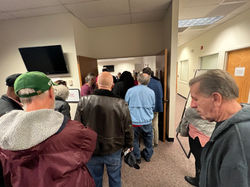
Resolution 26-01: Extension of Pigeon Point Option. DSPC Board Resolution #25-06 (2025) was titled "Fifth Amendment to 1995 Acquisition Agreement with City of Wilmington (Extending Deadline to Exercise Pigeon Point Option)." Today’s Resolution 26-01 is the SIXTH extension in 31 years. When the State of Delaware purchased the Port of Wilmington from the City of Wilmington in 1995, the acquisition agreement included an option for the DSPC to acquire or control property at Pigeon Point. Pigeon Point Road is where the port’s auto industry tenants have operated for decades: AutoPort, Inc. at 203 Pigeon Point Road and Trans Cargo LLC at 170 Pigeon Point Road. The DSPC has held this option for 31 years, renewed it six times, never exercised it, and never released it. A perpetually renewed but never exercised option gives the DSPC permanent leverage over these tenants without commitment. That hanging threat may itself be part of what made it impossible for auto businesses to invest, expand, or commit to long-term operations at the port.
Agenda Item VII.a: Enstructure Presentation. The questions in this report demand answers from this presentation. What happened to the auto business? Why did 30 to 40 ships leave for Baltimore and New York? Why were rates raised on established tenants who had operated for four decades?
Agenda Item X: General Public Comment (approximately 4:00 PM). The longshoremen, the Teamsters, the auto workers, and the taxpayers who invested $27.5 million in the auto berth will be in this room.
Note: The Board enters Executive Session at 3:03 PM. The public meeting does not begin until approximately 4:00 PM. Nearly one hour of closed-door deliberation. The state auditor’s December 2025 performance audit found that the DSPC held executive sessions that did not meet the requirements for closed meetings under Delaware Code (Finding 1). Delaware’s Freedom of Information Act, 29 Del. C. Chapter 100, requires that public bodies conduct business in open meetings. Section 10004(b) narrowly defines the permissible topics for executive session. The DSPC’s pattern of conducting substantive business behind closed doors, documented by the state auditor, raises the question of whether today’s executive session complies with the law or continues the pattern of opacity that has defined this board’s governance.
Source: Diamond State Port Corporation, Public Session Board of Directors Meeting Agenda, March 23, 2026.
To the men and women who loaded Camaros onto ships at five in the morning. To the rail workers who
brought the Jeeps and F-150s down from Michigan. To the technicians who bolted fire extinguishers into
export SUVs and wrapped hoods in plastic for a voyage to Jeddah. To the Teamsters who hauled. To the
ILA members who stevedored. To Trans Cargo, who gave high-mileage cars a second life in Africa instead
of sending them to the scrap heap.
They owe you an explanation. This report is the beginning of one.
A Note on Sources
____________________________________________________________________________________________________________________
This report is built on three categories of evidence.
First: public records. Port history documents from the Diamond State Port Corporation and Enstructure. Press releases. News reporting from the Delaware Business Times, Spotlight Delaware, WHYY, Automotive Logistics, FreightWaves, the Maritime Executive, AJOT, Delaware Public Media, and CoastTV. The state auditor’s December 2025 performance audit. The DSPC’s own 2021 Federal Consistency Certification for berth-side dredging (Project Reference: Port of Wilmington Maintenance Dredging, 2021_0013, signed by Eugene Bailey). The Delaware Statewide Dredging Policy Framework (February 2001, DNREC, Appendix E:
Port of Wilmington). U.S. Coast Guard Marine Safety Information Bulletins (January through March 2026).
The U.S. National Ice Center Mid-Atlantic Ice Analysis (February 9, 2026). DSPC Board resolutions and board documents. Published port tariffs (Tariff #1J, filed under 46 U.S.C. 40501(f)). Corporate filings from the Delaware Division of Corporations. Campaign finance records from the Delaware Office of the State Election Commissioner. Delaware Freedom of Information Act, 29 Del. C. Chapter 100. Every public source is cited in APA format in the Evidence File at the end of this report.
Second: firsthand accounts from three confidential sources with direct knowledge of port operations. One has decades of direct involvement in the port’s auto industry with firsthand knowledge of OEM relationships, ocean carrier operations, and tenant economics. He managed operations. He knows every OEM contract. He knows every ship schedule. The second has multiple decades of service at the Port of Wilmington with direct knowledge of longshore operations, workforce demographics, equipment conditions, and port history. The third is an active port worker with direct operational visibility. No names are used. No job titles are used. No identifying details are provided. These sources fear retaliation from Governor Meyer’s administration. That fear is itself evidence. It is consistent with the documented pattern of aggressive political tactics described in the companion Truthline investigations and confirmed by Democratic senators who publicly called the governor "manipulative" and accused his office of operating as "a dictatorship" (Senator Darius Brown, Delaware Public Media, 2025). Their accounts are used where they provide information not available in the public record, and where their claims can be corroborated or are consistent with documented facts. Where a claim rests solely on a confidential source, it is identified as such.
Third: photographic evidence and real-time operational intelligence documenting the ongoing dredging operation and continued Chiquita ship diversions as recently as March 9, 2026. Photographs show a hydraulic cutterhead dredge with discharge pipeline operating in the Christina River directly in front of the port’s berths, with dredge spoils being pumped to a disposal site on the opposite shore. The dredging equipment first appeared on February 27, 2026, two days after the Truthline Network’s companion investigation was published on social media, February 25.
PART I
The Automobile Empire on the Christina
1. From Fiats to Volkswagens (1974 to 1997)
In 1974, half of all Fiat automobiles sold in the United States came through Wilmington’s terminal. Think about that for a moment. Half of every Fiat on every American road rolled off a ship in Wilmington, Delaware. Two years later, Volkswagen of America chose Wilmington as its automobile hub for imports of Volkswagen, Audi, and Porsche vehicles to North America. The port constructed a special floating dock specifically to serve the automobile trade. By 1987, Volkswagen had expanded to approximately 80 acres with new administration buildings (DSPC Port History; Enstructure Port History).
In 1996, VW consolidated its East Coast operations and closed its Wilmington auto port. The following year, it reopened and signed a three-year lease. That cycle was an early warning: car companies are loyal to efficiency, not geography. If you cannot offer the service they require, they leave. And once they leave, getting them back requires effort that few port authorities will invest (DSPC Port History).
But Volkswagen’s presence did something more important than the revenue it generated. It signaled to other automakers that Wilmington had the infrastructure, the workforce, and the expertise to handle finished vehicles at scale. General Motors selected Wilmington as its largest point of export to the Middle East. The stage was set for what came next (Area Development, 2009; World Port Source).
"Thirty-seven years of ships. Thirty years of holiday shifts. One year of Meyer.
Zero dredging. Four ships to Chester. Do the math."
 |  |  |  |
|---|---|---|---|
 |  |  |  |
 |  |  |  |
 |  |  |  |
 |  |  |
2. AutoPort, Trans Cargo, and the Export Revolution (1981 to 2024)
In 1981, AutoPort, Inc. opened at 203 Pigeon Point Road in New Castle, Delaware. The company saw what others missed: Wilmington’s rail connections and ocean carrier access made it an ideal outbound logistics hub. AutoPort served as a transportation hub for GM, Chrysler, and Ford, touching approximately 150,000 vehicles per year, with about 60,000 passing through its processing centers annually for export (AutoPort, Inc.; Delaware Business Times; NTEA Feature, 2019).
Harry Hussein, AutoPort’s head of business development, had previously served as General Manager, Mid-Atlantic at Hoegh Autoliners and held positions at Liberty Global Logistics. He brought the carrier relationships and the market knowledge that connected Wilmington to the world. Under his leadership and that of Dick Johnson, vice president of business development, AutoPort built the OEM portfolio that made the port the mid-Atlantic leader in vehicle exports (ZoomInfo; Automotive Logistics, 2024; Delaware Business Times).
The export preparation process was specialized and exacting. Vehicles arriving by rail received barcode tags and destination placards. Many read "Jeddah." Middle East-bound vehicles received mandatory safety kits: fire extinguishers, flares, first aid supplies. Tires were inflated to voyage specifications. Exposed exterior surfaces were wrapped in protective plastic. AutoPort’s garages also performed sunroof installations, special mirror modifications, and other alterations required by destination markets. Each vehicle was prepared for a sea voyage on ships carrying up to 5,000 vehicles. This was not warehouse work. This was precision logistics with zero tolerance for error (Delaware Business Times; Confidential Source 1).
Trans Cargo: The Used Vehicle Business Nobody Talks About
Operating from 170 Pigeon Point Road, Trans Cargo LLC ran a parallel and equally important business that has received almost no public attention until now. Trans Cargo prepared used vehicles, often with 200,000 miles or more, for export primarily to African nations. The company performed mechanical work to keep the vehicles running, then containerized them for ocean shipment. These vehicles were given second lives on roads in West Africa and other regions rather than being recycled or scrapped. Trans Cargo also operated the rail yard operations at the Pyles Lane facility, handling vehicles coming off the rail for processing (Confidential Source 1; Manta.com; Ghanem Forwarding; LinkedIn, Trans Cargo LLC).
Trans Cargo’s Manta.com business listing confirms its Port of Wilmington location and describes it as a terminal for automobiles involved in import and export, working with Hoegh Autoliners, Liberty Global Logistics, and African car carriers, as well as operating a domestic rail head for Chrysler, Ford, GM, and Honda. The company’s LinkedIn profile describes it as a leading RoRo and automotive terminal operator at the Port of Wilmington. Trans Cargo runs out of multiple facilities (Confidential Source 1).
OEM Relationships and Contract History
Sources: AutoPort, Inc.; AJOT (2019); Maritime Executive (2019); FreightWaves (2015); DSPC Port History; Manta.com; Confidential Source 1.
Trans Cargo took cars that America was done with and gave them second
lives on roads in Africa. That is not just commerce. That is sustainability
before anyone called it that. And it was destroyed because the port operator
wanted to capture the revenue without understanding the work.
RETURN TO TABLE OF CONTENTS
PART II
What Happened and Who Made It Happen
3. The 31-Year Option. Pigeon Point and the Leverage That Never Expires.
Before examining what happened to the auto business, it is necessary to understand a piece of real estate history that has shaped the power dynamics at the Port of Wilmington for three decades.
When the State of Delaware purchased the Port of Wilmington from the City of Wilmington in 1995, the acquisition agreement included an option for the Diamond State Port Corporation to acquire or exercise control over property at Pigeon Point. That option has a deadline. And that deadline has been extended at least five times.
The DSPC’s own board documents page lists Resolution #25-06 (2025) as the "Fifth Amendment to 1995 Acquisition Agreement with City of Wilmington (Extending Deadline to Exercise Pigeon Point Option)." Today, March 23, 2026, the Board will vote on Resolution 26-01, which extends this option yet again. This is the sixth extension in 31 years (DSPC Board Documents, port.delaware.gov).
Pigeon Point Road is the physical address of the port’s auto industry tenants: 203 Pigeon Point Road and 170 Pigeon Point Road. The companies that have processed and exported vehicles from the Port of Wilmington for over forty years operate on land over which the DSPC holds a perpetually renewed but never exercised acquisition option.
Consider what that means from the tenant’s perspective. You cannot make a twenty-year capital investment in a facility when the landlord holds an option to take over your property that it renews every year or two but never exercises and never releases. You cannot sign long-term OEM contracts with confidence when the entity that controls your lease has been extending an option over your land for three decades. The option itself is a form of control. It does not need to be exercised to be effective. It only needs to exist.
The public has a right to know: What are the specific terms of this option? What would exercising it mean for the current tenants? Is this extending AutoPort’s ability to stay? Or is it extending the port’s option to take over that property? Why has it been extended six times over 31 years without being either exercised or released? And is this perpetual option part of the leverage that was used to push auto industry tenants out of the port?
"Thirty-one years. Six extensions. Never exercised. Never released.
A perpetual option over the land where forty years of auto business
was built. That is not planning. That is leverage. And the people
who hold it owe the people who work on it an explanation."
44. The Port Decided to Capture the Revenue
This is the chapter that changes everything. Because until now, the decline of the auto business at the Port of Wilmington has been treated as a mystery, or worse, as something that just happened. It did not just happen. According to a source with firsthand knowledge, it was caused by deliberate decisions made by the Diamond State Port Corporation and Enstructure.
The source provided specifics. Each one deserves to be heard in full:
On AutoPort: "Auto Port nearly out of business." GM, Stellantis (Chrysler), and Ford motor vehicle work has left. "30 or 40 ships left the port to Baltimore and New York." The Diamond State Port Corporation’s controlling interest "want to get into the car business." The supplemental jobs that surrounded the auto operation left with the vehicles. AutoPort had been in the shipping business for over 40 years.
On rates: "I should say raised the rates too high." That is a direct quote from the source. The port raised the rates to a level where the established businesses could not operate profitably.
On Trans Cargo: Trans Cargo was preparing cars to go overseas, mostly to African nations and the Middle East. Cars with 200,000 miles. Trans Cargo would do what was needed to keep them running, put them into containers, and ship them to Africa for reuse instead of recycling. The port "did not have a relationship with the companies" and tried to "do it to make the money themselves and trying to get those contracts." Trans Cargo runs out of multiple facilities. Trans Cargo lost the work "not due" to their own performance but because the DSPC "wanted to do the work themselves the old Volkswagen lot." This happened approximately in late summer to October of 2025.
On the rail yard: "Transcargo still doing the rail yard, port wanted to make the money Transcargo was making." The port wanted the rail yard revenue that Trans Cargo had been earning.
On the longshoremen: The ILA longshoremen drove the cars off the ships. They unloaded boxes full of used cars. Then the cars going back to Africa and other destinations. Those jobs are gone. The Teamsters are also affected. If the Africa work comes back and a contract is signed, the Teamsters will get work back.
On legal costs: Negotiations that previously would have been handled internally are now being farmed out to outside counsel, including Connolly Gallagher and others. The legal costs are substantial and draining operating funds.
The port did not have a relationship with the companies and tried to do it to
make the money themselves. They raised the rates too high. They lost the contracts.
The ships went to Baltimore and New York. That is not a market correction.
That is self-inflicted destruction of a forty-year business.
June 5, 2025, "I'm excited to share some appealing news 🍌: Chiquita has renewed their partnership with the Port of Wilmington! That means real jobs, real revenue, and real momentum.We're not slipping up — with Enstructure LLC and Chiquita aboard, the Port's future is ripe with possibility!" — Facebook Post, Delaware Governor Matt Meyer
5. The Longshoreman’s Account
A second confidential source with multiple decades of direct experience at the Port of Wilmington provided additional context that gives this story its human dimension. This is a man who has spent nearly 40 years on these docks. He has seen every operator, every governor, every crisis. He knows the port the way a surgeon knows an operating room.
On the workforce: ILA Local 1694, the deep-sea longshoremen’s local covering Wilmington and Philadelphia, is 96 to 97 percent Black. William Ashe Jr. has led the local through a career spanning nearly five decades. He recently lost a brother, a reminder that the families who built this port are not abstractions. They are flesh and blood. A group of 40 to 45 men built and maintained the Dole and Chiquita relationships for 45 years through specialized expertise that cannot be replicated by a corporate operator with a spreadsheet (Confidential Source 2).
On the specialized expertise: The port’s intermodal box mechanics maintain perishable cargo at 0.04 degrees centigrade. That precision made Wilmington the number one perishable port in the country and number two in the world. You do not learn to do that from a manual. You learn it from the man who did it before you, who learned it from the man before him. That chain of knowledge is 45 years long. It is irreplaceable (Confidential Source 2).
On the equipment: The longshoremen "make it work with junk compared to other areas," referring to the port’s cranes and equipment. They deliver world-class results with capital equipment that other ports would have replaced years ago. This corroborates the state auditor’s finding that the DSPC failed to ensure adequate operational oversight (Confidential Source 2; Delaware Auditor, December 2025).
On the auto business specifically: The longshoremen drove the cars off the ships. They unloaded containers full of used cars. They loaded the cars going to Africa and the Middle East. Those jobs are gone now. The Teamsters were directly affected because every vehicle that left the port by truck was hauled by a Teamster driver. If the Africa used-vehicle work comes back and a contract is signed, the Teamsters will get work back. But right now, that work is gone (Confidential Source 2).
On the Gulftainer era: Sources confirmed that the CEO of Gulftainer’s operations, Joe Cruz, held dual roles managing both the Wilmington and Cape Canaveral ports simultaneously. He earned approximately $450,000 for the Wilmington operation and approximately $300,000 for the Florida operation, totaling approximately $750,000 per year. He was brought in after his predecessor was removed. This dual-salary structure for a single operator managing two ports illustrates the governance failures the state auditor documented (Confidential Sources 1 and 2).
On the community: This work is a case of Black pride and history. When the longshoremen’s children came to the port, the fathers and grandfathers shared that heritage with them. The source urged that this report include a section on the 45 years these men kept this commodity here, serving as mentors for the Black community, and the successful leadership of the ILA locals doing this work. It is historical. It deserves to be remembered. And it deserves to be protected (Confidential Source 2).
Forty-five years of keeping Dole and Chiquita in Wilmington. Forty-five years of
maintaining perishable cargo at 0.04 degrees with equipment other ports would
have scrapped. Forty years of loading American cars onto ships bound for Jeddah. Ninety-six percent Black. And the people who are supposed to protect this port
could not keep the river dredged or the auto business open.
RETURN TO TABLE OF CONTENTS
PART III
The Physical Plant and the Workers
6. What $27.5 Million Built and What Was Lost
The state of Delaware invested $27.5 million in a dedicated Auto and RoRo Berth on the Delaware River, completed in 2002. The berth is 875 feet long, 115 feet wide, and has 38 feet of water depth alongside. It is located 900 feet offshore, connected to the vehicle processing and storage facilities by a 1.2-mile dedicated roadway. It was built to accommodate the pure car and truck carriers (PCTCs) operated by Hoegh Autoliners and Liberty Global Logistics (DSPC Port History; Area Development, 2009).
AutoPort’s Physical Footprint at Port Wilmington
Sources: AutoPort, Inc.; NTEA Feature (2019); Area Development (2009); DSPC Port History; DBT Manufacturing and Logistics (2025).
"120 days. One concierge. Parallel review.
The developer who gets the designation gets the government.
The developer who does not gets the queue."
RETURN TO TABLE OF CONTENTS
7. The Full Workforce Ecosystem
When a vehicle moved from a railcar to a ship’s deck, it passed through the hands of workers from multiple unions, multiple companies, and a network of service providers. This was not one employer. This was an ecosystem. And when the cars stopped coming, the entire ecosystem collapsed.
Workforce Ecosystem of the Port Wilmington Auto Business
Sources: AutoPort, Inc.; Delaware Business Times; Enstructure press releases (2023); Confidential Sources 1 and 2.
"County: bundle 87 properties. State: designate priority projects.
Same method. Bigger jurisdiction. Fewer witnesses."
| | |
|---|---|---|
| | |
| | |
 | | |
|  |  |
 |  |  |
 |  |  |
 |  |  |
 |  |  |
 |
PART IV
The Economic Damage
8. The Numbers
Estimated Annual Economic Impact of the Port Wilmington Auto Business (At Peak)
Sources: Automotive Logistics (2024); AutoPort, Inc.; DSPC Port History; Confidential Source 1; industry benchmarks.
The $27.5 million auto berth sits largely idle. The 1.2-mile dedicated roadway connects to processing facilities with diminished throughput. The Foreign Trade Zone designation that gave the auto business a customs advantage is underutilized. A banana does not need an 875-foot RoRo berth. That infrastructure was built for cars. The cars are gone. And the people who chased away the business that justified the investment have not explained what they intend to put in its place.
PART V
The Complete Timeline
RETURN TO TABLE OF CONTENTS
PART VI
The Dredging Crisis in Context
The auto business collapse did not happen in isolation. It happened alongside the dredging crisis documented in the companion Truthline report, "The Battle for Delaware’s Waterfront," published March 4, 2026. Two pillars of the port’s economy are under simultaneous attack: the banana business is being sent to Chester by silt, and the auto business has been sent to Baltimore and New York by rate increases and mismanagement. The longshoremen are caught in the middle of both.
Two Completely Separate Dredging Obligations
The federal government, through the Army Corps of Engineers, maintains the main Delaware River channel at 45 feet. The Corps also separately maintains the Wilmington Harbor federal channel (the Christina River approach) at its authorized depth of 35 to 39 feet. The Army Corps spent $27.6 million on that federal maintenance in winter 2025 and 2026. The federal government did its job.
The state of Delaware, through the Diamond State Port Corporation, is responsible for berth-side dredging: maintaining Berths 1 through 4 at 38 feet Mean Low Water (plus two feet of allowable overdredge) and Berths 5 through 7 at 35 feet MLW (plus two feet). This is documented in the DSPC’s own 2021 Federal Consistency Certification, filed with DNREC’s Delaware Coastal Management Program (Project Reference: Port of Wilmington Maintenance Dredging, 2021_0013), signed by then-Executive Director Eugene Bailey. The certification identifies DSPC as the named applicant. It commits to an estimated 75,000 cubic yards per yearly dredging event for ten years. It states explicitly that state berth-side dredging occurs "concurrently" with federal channel dredging. Concurrently. Not instead of. Not dependent upon. Two separate obligations with two separate paper trails. One was fulfilled. The other was not.
This obligation is not new. The Delaware Statewide Dredging Policy Framework, published by DNREC’s Delaware Coastal Programs in February 2001, has been in place for 25 years. Appendix E specifically addresses the Port of Wilmington, documenting approximately 125,000 cubic yards of material dredged annually between the federal channel and the port’s docking facilities, with disposal costs averaging $1.75 to $1.85 per cubic yard. Material is disposed at the Pedricktown South Confined Disposal Facility in New Jersey or the Wilmington Harbor South CDF in Delaware, both operated by the Army Corps. Every governor since Ruth Ann Minner operated under this framework. Governor Meyer is the first governor who failed to execute it.
The Ice Was Real. It Was Not the Cause.
The U.S. National Ice Center documented 38.36% ice cover on the Delaware Bay and River on February 9, 2026. The Coast Guard issued Marine Safety Information Bulletin 07-26 on February 2, setting ice precautions for the entire Delaware River. Ice Condition One was set January 26. It escalated through multiple bulletins. Ice conditions were not fully lifted until March 4. These conditions prevented dredging during February 2026. But nine previous governors completed the dredging before winter arrived. The dredging should have been done in the summer and fall, as Ashe stated. Ice was the consequence of starting too late, not the cause of the failure.
The Truthline Investigation Forced Action
The companion Truthline report was published Wednesday, March 4, 2026. Spotlight Delaware published its follow-up on February 23 (crediting the Truthline report as the origin of the story). By Friday, March 6, dredging equipment appeared in the Christina River for the first time. Photographic evidence obtained by this investigation shows a hydraulic cutterhead dredge with a discharge pipeline operating in the channel directly in front of the port’s berths, with dredge spoils being pumped to a disposal site on the opposite shore. Enstructure told a port source the dredging would take approximately one month once fully operational.
And Yet the Diversions Continued
On March 9, 2026, five days after the Truthline report was published and three days after dredging equipment first appeared, a fully loaded Chiquita vessel was still bypassing the Port of Wilmington. Around noon, the vessel sailed past Wilmington heading to Chester, Pennsylvania, where it began offloading 250 to 350 containers at PSA Penn Terminals (a non-ILA facility) starting at 2:00 PM, finishing by 2:00 AM. The vessel sailed at 3:00 AM back to the Port of Wilmington for an 8:00 AM start, with 469 containers remaining to come off. The ship was the smallest in Chiquita’s three-vessel Wilmington fleet, holding approximately 780 containers.
The other two hold approximately 900. On that single vessel call, roughly 35 to 45 percent of the cargo went to Chester. Roughly 35 to 45 percent of the longshoremen’s work went with it (Confidential Source 3, March 9, 2026).
"This is not coincidence. This is not incompetence.
This is a system operating exactly as designed, by the people who designed it."


PART VII
Who Benefits: The Political Connections
The Baker Connection: Lobbyist, Dredging, and Holt Logistics
Darrell J. Baker, Esquire, 704 King Street, Suite 600, Wilmington, Delaware, is the registered agent for two entities: Summit North Marina LLC (formed June 9, 2010) and Chesapeake and Delaware Dredging LLC (formed July 15, 2021). Both operate at Summit North Marina, 3000 Summit Harbour Place, Bear, Delaware, on 129 acres of state park land along the Chesapeake and Delaware Canal within Lums Pond State Park.
Darrell Baker is also the registered Delaware lobbyist for Holt Logistics Corp. Holt Logistics is the four-generation family shipping empire whose president, Leo Holt, runs Packer Avenue Marine Terminal in Philadelphia, Gloucester Marine Terminal, and the Paulsboro Marine Terminal. Every container that goes through a new Wilmington terminal is a container that does not go through a Holt terminal. That is not inference. That is geography.
The Lawsuit That Killed the Edgemoor Expansion
Holt Logistics and the Philadelphia Regional Port Authority filed the federal lawsuit that revoked the Edgemoor expansion permits in October 2024. U.S. District Judge Mark Kearney ruled in their favor, invalidating the federal permits. A Delaware state judge then placed state construction permits in limbo in April 2025. The $635 million Edgemoor expansion, the only long-term solution to the port’s competitive gap, remains in legal limbo. Baker’s registered Delaware lobbyist work for Holt includes appearances at "Stop the Edgemoor Port" community meetings.
Competing Ports Benefit Directly
Every ship that cannot reach Wilmington goes to Chester, Philadelphia, or New Jersey. PSA Penn Terminals, sitting directly on the 45-foot main channel, is capturing Chiquita fruit ships right now. PhilaPort’s container traffic has nearly doubled since 2016. Holt Logistics’ terminals at Packer Avenue, Gloucester, and Paulsboro capture both container and RoRo cargo that Wilmington loses. Baker lobbies for Holt. Baker’s client contributed to Meyer. Baker’s own entities contributed to Meyer. The governor who received those contributions failed to dredge.
The Governor’s Political Operation
Meyer removed ILA Vice President Ashe from the DSPC board on his first day in office. He boycotted the legislative task force for eight months. He publicly advocated for automation that the ILA’s national master contract prohibits. He appointed a Board of Adjustment chair and corporate restructuring specialist (David Burt) to the port board, a skill set suited for deal-making, not port operations. He appointed the president of Associated Builders and Contractors, an organization not aligned with organized labor, to the port board (the Senate rejected her). The pattern concentrates control while weakening the union’s voice.
Alan Levin: The Mentor, the Money, and the Model
Alan Levin benefits. Meyer’s political mentor and campaign advisor, who contributed at least $30,000 to the Change Can’t Wait PAC and whose household total across all Meyer committees reached $30,700, now chairs DEFAC, the body that certifies the revenue projections governing whether the $195 million Edgemoor investment proceeds. Levin pioneered the port privatization template under Governor Markell in 2012 with the Kinder Morgan deal. That template survived. It is the model running the port today. Levin sits at Faegre Drinker Biddle and Reath, a national law firm with significant real estate, land use, and corporate practice areas. His
law firm colleague Shawn Tucker, who a firsthand source identifies as handling Amazon’s legal work at the firm, contributed $1,000 to the same PAC.
The Amazon Question
If the port’s traditional tenants are forced out, the facility’s operating contract becomes available for restructuring. The companion Truthline report documented speculation that Amazon could acquire the port’s operating contract. Governor Meyer is the founder and owner of Wise Men Shipping LLC, a company that ships packages through Amazon’s logistics infrastructure from Wilmington warehouses to East Africa. As County Executive, Meyer approved a 67% property tax reduction for Amazon’s Boxwood fulfillment center, secured $4.5 million in state aid for Amazon, and used expedited permitting for Amazon projects. Levin brought Amazon to Delaware. Whether these connections amount to a coordinated strategy or merely a devastating coincidence, the pattern of facts demands investigation.
"The order says it preserves every right.
Its mechanics eliminate the tools that those rights depend on.
Section 1 is the promise. Section 4 is the performance.
A court will have to decide which one is the law."
RETURN TO TABLE OF CONTENTS
PART VIII
Demands for Accountability: Questions for the DSPC Board, March 23, 2026
The following questions are directed to the Diamond State Port Corporation Board of Directors, to Enstructure, and to Governor Matt Meyer’s administration. They are not rhetorical. They are demands for answers that the workers and taxpayers of Delaware have every right to make:
1. Resolution 26-01 extends the Pigeon Point Option for the sixth time since 1995. What are the specific terms of this option? What would exercising it mean for the current tenants at 203 and 170 Pigeon Point Road? Why has this option been extended six times over 31 years without being exercised or released? Is this perpetual option part of the leverage used to push auto industry tenants out of the port? Is the port extending their ability to stay, or extending the port’s option to take over that property?
2. Did Enstructure and/or the DSPC raise rates on AutoPort and Trans Cargo to levels that made their operations uneconomic? If so, by how much, when were the increases implemented, and who specifically authorized them?
3. Did Enstructure attempt to bring vehicle processing, rail yard operations, and used-vehicle containerization in-house, displacing tenants with 40 years of specialized expertise? What was the result? How many vehicles are being processed now compared to the 115,000 AutoPort handled in 2023?
4. How many RoRo vessel calls are occurring per month at the auto berth now, compared to three to four per month during peak OEM contract years and the Ford and Stellantis contract era?
5. What is the current status of OEM export contracts with General Motors, Ford, and Stellantis? Have those contracts been terminated, not renewed, or transferred to competing ports? Which ports now handle the vehicles that Wilmington used to handle?
6. What is the current utilization rate of the $27.5 million Auto and RoRo Berth? What return is the taxpayers’ investment generating? If the answer is substantially less than before, who is accountable?
7. Were the ILA, Teamsters, and other unions consulted before decisions were made that affected the auto business? The state auditor found the DSPC had not held adequate oversight meetings with the ILA (Finding 2). Was the auto business discussed in those meetings that did not happen?
8. Has the DSPC board discussed the loss of the auto business in any meeting, public or executive session? If it was discussed in executive session, under which specific statutory exception of 29 Del. C. Sec. 10004(b) was that discussion held? If it was not discussed at all, how is that possible given the magnitude of the loss?
9. The DSPC’s own 2021 Federal Consistency Certification commits to 75,000 cubic yards of berth-side dredging per year. Every governor for 30 years completed it. Why did Governor Meyer’s administration fail to perform routine maintenance dredging? Why was the dredging not completed before winter, as every prior administration managed? Why, on March 9, 2026, was a Chiquita vessel still diverting 250 to 350 containers to a non-ILA facility in Chester, offloading at PSA Penn Terminals before returning to Wilmington with 469 remaining, even with the dredge finally in the water?
10. The Gulftainer CEO, Joe Cruz, earned approximately $750,000 per year ($450,000 Wilmington, $300,000 Cape Canaveral) managing both ports simultaneously. What is the current total compensation of Enstructure’s leadership for the Port of Wilmington operation? Where is the transparency the state auditor demanded?
This report began with a berth that should be full of cars and a river that should have been dredged. It ends where all accountability begins: with a public meeting and a public record.
The Board meets today. The evidence file is open. The longshoremen are watching. The Teamsters are watching. The auto workers are watching. The taxpayers who invested $27.5 million are watching. And this report will be in the room.
Four million vehicles. Forty years.
One decision to chase the revenue without doing the work.
The cars stopped coming. The workers are still here.
They deserve answers. Today.
RETURN TO TABLE OF CONTENTS
On February 26, 2026, Governor Matt Meyer signed Executive Order 18 at a ceremony attended by members of the Home Builders Association of Delaware, who were invited by the Governor's office. The National Governors' Association and the National Association of Home Builders posted the video the next day, calling it a moment when "advocacy efforts have paid off." The Home Builders Association of Delaware described the signing as a "permitting victory." Neither organization mentioned that the order immediately eliminates Traffic Impact Studies for designated housing projects, that the Governor alone decides which projects receive the designation, or that the developers and construction industry PACs profiled in this report contributed more than $725,000 to the campaign that put the man holding the pen in the Governor's chair. Watch the video. Read the report. The people in the room knew what they were celebrating.
GOVERNOR MATT MEYER'S FACEBOOK POSTS PROMOTING EXECUTIVE ORDER 18
Every line of this post is contradicted by Executive Order 18, Governor Matt Meyer actually signed. He says no safety or environmental standards were cut. His order immediately eliminates Traffic Impact Studies for developer projects, bypasses the Administrative Procedures Act, and builds a permitting runway around Delaware's Coastal Zone Act for a data center that would consume twice the electricity of every home in the state. He says it streamlines coordination. It gives the Governor sole, unappealable authority to designate which projects and which locations get the fast track, with $725,000 in developer money mapping directly to the donors who benefit. This report documents every dollar, every donor, every provision.

The Truthline Network Publication Attachments List for This Report
For the growing number of readers who enjoy deep dives, explainers, and additional information, below are PDFs that supplement this report for your viewing or downloading.
[PDF] [Where in the report?] Governor Matt Meyer, Executive Order 16
[PDF] [Where in the report?] Governor Matt Meyer, Executive Order 18
[PDF] [Where in the report?] T.C. Memo. 2024-59, Parkway Gravel Inc. and Subsidiaries v. Commissioner of Internal Revenue
[PDF] [Where in the report?] Truthline Memorandum, "The Tax Court Record: Ferrara, Smiley, and the Airport Corridor Rezoning Chain", Companion Document to “The Quiet Dismantling of Delaware’s Democratic Guardrails”
[PDF] [Where in the report?] Truthline Memorandum, "Twenty Years, One Councilman: The George Smiley File, The Tax Court Record, the Property Chain, and the Questions Nobody Has Asked", Companion Document to “The Quiet Dismantling of Delaware’s Democratic Guardrails”
A Note on Methodology and Sourcing
This supplement follows the same sourcing standards as the original report. Every claim is traceable to a government document, court filing, campaign finance disclosure, published tariff, statutory text, or on-the-record statement from a named official. Where unnamed sources provide context, the underlying facts are independently verifiable through public records.
"We make it easy to verify. We make it hard to misquote."
RETURN TO TABLE OF CONTENTS
The Evidence File: Receipts, Sources, and Primary Documents
Every claim in this report is sourced. Every number is traceable. Confidential sources are identified by role and date of communication.
This report is built on three categories of evidence.
First: public records. Port history documents from the Diamond State Port Corporation and Enstructure. Press releases. News reporting from the Delaware Business Times, Spotlight Delaware, WHYY, Automotive Logistics, FreightWaves, the Maritime Executive, and the American Journal of Transportation. The state auditor's December 2025 performance audit. U.S. Coast Guard Marine Safety Information Bulletins. U.S. National Ice Center analysis. Federal dredging contract records. Published port tariffs. Corporate filings. Every public source is cited in APA format in the Evidence File at the end of this report.
Second: firsthand accounts from three confidential sources with direct knowledge of port operations. The second is a 39- to 40-year veteran deep-sea longshoreman at the Port of Wilmington. The third is an active port worker with direct operational visibility. Their accounts are used where they provide information not available in the public record, and where their claims can be corroborated or are consistent with documented facts. Where a claim rests solely on a confidential source, it is identified as such.
Third: photographic evidence and real-time operational intelligence provided by port sources documenting the ongoing dredging operation and continued Chiquita ship diversions as recently as March 9, 2026.
Evidence File: Table of Contents
I. Confidential Sources
II. Government Records, Audits, and Regulatory Filings
III. DSPC Board Documents and Port Tariffs
IV. Federal Dredging, Ice, and Maritime Safety Records
V. State Legislation and Legal Framework
VI. Port History and Operator Records
VII. News Reporting: Delaware and Regional Media
VIII. News Reporting: National and Trade Publications
IX. Industry and Company Sources
X. Corporate Filings and Campaign Finance Records
XI. Companion Truthline Investigation
I. Confidential Sources
The following confidential sources provided firsthand accounts used in this report. Their identities are protected. Their accounts are used where they provide information not available in the public record, and where their claims can be corroborated or are consistent with documented facts. Where a claim rests solely on a confidential source, it is identified as such.
Confidential Source 1. (2026). Source with decades of direct involvement in the port's auto industry, with firsthand knowledge of OEM relationships, ocean carrier operations, and tenant economics. Interview notes.
Confidential Source 2. (2026, February 27). Source with multiple decades of service at the Port of Wilmington (39 to 40 years) and direct knowledge of longshore operations, workforce demographics, equipment conditions, and port history. Telephone interview notes.
Confidential Source 3. (2026, March 9). Active port worker, Port of Wilmington. Text messages and photographic evidence of dredging operations and Chiquita vessel diversion to PSA Penn Terminals, Chester, Pennsylvania.
II. Government Records, Audits, and Regulatory Filings
Delaware Office of Auditor of Accounts. (2025, December 4). Diamond State Port Corporation performance audit, FY2021 to FY2025. $233 million in taxpayer funds reviewed. Five findings of DSPC failure, including executive session violations (Finding 1) and inadequate ILA oversight meetings (Finding 2). https://auditor.delaware.gov/2025/12/04/diamond-state-port-corporation-performance-audit/
Delaware Statewide Dredging Policy Framework. (2001, February). DNREC Delaware Coastal Programs. Appendix E: Port of Wilmington. Approximately 125,000 cubic yards dredged annually between the federal channel and port docking facilities; disposal costs averaging $1.75 to $1.85 per cubic yard; material disposed at Pedricktown South Confined Disposal Facility (NJ) and Wilmington Harbor South CDF (DE), both operated by the Army Corps of Engineers.
Diamond State Port Corporation. (2021). Federal Consistency Certification, Port of Wilmington Maintenance Dredging, Project Reference 2021_0013. Signed by Eugene Bailey, Executive Director. Filed with DNREC Delaware Coastal Management Program. Commits to an estimated 75,000 cubic yards per yearly dredging event for ten years. States explicitly that state berth-side dredging occurs "concurrently" with federal channel dredging. Identifies DSPC as the named applicant. Berths 1 through 4 maintained at 38 feet Mean Low Water (plus two feet allowable overdredge); Berths 5 through 7 at 35 feet MLW (plus two feet).
Diamond State Port Corporation. Published Port Tariff #1J, filed under 46 U.S.C. 40501(f).
III. DSPC Board Documents and Port Tariffs
Diamond State Port Corporation. (n.d.). Board documents. State of Delaware. https://port.delaware.gov/diamond-state-port-corporation-board-documents/
Diamond State Port Corporation. (2026, March 23). Public Session Board of Directors Meeting Agenda. Buena Vista, 661 S. DuPont Highway, New Castle, DE. Agenda Item IX.a: Resolution 26-01: Extension of Pigeon Point Option. This is the sixth extension of the Pigeon Point Option since the State of Delaware purchased the Port of Wilmington from the City of Wilmington in 1995. Resolution #25-06 (2025) was titled "Fifth Amendment to 1995 Acquisition Agreement with City of Wilmington (Extending Deadline to Exercise Pigeon Point Option)." Obtained via public notice.
IV. Federal Dredging, Ice, and Maritime Safety Records
U.S. Coast Guard. (2026, January through March). Marine Safety Information Bulletins 01-26 through 10-26. Fifth Coast Guard District, Sector Delaware Bay. Ice Condition One set January 26, 2026.
MSIB 07-26 issued February 2, 2026, setting ice precautions for the entire Delaware River; ice precautions escalated through multiple bulletins; conditions not fully lifted until March 4, 2026.
U.S. National Ice Center. (2026, February 9). Mid-Atlantic ice analysis, ice concentration. NOAA. Ice cover: 38.36% on the Delaware Bay and River.
Maritime Exchange for the Delaware River and Bay. (2026). USCG Ice Alerts, January through March 2026. https://www.maritimedelriv.com/category/uscg-ice-alerts/
V. State Legislation and Legal Framework
Delaware Freedom of Information Act, 29 Del. C. Chapter 100. Section 10004(b), permissible topics for executive session. Requires that public bodies conduct business in open meetings. Section 10004(b) narrowly defines the topics permissible for executive session.
The state auditor's December 2025 performance audit found the DSPC held executive sessions that did not meet these requirements (Finding 1).
VI. Port History and Operator Records
Diamond State Port Corporation. (n.d.). Port history. State of Delaware. https://port.delaware.gov/port-history/
Enstructure Wilmington. (n.d.). Port history. https://portwilmington.com/port-history/
Enstructure Wilmington. (n.d.). Auto and RoRo. https://portwilmington.com/auto-roro/
Enstructure Wilmington. (2023, July). Enstructure, GT USA Wilmington complete transfer of Port of Wilmington operations.
Wikipedia. (n.d.). Port of Wilmington (Delaware). https://en.wikipedia.org/wiki/Port_of_Wilmington_(Delaware)
World Port Source. (n.d.). The Port of Wilmington port commerce.
http://www.worldportsource.com/ports/commerce/USA_DE_The_Port_of_Wilmington_158.php
Port of Wilmington Maritime Society. (n.d.). Maritime links / Shipping lines. https://www.portofwilmington.com/maritime-links.html
VII. News Reporting: Delaware and Regional Media
Delaware Business Times. (n.d.). AutoPort makes Wilmington a vehicle shipping hub. https://delawarebusinesstimes.com/news/autoport-wilmington-shipping-hub/
Delaware Business Times. (2025). Manufacturing and logistics: Prime location makes Delaware a perfect home base. https://delawarebusinesstimes.com/supplements/innovation/manufacturing-logistics-prime-location-makes-delaware-a-perfect-home-base/
Spotlight Delaware. (2026, February 23). Dredging delays divert ships past the Port of Wilmington. Credits the Truthline Network report as the origin of the story. https://spotlightdelaware.org/2026/02/23/dredging-delays-divert-ships-past-the-port-of-wilmington/
CoastTV. (2026). Ice chokes Delaware Bay, disrupts services as cold lingers. https://www.coasttv.com/news/ice-chokes-delaware-bay-disrupts-services-as-cold-lingers/article_cc31827a-a756-4acb-bcbe-4ffe4cb387e8.html
VIII. News Reporting: National and Trade Publications
AJOT. (2019, January). The Port of Wilmington, Delaware celebrates first export shipment of finished Ford vehicles. American Journal of Transportation. https://www.ajot.com/news/the-port-of-wilmington-delaware-celebrates-first-export-shipment-of-finished-ford-vehicles
Area Development. (2009, April). The Port of Wilmington, Delaware: Auto and RoRo. https://www.areadevelopment.com/specialpub/ldw09/wilmington-east-coast-gateway001.shtml
Automotive Logistics. (2024, May 15). Autoport's efficiency drive on the east coast. Documents AutoPort handling 115,000 vehicles in calendar year 2023, with approximately 55,000 exports. https://www.automotivelogistics.media/ports-and-processors/autoports-efficiency-drive-on-the-east-coast/45611.article
FreightWaves. (2015, March 2). Autoport to export Chrysler cars from Port of Wilmington. Documents the FCA US (Stellantis) multi-year export contract awarded in 2015, with vehicles previously shipped from Baltimore. https://www.freightwaves.com/news/autoport-to-export-chrysler-cars-from-port-of-wilmington
Maritime Executive. (2019, January 24). Port of Wilmington handles its first Ford vehicle exports. Documents the Ford multi-year contract, first shipment January 7, 2019, 3 to 4 ship calls per month. https://www.maritime-executive.com/article/port-of-wilmington-handles-its-first-ford-vehicle-exports
The Auto Channel. (2015, February 26). FCA US to begin shipping vehicles from Wilmington, Del., port. https://www.theautochannel.com/news/2015/02/26/125628-fca-us-to-begin-shipping-vehicles-from-wilmington-del-port.html
IX. Industry and Company Sources
AutoPort, Inc. (n.d.). About AutoPort. Documents the company's operations at 203 Pigeon Point Road, New Castle, Delaware, including 100 to 110 acres, 6 rail spurs with capacity for 72 rail cars, 50,000-square-foot conversion center, 20,000-square-foot processing center, 10,000-square-foot fabrication center, and 10,000-square-foot dedicated warehouse. ISO 9001 certified. https://www.autoportinc.com/about/
Ghanem Forwarding. (n.d.). Wilmington terminals. Lists Trans Cargo LLC among Port of Wilmington terminal operators. https://www.ghanemforwarding.com/Ports-and-Shipping/Wilmington/
LinkedIn. (n.d.). Trans Cargo L.L.C. Describes the company as a leading RoRo and automotive terminal operator at the Port of Wilmington. https://www.linkedin.com/company/trans-cargo-l-l-c
Manta.com. (n.d.). Trans Cargo LLC, 170 Pigeon Point Road, New Castle, DE. Confirms Port of Wilmington location. Describes the company as a terminal for automobiles involved in import and export, working with Hoegh Autoliners, Liberty Global Logistics, and African car carriers, as well as operating a domestic rail head for Chrysler, Ford, GM, and Honda. https://www.manta.com/c/mx5vtt4/trans-cargo-llc-170-pigeon-point-road-new-castle-de-united-states
NTEA. (2019, December). Featuring AutoPort Inc. Industry profile of AutoPort's vehicle processing operations and capabilities. https://www.ntea.com//NTEA/Member_benefits/Industry_leading_news/NTEANewsarticles/Featuring_AutoPort_Inc.aspx
X. Corporate Filings and Campaign Finance Records
Delaware Division of Corporations. Corporate filings for Summit North Marina LLC (formed June 9, 2010). Registered agent: Darrell J. Baker, Esquire, 704 King Street Suite 600, Wilmington, DE. Operates at Summit North Marina, 3000 Summit Harbour Place, Bear, Delaware, on 129 acres of state park land along the Chesapeake and Delaware Canal within Lums Pond State Park.
Delaware Division of Corporations. Corporate filings for Chesapeake and Delaware Dredging LLC (formed July 15, 2021).
Registered agent: Darrell J. Baker, Esquire, 704 King Street Suite 600, Wilmington, DE. Same address as Summit North Marina LLC.
Delaware Division of Corporations. Corporate filings for Wise Men Shipping LLC. Governor Matt Meyer is the founder and owner. The company ships packages through Amazon's logistics infrastructure from Wilmington warehouses to East Africa.
Delaware Office of the State Election Commissioner. Campaign finance records for Change Can't Wait PAC and related Meyer campaign committees. Alan Levin contributed at least $30,000 to the Change Can't Wait PAC. Levin household total across all Meyer committees reached $30,700. Levin's law firm colleague Shawn Tucker contributed $1,000 to the same PAC. Baker's client Holt Logistics contributed to Meyer. Baker's own entities contributed to Meyer.
XI. Companion Truthline Investigation
Hartley-Nagle, K. (2026, March 4). Battle for Delaware's waterfront: Port of Wilmington Truthline Report. The Truthline Network. The companion investigation documenting the dredging crisis, Chiquita ship diversions, and political connections. Published March 4, 2026. Dredging equipment appeared in the Christina River on March 6, two days after publication. Spotlight Delaware credited this report as the origin of its February 23 story. https://www.karenhartleynagle.com/battle-for-wilmingtons-waterfront-port-of-wilmington-truthline-report
"This is not coincidence. This is not incompetence.
This is a system operating exactly as designed, by the people who designed it."
Attribution:
Content and analysis © 2025 The Truthline Network, a division of Nexus Innovation Group LLC.
All content authored by Karen Hartley-Nagle, Founder & Publisher, The Truthline Network; Editor-in-Chief, Host & Executive Producer,
The Truthline (Radio & Live); Former President, New Castle County Council (2016–2024); Founder & CEO, Nexus Innovation Group, LLC.
Excerpts, data, or quotations may be reproduced for noncommercial use with attribution to The Truthline Network and a direct link to the original report. Commercial use or republication requires written permission.
Cite as: Hartley-Nagle, K. (2026, March 4). The Quiet Dismantling of Delaware's Democratic Guardrails: Executive Order 18 And The Pattern of Developer-Driven Land Use Policy. The Truthline Network.
https://www.karenhartleynagle.com/eo18-report-developer-money-democratic-guardrails
Author: Karen Hartley-Nagle
Title: President of New Castle County Council, 2016 to 2024
Publisher: The Truthline Network
Date: March 24, 2026
Read full documents: The Evidence File → Sources above
"Transparency isn’t charity. It’s the rent you pay for power"
Read the Audit Reckoning Series:
Report 1 | Report 2 | Report 3 | Report 4 | Coming Soon: Report 5
RETURN TO TABLE OF CONTENTS
THE TRUTHLINE NETWORK
"Truth doesn't whisper. It breaks through."


"AutoPort loaded four million cars onto ships at this port for forty years.
The port decided it wanted that money. It raised the rates. It lost the ships.
It hasn't explained why."
"The headlines wrote themselves. Click the photos for the coverage."


