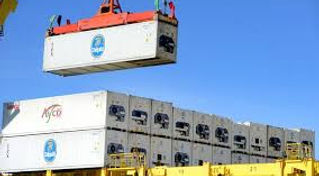
"They did not close the port. They just stopped dredging the river.
The ships left on their own."
[Click the pictures below for linked news articles]


THE BATTLE FOR DELAWARE'S WATERFRONT
Power, Bananas, And The Fight Over Wilmington's Port
By Karen Hartley-Nagle
Former President, New Castle County Council (2016 to 2024)
Published: February 18, 2026 | February 23, 2026 Supplemental Sections 14 through 21 | A Truthline Investigative Report
Res neglecta, res amissa
What is neglected is lost.
A NOTE TO MOBILE READERS: If you are viewing this report on a cell phone, the TABLE OF CONTENTS does not load properly. I do not have an alternative solution for this. Please keep scrolling down past to the Introduction heading — that is where the report begins. Laptop & desktops load fine.
⚠️ ATTRIBUTION NOTICE: This investigation was first published at karenhartleynagle.com. Spotlight Delaware credited this report as the origin of the story in its February 23, 2026 article “Dredging Delays Divert Ships Past the Port of Wilmington.” The News Journal published a follow-up on February 25, 2026 without attribution. The factual record of origination is preserved here.
TABLE OF CONTENTS
"They worked every Presidents' Day for thirty years.
This year the bananas went to Chester and the longshoremen went home.
Nobody called. Nobody explained. Nobody dredged."
Introduction
On the Sunday before Presidents' Day, February 16, 2026, the parking lot at the Port of Wilmington was empty. No trucks idled at the gate. No cranes swung containers off ships. No longshoremen reported for the holiday shift they had worked every year for three decades. The cold storage warehouses, 800,000 square feet of them, sat dark. Somewhere in the port's offices, a phone was not ringing.
Eleven miles north, at PSA Penn Terminals in Chester, Pennsylvania, a Chiquita vessel was being unloaded by non-union workers. The bananas that had traveled by ship from the plantations of Central America, bananas that for thirty-seven years had arrived in Wilmington, Delaware, were being stacked on pallets in someone else's city, in someone else's state, by someone else's workers.
This is not a story about a port. It is a story about what happens when the people who are supposed to protect a public asset may have reasons not to. It is a story about a first-term governor with a personal business tied to Amazon's logistics network who failed to dredge a river. It is a story about a political mentor who has moved through three gubernatorial administrations like a shadow, always near the center of power, never quite in the frame. It is a story about $250 million of taxpayer money invested in an expansion that may never be built while competitors in Pennsylvania and New Jersey grow stronger every month. And it is a story about the men and women, predominantly Black, many earning six figures for the first time in their families' histories, who load bananas and pineapples and grapes in the cold at five in the morning, and who are now being told there may be no work today, no work tomorrow, no work next week.
"Presidents' Day at the Port of Wilmington is a workday. It has been a workday for thirty years. This year, the longshoremen were home. Not because of a holiday.
Because four ships went to Chester and nobody in Dover can
explain why the river was not dredged."
Every claim in this report is sourced. Every number is traceable to a government audit, a court filing, a campaign finance disclosure, or a firsthand interview. The people of Delaware deserve to know what is happening to their port. This is what we found.
"Thirty-seven years of ships. Thirty years of holiday shifts. One year of Meyer.
Zero dredging. Four ships to Chester. Do the math."
1. THE BANANA THAT BUILT A PORT (New Info)
To understand what Delaware is about to lose, you have to understand what it built.
The Port of Wilmington sits where the Christina River meets the Delaware River, sixty-five miles from the open Atlantic. It has been a working port since 1923, but for most of a century it was a middling facility, overshadowed by Philadelphia to the north and Baltimore to the south. What changed everything was fruit.
Del Monte arrived in 1972 and made Wilmington its principal North American banana port. Then Chiquita inaugurated weekly containerized banana shipments in 1987 and 1988, and within a few years, Wilmington became Chiquita's largest port operation in North America. Combined with Dole, the port began handling nearly one million tons of bananas annually. Wilmington became the number one banana port in North America and the second largest in the world, behind only Antwerp in Belgium.
Think about that for a moment. A small state's port, tucked up a side river, became the second-largest banana port on the planet. That did not happen by accident. It happened because longshoremen showed up in the dark and the cold and moved fruit faster and more reliably than anyone else on the coast. It happened because the state invested in 800,000 square feet of dockside cold storage, one of the largest refrigerated terminal complexes in the country. And it happened because Chiquita, a company that had operated in Wilmington for nearly four decades, trusted that the people and the infrastructure would be there when the ships arrived.
"Wilmington became the number one banana port in North America and the second largest in the world. That did not happen because of politicians. It happened because longshoremen showed up before dawn in January and never missed a ship.
Now the ships are missing them."
Chiquita's economic footprint tells the story in numbers. The company's 2008 eleven-year lease was valued at $21 million per year in business revenue. It sustained 400 direct jobs. It generated $1.5 million annually in regional taxes, roughly $230 million in cumulative business revenue over the contract term. The company leases approximately 20 acres, makes 52 vessel calls per year, and moves 270,000 tons of bananas along with thousands of tons of pineapples, clementines, and grapes through the port's cold storage complex.
"$21 million a year. 400 jobs. 52 ships. 270,000 tons.
One river. One governor. One failure."
The port overall supports over 4,000 direct jobs and generates $340 million in business revenue and $31 million in state and regional taxes annually. Former Secretary of State Jeffrey Bullock noted that the majority of port employees are Black, making the port one of the most important engines of African American economic opportunity in the state. These are not warehouse gigs paying fifteen dollars an hour. Many longshoremen earn over $100,000 a year. The new national ILA contract, effective through 2030, provides a 62 percent raise over six years. For hundreds of families in Wilmington, the port is the difference between poverty and the middle class.
"These are not warehouse gigs paying fifteen dollars an hour. Many longshoremen earn over $100,000 a year. The new ILA contract guarantees a 62 percent raise over six years. That is the pathway to the middle class that Governor Meyer is letting silt shut down."
In June 2025, Chiquita signed a new long-term agreement with Enstructure, the port's current operator, ostensibly continuing a partnership that began in the late 1980s. Governor Matt Meyer acknowledged the fragility obliquely at the renewal announcement: "Our state has slipped on a few peels in our path to expanding the port." The pun was intentional. The anxiety was genuine. But the reassurance was premature, because even as Meyer stood at the podium, the river his administration was supposed to dredge was filling with silt.
'The terms of the Chiquita-Enstructure agreement are confidential, per Enstructure's statement to WDEL on June 5, 2025. However, every commercial port lease in the maritime industry includes depth guarantees, force majeure provisions, and termination clauses. If the contract allows Chiquita to exit when depth falls below a specified threshold, the dredging failure is not just a labor issue. It is a contract default risk that could cost Delaware its largest port customer permanently.
"'Our state has slipped on a few peels.' That was the governor's joke in June 2025.
By February 2026, four Chiquita ships had gone to Chester.
Two hundred people had no work. The joke is on them."
BREAKING DEVELOPMENT: FEBRUARY 16, 2026
What happened next was the thing everyone feared and no one in the press has reported.
According to ILA President 1694, William Ashe Jr., speaking directly on February 16, 2026, Chiquita has already diverted four ships to the Port of Chester, Pennsylvania, in the last month and a half because vessels cannot access the Port of Wilmington at sufficient depth. Ashe provided specifics. The ships dropped off "bananas in containers and other commodities from South and Central America."
The first ship carried 108 containers. The second carried 300. The third carried 80. The fourth ship's count was unknown at the time of the conversation. Ships hold between 700 and 800 containers. Four ships went to Penn Terminals in Chester, a non-union facility. One ship went to an ILA facility in Philadelphia, which Ashe stated was "fine with them."
"Four ships. 108 containers on the first. 300 on the second. 80 on the third.
All to Chester. All non-union. No one in the press reported it.
No one in the governor's office explained it."
The cause, in ILA International Vice President Ashe's words: "The maintenance dredging was not done by Governor Meyer. The silt ran back in the Christiana River, and the ship could not get back into port." He added the line that should keep every Delaware official awake at night: "In 30 years, we have not had a problem with the Christiana like we do now. Every prior administration got it done."
"In 30 years, not one governor failed to dredge the Christiana.
Not during recessions. Not during hurricanes. Not during a pandemic.
Meyer failed to dredge it during a budget surplus."
Ashe confirmed in a follow-up conversation on Friday, February 20, that only Chiquita vessels have been impacted, not those from Dole. The reason is mechanical: Chiquita's ships draw deeper than Dole's. The Chiquita Great White Fleet includes vessels such as The Explorer and The Voyager, added in 2023, which are among the largest in the company's history. A fully loaded Chiquita vessel at maximum draft cannot clear berths that have silted above 35 feet. A Dole vessel, drawing less water, still can. This distinction does not reduce the crisis. It defines its trajectory. If the silt continues to accumulate, Dole will be next.
"Today it is Chiquita. Tomorrow it is Dole. The depth problem does not stabilize.
It worsens every month the dredging does not happen.
That is not a setback. That is a trajectory."
A full accounting of the diversion sequence requires one additional detail. The Chiquita vessel did not bypass Wilmington entirely. It went to Chester first, unloaded the majority of its cargo at PSA Penn Terminals, a non-ILA facility, and then returned to Wilmington the following day with a reduced load, light enough to clear the silted berths. On Presidents' Day, February 16, 2026, the Chiquita gate and yard at the Port of Wilmington were closed. The Port of Wilmington's own published tariff, Tariff #1J, filed under 46 U.S.C. 40501(f), Section 11.2, classifies Presidents' Day as an Overtime Holiday, not a No Work Holiday. It is a working day. The Chiquita operation was not working that day. On Tuesday, February 17, the same vessel arrived in Wilmington with the remaining cargo.
'A clarification on the characterization of Penn Terminals. PSA Penn Terminals employs workers represented by the International Brotherhood of Boilermakers Local 802. The report's characterization of Chester as non-union reflects ILA leadership's language, used independently by President Ashe and three other officials. When ILA leaders say non-union, they mean non-ILA. The Boilermakers are an industrial union, not a longshore union, not party to the ILA's national master contract finalized in March 2025, and not representing longshore workers on the East Coast. The jurisdictional distinction is itself evidence: ILA members lost shifts while Boilermaker members gained them. That is not a transfer within organized labor. It is a displacement across jurisdictional lines.
"Four ships diverted. Two hundred jobs gone. Zero press coverage.
That is not a news cycle. That is a blackout."
The impact: 150 direct ILA jobs will be lost, with casual workers bringing the total to approximately 200 people affected. On February 16, Presidents' Day, a day when longshoremen and women normally work, no labor was used at the Chiquita operation. The holiday shift, the one they had worked every year for thirty years, was canceled. The bananas were in Chester.
'A worker at PSA Penn Terminals in Chester, writing publicly on February 22, 2026, confirmed that the banana ships are overwhelming a small, already crowded port and stated that Chester wants the ships out. When the receiving facility itself says the arrangement is failing, the unsustainability of the current situation is confirmed by every party involved.
And the cost of this workaround is not theoretical. Every port call generates published fees under Tariff #1J, filed under the U.S. Shipping Act (46 U.S.C. 40501(f)). Dockage: $10.63 per foot per day for a vessel in the 601 to 700 foot range. Line handling: $3,627.52 per docking or undocking. Wharfage on full containers: $132.02 per container. Security: $6.72 per container. Terminal usage: $10.41 per TEU. Gate entry: $30.00 per truck. Pilotage and tug assistance are additional. When a Chiquita vessel calls Chester first and Wilmington second, every one of these charges applies twice. Two ports, two bills. No shipping line absorbs double port costs indefinitely. That is not a business model. That is a countdown.
"Two ports. Two bills. Fifty-two times a year. No shipping line absorbs that. The tariff is public. The math is the argument the governor cannot answer."
No mainstream press outlet has reported this development as of the date of this report.
If confirmed with the specific tonnage data Ashe provided in a follow-up call, this represents the single most consequential development in the Port of Wilmington's modern history. And the fears were not theoretical. In 2014, Chiquita nearly left when the Port of Paulsboro, New Jersey, lobbied aggressively to poach the account. Chiquita had just ended a 40-year deal with Mississippi's Port of Gulfport, proving it was willing to walk. This time, the company is not threatening to walk. It is walking.
The Numbers On The Record No One Else Reported
International Longshoremen’s Association (ILA) Vice President William Ashe Jr. speaking on the record February 16, 2026. What he said had not appeared anywhere in the press. Not one word of it.
Four Chiquita ships had been diverted to Penn Terminals in Chester, Pennsylvania and One Chiquita Ship went to an ILA facility in Philadelphia in the prior month and a half. Here are the specifics, as Ashe provided them:
● Ship 1: 108 containers offloaded at Chester
● Ship 2: 300 containers offloaded at Chester
● Ship 3: 80 containers offloaded at Chester
● Ship 4: Container count unknown at time of conversation offloaded at Chester
● Ship 5: Container count unknown at time of conversation offloaded at ILA Facility at Philadelphia
Ships hold between 700 and 800 containers. In each case, Chiquita’s vessels were dropping much of their cargo in Chester or Philadelphia before sailing to Wilmington, lighter now, riding higher in the water, finally shallow enough to navigate the silted Christina River to unload the rest.
“Normally, we’ll work the ship around-the-clock for two days, or at least a day and a half. Now we’re lucky to get one around-the-clock.” — William Ashe Jr., ILA Vice President, February 16, 2026
Those lost hours were not lost to bad weather. They were lost to neglect. Institutional, governmental, administrative neglect. And the workers who absorbed those lost hours are real people: longshoremen who work the waterfront, crane operators, truck drivers, cold-storage workers, inspectors. People with mortgages and kids and thirty-year careers built around the assumption that the government of Delaware would do what every prior government had done, which is keep the river dredged.
It did not.
"In 2014, Chiquita nearly left for Paulsboro. It had just ended a 40-year deal with Gulfport. That was the warning. Every governor who heard it dredged the river.
Meyer heard it and did not."
June 5, 2025, "I'm excited to share some appealing news 🍌: Chiquita has renewed their partnership with the Port of Wilmington! That means real jobs, real revenue, and real momentum.We're not slipping up — with Enstructure LLC and Chiquita aboard, the Port's future is ripe with possibility!" — Facebook Post, Delaware Governor Matt Meyer
2. SEVEN FEET OF WATER AND A CENTURY OF PHYSICS (New Info)
The existential threat to the Port of Wilmington is not about one governor's failure. It is about physics, and it has been building for decades. But what turned a structural challenge into an active crisis was the decision not to do the one thing that every previous governor had done.
The port's berths sit on the Christina River at a controlling depth of only 35 to 38 feet. The main Delaware River shipping channel, by contrast, was deepened to 45 feet in a massive federal project completed in December 2022. That project cost $400 million. It took three decades. The Army Corps of Engineers removed 16 million cubic yards of sediment and rock over 103 miles from Philadelphia to Delaware Bay. When it was finished, every port with berths on the main channel could accommodate the new generation of mega-ships.
Every port except Wilmington.
"Forty-five feet in the channel. Thirty-eight at the berth.
Seven feet between competing and closing. Every governor closed the gap.
This one widened it."
The problem is geography. Wilmington's wharves sit on the Christina, not the Delaware. Ships that can transit the main channel at full draft must lighten their loads or shrink in size to reach Wilmington's berths. The port currently handles vessels carrying 1,200 to 1,300 TEU containers. PhilaPort's Packer Avenue Marine Terminal, with berths dredged to 45 feet and five super-post-Panamax cranes, welcomed a 14,400 TEU vessel in December 2023. That is ten times the capacity Wilmington can handle. PSA Penn Terminals at Chester, sitting directly on the 45-foot main channel, posted 357,000 TEUs in a recent banner year and is investing heavily in electrified cranes and modernized equipment.
"PhilaPort welcomed a 14,400 TEU vessel. Wilmington handles 1,300.
Penn Terminals posted 357,000 TEUs. Wilmington manages 215,000.
The numbers are not competing. The numbers are separating."
The gap is seven feet. Seven feet of water is killing Delaware's competitiveness.
But here is the critical distinction, the one that separates a structural problem from a political scandal.
There are two dredging responsibilities on the Delaware River, and they are completely different.
The federal government, through the Army Corps of Engineers, maintains the main Delaware River channel at 45 feet. The Corps also separately maintains the Wilmington Harbor federal channel, which is the Christina River approach, at its authorized depth of 35 to 39 feet. The Army Corps spent $27.6 million in winter 2025 and 2026 for that routine federal maintenance. The federal government is doing its job.
"The federal government spent $400 million and 30 years deepening the Delaware River to 45 feet. The State of Delaware could not maintain 38. The gap is seven feet.
That is the distance between a working port and an empty parking lot."
The state of Delaware, through the Diamond State Port Corporation, is responsible for berth-side dredging: maintaining Berths 1 through 4 at 38 feet and Berths 5 through 7 at 35 feet. This is the state's job. This is the work that Governor Meyer did not do.
"The feds spent $400 million. The state could not spend a phone call to a dredging contractor."
State documents confirm this distinction with precision. The Diamond State Port Corporation's 2021 Federal Consistency Certification, filed with DNREC's Delaware Coastal Management Program (Project Reference: Port of Wilmington Maintenance Dredging, 2021_0013), signed by Eugene Bailey 9-9-20200, identifies DSPC as the named applicant for berth-side maintenance dredging at Berths 1 through 7. The certification specifies dredging depths of 38 feet Mean Low Water plus two feet of allowable overdredge for Berths 1 through 4, and 35 feet Mean Low Water plus two feet for Berths 5 through 7. It commits to an estimated 75,000 cubic yards per yearly dredging event for ten years.
'The state's responsibility for port dredging is further documented in the Delaware Statewide Dredging Policy Framework (February 2001), a comprehensive state policy document authored by the Delaware Dredging Working Group and published by DNREC. Appendix E of that document is dedicated specifically to the Port of Wilmington. The Framework establishes that maintenance dredging is a recognized, recurring state obligation and that DNREC has regulatory authority over all dredging in Delaware waters. This policy infrastructure has been in place for 25 years.
Material is disposed at the Pedricktown South Confined Disposal Facility in New Jersey or the Wilmington Harbor South CDF in Delaware, both operated by the Army Corps.
The certification states explicitly: "The Christina River navigational channel is dredged regularly by the U.S. Army Corps of Engineers and dredging for this project will occur concurrently with main channel dredging." Concurrently. Not instead of. Not dependent upon. The state's berth-side obligation runs parallel to the federal channel obligation. They are two separate responsibilities with two separate paper trails.
"Concurrently. That is the word in the state's own filing. It means the state dredges alongside the feds, not because of the feds. Two obligations. Two paper trails.
One of them was fulfilled. The other was not."
And this obligation is not new. The State of Delaware has maintained a formal statewide dredging policy since February 2001. The Delaware Statewide Dredging Policy Framework, authored by the Delaware Dredging Working Group and published by DNREC's Delaware Coastal Programs, establishes protocols for maintenance dredging, environmental evaluation, permitting coordination, and disposal operations. Appendix E of the Framework specifically addresses the Port of Wilmington, documenting approximately 125,000 cubic yards of material dredged annually between the federal channel and the port's docking facilities, with disposal costs averaging $1.75 to $1.85 per cubic yard. This is not new information. It is a 25-year-old state policy document confirming that berth-side maintenance dredging has been a known, budgeted, routine state obligation for a quarter of a century.
"Twenty-five years.
Every governor since Ruth Ann Minner operated under this framework.
The obligation is documented. The budget line exists. The protocol is written.
Meyer is the first governor who failed to execute it. That is not a resource problem.
That is a decision."
That is what makes the failure indefensible. The state's own filings prove the obligation. The state's own policy framework proves the knowledge. And the record of every prior administration proves it was done.
According to Ashe, speaking on February 16, 2026, Governor Meyer has failed to perform the routine maintenance dredging of the Christiana River that every prior administration completed. Silt accumulated naturally, as silt does in every river, every year, in every state. But in every prior administration, the dredging was done and the silt was removed. Under Meyer, it was not. The controlling depth fell to the point where Chiquita vessels could no longer reach their berths.
"Silt accumulates in every river, every year, in every state. That is not news. That is physics. The news is that every governor before this one removed it, and this one did not. Physics did not change. The governor did."
This is not a matter of the 45-foot main channel. This is not about the Edgemoor deepwater terminal project, which faces genuine legal and political obstacles. This is basic routine maintenance of the existing facility, the kind of sediment management that every previous governor handled as a matter of course. The failure to dredge is what forced Chiquita to divert four ships to Chester in the past six weeks, a diversion that has eliminated work for 150 to 200 International Longshoremen (and women) Association members.
"Two ways to kill a port. Lock the gates and take the blame.
Or let the river rise and blame the river."
As Army Corps official Ed Voigt told WHYY: "The future of the Port of Wilmington is on the Delaware River, somewhere." ILA President Ashe put the urgency more bluntly: at some point, Dole and Chiquita will want a facility that can bring bigger vessels in, and what does Delaware tell them then?
"If you wanted to kill a port without anyone noticing, you would not close it.
You would let the river fill with silt and wait for the ships to stop coming.
Then you would say it was the market."
A veteran political strategist would notice something else about this situation. Failing to perform routine maintenance that every predecessor completed, while simultaneously stalling the only project that would free the port from dependence on the Christiana River, creates maximum damage to the existing facility with minimum accountability. If you wanted to kill a port without leaving fingerprints, this is exactly how you would do it.
"Failing to maintain the berths while simultaneously stalling the
deepwater project that would free the port from the Christina River
creates maximum damage with minimum accountability.
You do not need a conspiracy theory for that.
You need a calendar and a map."
RETURN TO TABLE OF CONTENTS
3. THE $635 MILLION FIX THAT SOMEONE DOES NOT WANT BUILT
The solution was supposed to be Edgemoor.
Two miles north of the existing port sits the former DuPont/Chemours chemical plant site, purchased by Diamond State Port Corporation in 2016 and 2017, sitting directly on the Delaware River's 45-foot main channel. The plan was to build a $635 million public-private partnership: a new deepwater container terminal with a 2,600-foot wharf, berths dredged to 45 feet, capacity for 1.2 million TEUs (quadrupling the current port), and an estimated 6,000 new jobs generating $40 million in annual tax revenue. The state committed $195 million. The federal government provided a $50 million Port Infrastructure Development Program grant. Private operator Enstructure pledged the balance.
"$195 million from the state. $50 million from the federal government.
A private operator ready to build. 6,000 jobs. $40 million in annual tax revenue. Twenty-five miles closer to the ocean than Philadelphia. The governor would not say 'Edgemoor' in his State of the State address. Draw your own conclusion."
If Edgemoor were built, (DSPC and Enstructure negotiated terms of a Development Plan agreeing on a final term sheet (the “Final Term Sheet”)), the port would no longer depend on the Christina River. Ships would come straight off the main channel. The depth problem would vanish. Wilmington would compete with PhilaPort and Penn Terminals on equal footing, with the added advantage of being 25 miles closer to the ocean than Philadelphia, giving container ships a fuel and time advantage.
Someone did not want that to happen.
Holt Logistics Corp., the family-owned company that operates Philadelphia's Packer Avenue Marine Terminal and terminals across South Jersey through its affiliate Greenwich Terminals, sued the Army Corps of Engineers in late 2023 alongside PhilaPort. They argued the Corps acted arbitrarily and capriciously in granting Edgemoor's construction permits. In October 2024, U.S. District Judge Mark Kearney agreed, invalidating the federal permits on grounds the Corps failed to assess how the proposed turning basin would affect main channel traffic and failed to require PhilaPort's "Statement of No Objection" as the non-federal sponsor of the 45-foot deepening project. A Delaware state judge then placed state construction permits in limbo in April 2025, ruling the Environmental Appeals Board failed in rational consideration of the evidence.
"Holt sued to stop Edgemoor. Holt runs the terminals that get the cargo if Edgemoor dies. The lawsuit is the business plan. The delay is the dividend."
The lead attorney for PhilaPort's successful lawsuit was Andrew Levine (notably, not "Levin"), a partner at Stradley Ronon Stevens & Young LLP in Philadelphia, who co-chairs the firm's environmental practice group. His legal team includes Michael J. Engle, Brandon M. Riley, and Joelle E. Polesky. Stradley Ronon publicly touted the permit vacatur as a major victory for PhilaPort.
Leo Holt, president of Holt Logistics, runs a four-generation family empire that dominates Delaware River cargo handling. His company operates Packer Avenue Marine Terminal, Gloucester Marine Terminal, and the new Paulsboro Marine Terminal across multiple states. His registered Delaware lobbyist, Darrell Baker, appears regularly at "Stop the Edgemoor Port" community meetings. The strategic logic is transparent: Edgemoor would sit 25 miles closer to the ocean than Philadelphia, and every container that goes through a new Wilmington terminal is a container that does not go through a Holt terminal.
"Holt Logistics spent millions in legal fees to stop Edgemoor.
You do not spend that kind of money to stop something that would fail.
You spend it to stop something that would work."
A breakthrough came in February 2026 when the Army Corps granted an exception to the PhilaPort "Statement of No Objection" requirement, clearing a critical hurdle. Enstructure projects construction completion by December 2028 if permits are resolved. But years of delay have already cost Delaware dearly, and the question is whether there will be any cargo left to fight over by the time the first crane is erected at Edgemoor.
"Leo Holt's registered Delaware lobbyist appears at 'Stop the Edgemoor Port' community meetings. Holt's company operates Packer Avenue, Gloucester, and Paulsboro.
Every container Edgemoor handles is a container Holt does not.
That is not opposition research. That is a business model."
RETURN TO TABLE OF CONTENTS
4. THE GOVERNOR WHO FOUGHT EVERYONE
To understand how the port reached this crisis, you have to understand the man who inherited it.
Matt Meyer, Delaware's 76th governor, took office on January 21, 2025, as the first governor in 50 years without prior state-level elected experience. A former New Castle County Executive (2017 to 2025), Brown University and Michigan Law graduate, former M&A attorney at Simpson Thacher & Bartlett, and State Department economic adviser in Iraq, Meyer appeared to run as an outsider challenging the "Delaware Way," the state's famously cozy political establishment. Only one sitting state legislator endorsed him in the primary.
He won anyway, running a viciously negative campaign against Lieutenant Governor Bethany Hall-Long in the September 2024 Democratic primary. Hall-Long, a nurse, educator, and dedicated public servant, ran a positive race focused on the issues. Meyer and allied outside PACs, fueled by a flood of dark "Delaware Way" money and independent expenditures, did not. The financial disparity was overwhelming, and the tactics were unlike anything Delaware had seen in a Democratic primary. Meyer won with 47 percent of the vote to Hall-Long's 37 percent and first-time candidate Collin O'Mara's 16 percent.
Meyer's combative approach was not new. During his 2020 County Executive reelection, he faced allegations of campaign finance irregularities and reports of belligerent calls to two mayors who were supporting his primary opponent, establishing a pattern of aggressive political tactics that intensified during his gubernatorial run.
Then the port wars began.
On his first morning in office, Meyer sent a letter withdrawing all five DSPC board nominations that outgoing Governor Hall-Long had submitted days before. Among the withdrawn nominees: ILA Vice President William Ashe Jr. and former Secretary of State Jeffrey Bullock, both of whom had wielded enormous influence over port decisions for over a decade. Meyer called them the work of "insiders."
"Picket line at midnight. Board removal at dawn. Automation by spring.
Silt by winter. Chester by February. That is not a year in office. That is a sequence."
Senate Democrats erupted. President Pro Tem David Sokola, Majority Leader Bryan Townsend, and Majority Whip Elizabeth "Tizzy" Lockman pushed back furiously. During Senate hearings, Democratic senators called Meyer "manipulative," "anti-collaborative," and "silent" on "one of the most critical infrastructure investments in recent Delaware history."
"His own Democratic senators called him manipulative.
His own Democratic legislature called the executive office a dictatorship.
His own cabinet secretaries boycotted the task force created to save the port.
This is not opposition. This is his own party describing what they see."
The Delaware Supreme Court sided with Meyer in March 2025, ruling governors can withdraw unconfirmed nominations. Meyer then submitted his own slate: David Burt, Ronald "Kimoko" Harris of ILA Local 1883, Robert "Jerry" Medd, Gene Bailey, and Jennifer Cohan, the former Transportation Secretary and president of Associated Builders and Contractors, an organization not aligned with organized labor. The Senate rejected Bailey and Cohan, confirming only three. The critical absence from Meyer's slate: Ashe and Bullock, the men who had steered port policy for years.
"Meyer nominated Jennifer Cohan to the port board. Cohan is president of
Associated Builders and Contractors, an organization not aligned with
organized labor. The Senate rejected her. Then Meyer told the press
he supported automation the national ILA contract prohibits.
The union was listening. The union understood."
The confrontation deepened in April 2025 when the General Assembly revived the Port of Wilmington Expansion Task Force,
co-chaired by Senator Darius Brown and Representative Frank Cooke. Meyer's five cabinet secretaries who are statutory members boycotted the first two meetings. Deputy Chief of Staff Nick Merlino called the task force "needless bureaucracy" and demanded questions be submitted in writing. Senator Brown erupted publicly: "The executive office is not a dictatorship, and Matt is not king." He accused Meyer of "cozying up to business interests opposing Delaware's Port expansion."
The first time a member of Meyer's cabinet attended a Port of Wilmington Expansion Task Force meeting was December 17, 2025, eight months after the General Assembly created the body. This is documented in the Delaware Senate Democrats' own press release. During those eight months, ships were diverting, longshoremen were losing shifts, and the river was filling with silt. The task force was designed to be the legislative mechanism for advancing the Edgemoor expansion, the only long-term solution to the port's competitive gap. The governor's administration treated it as optional for 240 days.
"Senator Darius Brown: 'The executive office is not a dictatorship, and Matt is not king.' He accused Meyer of 'cozying up to business interests opposing Delaware's Port expansion.' That is a Democratic senator describing a Democratic governor.
That is not partisanship. That is alarm."
"Eight months. 240 days. Zero cabinet members at the table created to save the port.
The task force met. The legislature showed up. The union showed up. The governor's administration did not. That is not a scheduling conflict. That is a position."
Then came the automation bombshell. In a May 2025 interview with Delaware Online, Meyer stated that automation and the need for an automated container port was recognized decades ago in Delaware. William Ashe publicly rebuked him at the next DSPC board meeting, declaring that the union cannot afford to have people going out saying to the public that they are going to build a fully automated terminal, because automation eliminates jobs. The remark was incendiary. The ILA's new national master contract, finalized in March 2025, explicitly prohibits unmanned autonomous off-loading equipment on the East Coast. Meyer was not just picking a fight with the local union. He was contradicting a binding national labor agreement.
"The ILA's national master contract, finalized in March 2025, explicitly prohibits unmanned autonomous off-loading equipment on the East Coast.
In May 2025, Governor Meyer publicly advocated for an automated port.
Either the governor does not read contracts, or the governor does not respect them.
His record on dredging suggests both."
By August 2025, Ashe was threatening to petition New Jersey to build a competing container terminal, claiming Meyer was trying to do everything to derail the Edgemoor project. Raised voices were heard during a private meeting with DSPC Chair Charuni Patibanda-Sanchez. A December 2025 state audit of DSPC found governance failures, improper executive sessions, and questions about the reliability of economic impact projections, adding more ammunition to every side of the fight.
"Day one: withdrew the union president from the port board. Day sixty: his cabinet boycotted the legislative task force. Day one hundred twenty: told the press he wanted automation the national ILA contract prohibits. Day three hundred sixty-five: the river was full of silt and the ships were in Chester. Four actions. One outcome. Exposed."
Think about the sequence from the perspective of a longshoreman who has worked the Wilmington waterfront for twenty years. A new governor takes office. On day one, he removes your union leader from the port board. He boycotts the legislative task force created to support the expansion that would save your job. He publicly advocates for automation that your national contract prohibits. He fails to dredge the river that your livelihood depends on. And then, on Presidents' Day, a day the port's own published tariff classifies as an Overtime Holiday, a working day, you get the call: no work today. The bananas went to Chester.
"Meyer stood on the ILA picket line at midnight on September 30, 2024.
He removed their president from the port board on January 21, 2025.
That is 113 days. In politics, there is a word for what that is.
The longshoremen know the word."
You would not need a political strategist to tell you what is happening. You would feel it in your empty pockets.
"Remove the union leader. Boycott the task force. Promote automation the contract forbids. Fail to dredge the river. Then wait for the phone to stop ringing.
This is a timeline. Read it again and tell me it is not a strategy."
RETURN TO TABLE OF CONTENTS
 |  |  |  |
|---|---|---|---|
 |  |  |  |
 |  |  |  |
 |  |  |  |
 |  |  |  |
5. THE MAN BEHIND THE CURTAIN
Every political story has a public face and a private architect. In Delaware port politics, the public face changes with each election. The private architect has remained the same for nearly two decades.
His name is Alan B. Levin.
Levin began his career as a Deputy Attorney General in the Delaware Department of Justice and as Executive Assistant and Counsel to U.S. Senator William V. Roth Jr. But his real power base was built in business. His father, Harry Levin, founded Happy Harry's, a Delaware drugstore chain, from a single store. Alan inherited the business and grew it from 16 to 76 stores with 2,700 employees, revenues approaching half a billion dollars, and a 65 percent share of the Delaware market. He sold the chain to Walgreens in 2006, a transaction that made him independently wealthy and gave him the freedom to operate in the space between business and government where the real decisions in Delaware are made.
"Alan Levin grew Happy Harry's from 16 stores to 76, sold it to Walgreens, and moved into the space between business and government where Delaware's real decisions get made. He has occupied that space for twenty years. Most people in Delaware do not know his name. That is not an accident. That is the design."
In 2005, Levin chaired the Delaware State Chamber of Commerce and lobbied successfully for gross receipts tax cuts worth $47 million annually. Governor Markell awarded him The Order of the First State, Delaware's highest civilian honor. These were not small accomplishments. They were the credentials of a man who understood that in a state as small as Delaware, you do not need to hold office to hold power. You need relationships, institutional knowledge, and the patience to play a long game.
"Sixteen stores to seventy-six. Walgreens buyout. Chamber chair. DEDO director.
Port board chair. Airport task force chair. DEFAC chair. Campaign donor.
No election. No confirmation. No accountability. One man. Twenty years."
Governor Jack Markell appointed Levin as Director of the Delaware Economic Development Office in 2009 and simultaneously as Chairman of the Diamond State Port Corporation board. In those dual roles, Levin pushed the first major port privatization attempt: a 50-year lease to Kinder Morgan, the Houston-based energy transport company, involving $200.5 million in investment.
"DEDO under Markell. The Airport Task Force under Meyer. DEFAC under Meyer.
The port privatization template under both. Three administrations. Four positions.
Zero elections. Zero confirmations. One man."
The ILA and the General Assembly revolted. Unions feared conversion to an energy terminal. Legislators passed oversight legislation. Kinder Morgan walked away in March 2013, with its president citing an "impossible position" due to union opposition.
But the privatization model did not die. It survived, and it is the model now in use. The 2018 Gulftainer deal and the current Enstructure concession both follow the public-private partnership template that Alan Levin pioneered in 2012 and 2013. He lost the battle but won the war.
"Levin tried to privatize the port with Kinder Morgan in 2012. The unions stopped him. The template survived. It is the model running the port today.
He lost the vote and won the decade."
After leaving DEDO in mid-2015, Levin joined the Wilmington office of Drinker Biddle & Reath (now Faegre Drinker Biddle & Reath LLP) as Of Counsel. As of April 2017, the Delaware State Chamber of Commerce confirmed this role at a Leadership Breakfast where Levin was introduced as serving "Of Counsel to Drinker Biddle & Reath and as Senior Advisor to SoDel Concepts." Faegre Drinker is a major national law firm with significant real estate, land use, and corporate practice areas in Delaware and Philadelphia. This matters because anyone involved in port-area development, redevelopment, or restructuring would need exactly the kind of legal infrastructure that Faegre Drinker provides.
Then Levin pronounced his next project: Matt Meyer.
"A firsthand source says Levin had a key to Meyer's office. The Delaware
Business Times calls him an advisor. The campaign finance records call him a donor.
Three descriptions. Same man. None of them require Senate confirmation."
The Delaware Liberal blog alleged that Levin was "linked at the hip with Meyer" beginning in 2017, training him on how to run an executive office during Meyer's first term as County Executive. During Meyer’s second term he steered the plan to capture the Governor’ Office. A firsthand source describes a relationship in which Levin had a key to Meyer's office and came and went as he pleased. The Delaware Business Times officially describes Levin as "an advisor to Governor Matt Meyer during the 2024 election." These are not disputed characterizations. This is the documented record.
In October 2019, Meyer appointed Levin to chair a 12-person Wilmington Airport Task Force studying the future of New Castle County Airport. The task force unanimously recommended against renewing the county's 30-year lease with the Delaware River and Bay Authority, a significant decision affecting transportation infrastructure. A firsthand source alleges that Amazon sought control of the airport with Levin's assistance. The Delaware River and Bay Authority confirmed that Amazon had expressed interest in making the airport an air hub.
After Meyer's victory in November 2024, Levin was appointed Chair of DEFAC, the Delaware Economic and Financial Advisory Council, the body that sets official revenue estimates for the state budget. This is a position of enormous influence over Delaware's fiscal framework. In February 2026, Levin was publicly urging Meyer and the legislature to "get a handle" on the state's economic situation amid federal funding uncertainties.
"Meyer installed his campaign advisor and political mentor as the chair of DEFAC, the body that determines whether Delaware can afford the $195 million port investment. Levin had no prior DEFAC service. The man who raised money for the governor now controls the revenue projections the governor needs. In any state, that would raise questions. In a state with 1 million people, there is nowhere to hide from them."
Here is what Executive Order Number Sixty-Two, signed by Governor Carney on August 27, 2024, actually says about the DEFAC chairmanship. Section 2 states: "DEFAC shall consist of at least 25 members appointed by the Governor to serve during his pleasure... The Governor shall designate a Chairperson of DEFAC from among its members." The operative phrase is "from among its members." The Governor must first appoint an individual as a DEFAC member, and then may designate that member as Chair.
The Executive Order does not explicitly require prior DEFAC service or any minimum tenure. But the traditional practice has been for the Chair to be drawn from experienced, long-serving members who have built institutional knowledge of the state's revenue forecasting process.
"Alan Levin chaired economic development under Markell. He chaired the airport task force under Meyer. He now chairs the fiscal council that decides whether the state can afford to build the new port terminal. He has never been elected to anything. He has never been confirmed by a legislature. He has never been accountable to a voter."
Meyer broke that custom. He appointed Alan Levin to DEFAC and simultaneously designated him as Chair. Levin had no prior DEFAC service. The practical effect is that Meyer installed his campaign advisor and political mentor as the person who controls the official revenue estimates that determine whether the $195 million state commitment to Edgemoor is fiscally viable, whether state agencies receive adequate funding, and how the legislature constructs the annual budget.
"Levin controls DEFAC. DEFAC controls the revenue estimates.
The revenue estimates control whether Edgemoor gets funded.
The mentor controls the math that decides the port's future.
Follow that chain. It is four links long."
The throughline from Markell to Meyer is unbroken. From DEDO to DEFAC. From port privatization to airport restructuring. From Kinder Morgan to Enstructure. Levin has maintained a continuous advisory role in Delaware's most consequential economic decisions for nearly two decades. He championed the privatization template now in use at the port. He sits at Faegre Drinker, a law firm whose practitioners would be essential to any port-area redevelopment. And he now controls the fiscal projections that will determine whether the $195 million Edgemoor investment proceeds or dies.
No one elected Alan Levin to anything. But his fingerprints are on everything.
"He had a key to the office. He had a seat at the table. He had a check in the PAC.
He had no title on the door. That is how power works in Delaware."
October 2, 2019, Delaware Governor Matt Meyer and DEFAC Chair Alan Levin discussing the Wilmington / New Castle County Airport: "New Castle County Executive Matt Meyer announced the creation of a task force to examine the future of the Wilmington Airport on Wednesday morning, October 2, 2019. The county's lease with the DRBA is set to expire in June 2025 and the county must make a decision on whether to renew that lease by June 2020. Matt sat down with task force chair Alan Levin to discuss the task force's mission." — YouTube Video, Former New Castle County County Executive and now Delaware Governor Matt Meyer
6. THE AMAZON CONNECTION
There is a company that connects every thread in this story, and its name is on the side of the brown cardboard boxes stacked in Matt Meyer's Wilmington warehouses.
Governor Matt Meyer is the founder and owner of Wise Men Shipping LLC, a Delaware company registered on January 9, 2013, with Meyer listed as registered agent at 2201 Gilpin Avenue in Wilmington, a property owned by his parents. The company operates VituMob, an e-commerce platform that enables customers in East Africa, primarily Kenya, to purchase goods from American online retailers, principally Amazon, and have them shipped through Wilmington, Delaware warehouses to Nairobi. VituMob's own Twitter page stated: "You can now shop directly from Amazon, pay using MPesa or PayPal and have it delivered to you in Nairobi, Kenya."
"VituMob's own Twitter page says: 'You can now shop directly from Amazon.'
Meyer's campaign says: 'VituMob does not have any agreement or contracts with Amazon.' Both statements are in writing. Can both statements be true?"
According to Spotlight Delaware's May 2024 investigation, the company works by having customers designate VituMob's Delaware warehouse addresses as shipping destinations for their American online orders. The goods are consolidated and forwarded to East Africa. The Delaware address allows customers to avoid sales tax. Meyer's campaign stated that VituMob "does not have any agreement or contracts with Amazon or any other American retailers," but the operational reality is that the company's entire business model depends on Amazon's fulfillment and logistics infrastructure. A social media commenter noted: "In my former job almost everyone was shopping on Amazon thanks to VituMob."
"VituMob says: shop on Amazon. The campaign says: no Amazon agreement. One is a business model. The other is a press release. The business model is still running."
Meyer employs two workers in Delaware and earns profits he described as "typically in the five-figure range... and every now and then, it's a little more than that." He reported ownership of VituMob LLC on every Statement of Financial Interests filed as County Executive and obtained an advisory opinion from the New Castle County Board of Ethics outlining limitations on his involvement with the company while in office.
The significance is not that the governor owns a small e-commerce company. Plenty of politicians have side businesses. The significance is that Matt Meyer has maintained a direct beneficial business relationship with Amazon's logistics ecosystem since 2012 and 2013, the same period during which, as County Executive beginning in 2017, he took a series of official actions that systematically benefited Amazon.
"Meyer's company, Wise Men Shipping LLC, registered January 9, 2013. Meyer's approval of Amazon's 67 percent property tax reduction: 2020. Meyer's $4.5 million in state aid for Amazon's fulfillment center: 2020. Meyer's expedited 'Jobs Now' permits for Amazon: documented. Meyer's campaign denial of any Amazon agreement: also documented. Both cannot be true. The registration date says which one is."
-
He championed Amazon's 820,000-square-foot fulfillment center at the former GM Boxwood plant, calling it "the retail operation of the future."
-
He approved a property reassessment that reduced Amazon's tax burden from approximately $1 million per year under GM to approximately $325,000, a 67 percent reduction. He told the Philadelphia Inquirer: "I OK'd [the reassessment] based on the belief we have to get this property moving."
-
He secured $4.5 million in state aid for Amazon's $250 million robotics-heavy fulfillment center.
-
He actively lobbied for Delaware's bid to host Amazon's second North American headquarters, calling the county "the premier destination for Amazon."
-
He used expedited "Jobs Now" review processes for Amazon's applications.
-
And he welcomed the $170 million Agile Cold Storage facility in Claymont with $4.56 million in state grants, a non-union cold storage operation in what ILA considers its territory.
"The governor owns a company that ships packages through Amazon. He cut Amazon's property taxes by 67 percent. He secured Amazon $4.5 million in state aid. He expedited Amazon's permits. His mentor brought Amazon to Delaware. His mentor's law firm colleague handles Amazon's legal work. His mentor's colleague donated to his PAC.
At what point does a pattern of facts become a pattern of interests?"
Sources are chattering about backroom deals and favored treatment for Amazon during Meyer's tenure as County Executive. A Delaware River and Bay Authority official confirmed that Amazon had sought to make the Wilmington/New Castle County Airport an air hub. And who was advising Meyer on the airport? Alan Levin, who chaired the Airport Task Force that recommended ending the DRBA lease.
Amazon's existing Delaware footprint is enormous. The MTN1 fulfillment center at 1025 Boxwood Road spans 3.8 million square feet with approximately 3,000 employees. A sortation center sits at 801 Boxwood Road. The PHL7 fulfillment center operates in Middletown at 560 Merrimac Avenue. Delivery stations at 2421 Bear Corbitt Road and 851 Boxwood Road are geared to electric delivery vehicles. A warehouse operates in Seaford. Amazon has invested more than $2.5 billion in Delaware since 2010. A new Amazon facility is rumoured to be planned for Governor Printz Boulevard, at a shopping center site seconds from the Port of Wilmington.
"A new rumoured Amazon facility is reportedly planned for Governor Printz Boulevard.
Seconds from the port. Next to the airport. On the rail lines. If you drew a map of a logistics monopoly, it would look exactly like the map of Matt Meyer's official decisions."
Delaware's appeal to Amazon is not accidental. The state has no sales tax, making it uniquely attractive for e-commerce fulfillment.
Delaware sits between Washington, D.C., Philadelphia, and New York City, at the geographic center of the densest consumer corridor on the Eastern Seaboard. According to multiple sources, Amazon's strategic interest in Delaware extends beyond fulfillment centers to potentially encompass the Port of Wilmington for maritime logistics, the Wilmington/New Castle County Airport for air cargo, and rail infrastructure for ground transportation, creating an integrated East Coast central logistics hub.
And who brought Amazon to Delaware in the first place? Alan Levin. His documented involvement includes the original Middletown fulfillment center in 2012, his stewardship of the General Motors Boxwood plant redevelopment (which became Amazon's largest Delaware facility after Levin first brought Fisker Automotive to the site with $21 million in state incentives and Fisker's subsequent failure), and his role in overall state economic development strategy. Levin sits at the origin point of every major Amazon facility decision in Delaware.
Now people are speculating that Amazon will buy out the port's operating contract to take over the facility. This allegation, if accurate, would represent the convergence of every thread in this report: a governor with a personal business relationship to Amazon's logistics infrastructure, a port losing its primary tenant due to dredging failures, and a corporation with the capital and strategic interest to convert a unionized banana port into an automated fulfillment and distribution hub.
"$2.5 billion invested by Amazon in Delaware since 2010.
A new facility rumoured to be planned for Governor Printz Boulevard,
seconds from the port. The airport next door. Rail lines running through.
That is not a coincidence of real estate. That is a logistics corridor. And the governor whose personal company ships through Amazon's infrastructure presides over all of it."
According to Delaware chatter discussions of an Amazon buyout of the port contract have reportedly occurred. Has it occured? Is this speculation or is It is a question demanding investigation.
Meyer's campaign has denied any formal agreement with Amazon. But a veteran strategist would observe that the question is not whether a contract exists. The question is whether the pattern of official actions systematically advantages the same company whose logistics infrastructure sustains the governor's personal business. When you line up the tax reassessments, the expedited permitting, the Edgemoor delays, the dredging failure, the automation advocacy, the airport task force, the campaign contributions from Levin and his Faegre Drinker colleague, and the governor's personal Amazon-dependent company, the pattern does not require a conspiracy to be devastating. It only requires a coincidence that no reasonable person would believe.
"The governor ships through Amazon. The governor cut Amazon's taxes. The governor expedited Amazon's permits. The governor's mentor brought Amazon to Delaware.
The governor's mentor's colleague handles Amazon's legal work.
Five sentences. One company. One question."
David Burt and the Board
One more piece of the puzzle. David Burt, whom Meyer appointed to the DSPC board, is not simply a loyalist. According to his official DSPC biography, Burt chaired the New Castle County Board of Adjustment for fourteen years under Meyer's appointment, presiding over 330 hearings and 2,776 cases adjudicating citizens' requests for property rights variances. A Tower Hill School, Swarthmore College, and William and Mary Law School graduate, Burt was admitted to the Delaware bar in 1986 and practiced trial law for a decade before being recruited by DuPont. At DuPont, he served as the company's Alternative Dispute Resolution leader, was chief legal counsel for its captive insurer Christiana Insurance LLC, and handled commercial litigation, international arbitration, and insurance law across the United States, Asia, and Europe.
After retiring from DuPont, Burt joined the International Institute for Conflict Prevention and Resolution as an executive consultant and consulted extensively in "Affirmative Recoveries," the specialty of recovering money from third parties on behalf of corporate clients.
A veteran strategist would observe: you do not install a fourteen-year land use adjudicator and corporate restructuring specialist on a port board unless you are contemplating significant changes to the port's operational or contractual arrangements. Burt's skill set is not port operations. It is deal-making, arbitration, and restructuring. He is the person you put in place when you expect a negotiation, not a crane.
"David Burt chaired the Board of Adjustment for 14 years: 330 hearings, 2,776 cases.
His specialty at DuPont was alternative dispute resolution and corporate restructuring. His post-retirement consulting specialty was 'Affirmative Recoveries,' recovering
money from third parties. That is the man Meyer put on the port board.
His resume is not a secret. His skill set is not port operations.
It is the skill set you need when a deal is coming, not a ship."
The Governor's Brother
Governor Matt Meyer publicly acknowledged his brother Jeremy in his inaugural address. Jeremy Edward Meyer is a licensed Philadelphia labor attorney (Pennsylvania Attorney ID: 85303, admitted May 12, 2000, status: Active) currently practicing at Spear Wilderman, P.C., at 230 South Broad Street, Suite 1650, Philadelphia. He previously practiced at Cleary & Josem, LLP, and when that firm's lawyers moved to Spear Wilderman, Jeremy Meyer moved with them. His practice areas include ERISA collection, labor and employment law, employment discrimination, and civil litigation. Spear Wilderman is a well-known union-side labor law firm representing unions, employee benefit funds, and workers.
Spear Wilderman represents the International Union of Operating Engineers Local 542 in multiple NLRB matters (Case Nos. 04-CB-199788, 04-CB-208297, 04-RC-276034). The firm also appears in NLRB Case No. 04-CB-314430, involving ILA Local 1566 and Greenwich Terminals, one of the principal plaintiffs in the Edgemoor federal permit litigation. Jeremy Meyer personally appears as counsel of record in ERISA benefit fund enforcement actions for IUOE Eastern PA and DE benefit, pension, and annuity funds.
However, a comprehensive docket review eliminates the allegation of a direct conflict of interest. A review of the federal Edgemoor permit litigation (E.D. Pa., Case No. 2:23-cv-04283-MAK, Greenwich Terminals LLC v. U.S. Army Corps of Engineers), the Delaware state permit appeals (DNREC Environmental Appeals Board and Delaware Superior Court, Case Nos. N24A-06-002 KMM and N24A-06-005 KMM), and related filings shows no appearance by Jeremy E. Meyer or Spear Wilderman, P.C. as counsel of record in those proceedings. The Edgemoor federal case counsel includes Stradley Ronon Stevens & Young LLP for PhilaPort. The Delaware state case lists Dilworth Paxson LLP and Manko Gold Katcher Fox LLP for the Greenwich parties, and Barnes & Thornburg LLP for DSPC.
Jeremy Meyer's practice footprint is in the labor and ERISA enforcement lane, not the port permitting lane. Based on publicly available filings, there is no evidence that he is involved in the port permitting cases at issue or in matters that would directly influence his brother's official actions regarding the Port of Wilmington or Edgemoor expansion. This review eliminates speculation and confirms the distinction between port permitting litigation and union labor representation matters. The facts matter more than the theory, and the facts do not support this particular allegation.
"Port loses cargo. Port loses tenants. Port loses value. Then someone buys the port.
That is not a theory. That is a playbook. Ask any restructuring lawyer how it works. Meyer put one on the board."
7. THE COMPETITION IS NOT WAITING
While Wilmington tears itself apart, every competitor on the Delaware River is getting stronger.
PSA Penn Terminals in Eddystone and Chester, Pennsylvania, is owned by PSA International of Singapore, one of the world's largest port groups. It sits directly on the 45-foot main channel. No turning basin permits needed. No Christiana River to dredge. No state politics to navigate. The facility operates on freehold property (privately owned, not subject to port authority politics or incremental fees), has installed three Liebherr ship-to-shore cranes, and is investing in electrification. CEO John Brennan has emphasized the advantage of being able to make strategic investments more efficiently without the complexities of a landlord-port model.
Penn Terminals handles containers, breakbulk, heavy-lift cargo, and refrigerated goods, precisely the cargo mix Wilmington depends on. It has earned PrimusGFS and CCOF organic certification for food-grade operations and hosts on-site U.S. Customs and USDA inspectors. At 357,000 TEUs recently, it already outperforms Wilmington's approximately 215,000 TEU throughput. Located 12 miles south of Philadelphia and 11 miles north of Wilmington, it occupies the strategic sweet spot on the Delaware River.
This is where Chiquita's bananas are going right now. Not because Chester is better, but because Wilmington is too shallow.
PhilaPort is an even larger threat. With $300 million in state investment, berths dredged to 45 feet, and five super-post-Panamax cranes, PhilaPort's container traffic has nearly doubled since 2016, reaching approximately 841,000 TEUs. In January 2025, Maersk and Hapag-Lloyd switched a major shipping route to Delaware River terminals, but to Philadelphia's, not Wilmington's. Every shipping line that signs a long-term deal with PhilaPort is a shipping line that will not come back to Wilmington even if Edgemoor gets built.
Add Holt Logistics' expanding Paulsboro and Gloucester City terminals in New Jersey, and Wilmington faces a three-state competitive encirclement, all operating at depths it cannot match.
8. THE LONGSHOREMAN
Bill Ashe has worked the waterfront for 49 years.
"Bill Ashe has worked the waterfront for 49 years. He has outlasted nine governors.
He should not have to outlast a dredging failure."
He leads ILA Local 1694, the deep-sea longshoremen's local covering Wilmington and Philadelphia. His daily workforce ranges from 400 to 1,000 workers depending on season, performing stevedoring, crane operations, cold storage management, and container handling. These are the people who get up at four in the morning to unload bananas in January. They work holidays. They work weekends. They work in weather that would close a school.
"Forty-nine years on the waterfront. Nine governors. Not one of them failed to dredge the river. The tenth did. Bill Ashe is still standing. The port is not."
Ashe's exclusion from Meyer's DSPC board nominations was personal and political. He had been nominated by outgoing Governor Hall-Long precisely because of his decades of influence. Meyer's team framed the removal as opposing "insider" deals. But the union sees it differently: a governor who stood on their picket line at midnight on September 30, 2024, during the national ILA strike, then turned around and sidelined their leader from the board within weeks of taking office.
"Ashe has been on the waterfront for 49 years.
He was nominated to the DSPC board by the outgoing governor.
Meyer withdrew the nomination on his first morning in office.
Twelve months later, Ashe is reporting ship diversions to Chester and 200 jobs lost.
The man Meyer removed is the one telling Delaware the truth about what
Meyer's failure has cost."
Meyer did nominate Ronald "Kimoko" Harris of ILA Local 1883, a different local, who was confirmed. But Harris is not Ashe, and the substitution was read as diluting labor's power over port decisions. In a state as small as Delaware, where everyone's dated, mated, or related, the longshoremen know the difference between respect and a head fake.
"ILA Local 2076, the warehouse sub-local, called only 60 workers daily during
fruit season. A fraction of the hundreds employed in prior years. The $170 million
Agile Cold Storage facility Meyer welcomed with $4.56 million in state grants will create 130 jobs. None ILA. That is $35,077 per non-union job in territory the
union has worked for decades. The governor calls it economic development.
The longshoremen call it replacement."
The warehouse workers' crisis adds another dimension. Members of ILA Local 2076, the warehouse sub-local, faced severe underemployment in 2024. During fruit season, daily calls were for only about 60 workers, a fraction of the hundreds employed in prior years. Workers blamed declining fruit shipments from Central American droughts, the shift from bulk to containerized cargo, and what they described as years of union-busting attempts.
"The $170 million Agile Cold Storage facility in Claymont will create 130 jobs.
None of them will be ILA. The governor welcomed it with $4.56 million in state grants. That is $35,077 per non-union job, paid for by Delaware taxpayers,
in territory the union has worked for decades."
Meanwhile, the $170 million Agile Cold Storage facility in Claymont, which Meyer welcomed as County Executive in 2023 with $4.56 million in state grants, does not intend to use ILA workers. It will create 130 non-union jobs in a sector the union considers its territory. This is not a footnote. This is the future that the longshoremen see coming: automated, non-union, and designed by people who have never stood on a dock.
"$4.56 million in state grants. 130 non-union jobs. In ILA territory.
That is $35,000 per job to replace the workers the governor will not protect.
Economic development or union displacement?
The math answers the question the governor will not."
RETURN TO TABLE OF CONTENTS
9. FOLLOW THE MONEY
In politics, the money always tells the story that the candidates will not.
The financial connections between Meyer's political operation and the Levin network are documented in Delaware campaign finance filings. The "Change Can't Wait PAC" (Account #02005278), with treasurer Maribeth Przywara, filed its 2023 Year End report showing $207,710 in total receipts against only $12,725.18 in expenditures, leaving $253,959.12 on hand. That is a war chest built with remarkably low overhead: nearly all of the PAC's 2023 expenditures went to Lori B. LaFave, a Virginia-based political consultant ($9,000 across three monthly payments), and Stripe payment processing fees.
The early money donors tell you who believed in Meyer before believing was popular.
"Levin contributed $5,000. Tucker contributed $1,000. Tucker is an attorney at
the same law firm where Levin serves as Of Counsel. A firsthand source says
Tucker handles Amazon's legal work at the firm. The two checks total $6,000.
The connection they document is worth considerably more than that."
Alan Levin contributed $5,000 on September 29, 2023, from PO Box 320, Montchanin, Delaware. This is the same Alan Levin who now chairs DEFAC, who mentored Meyer, who led the first port privatization attempt under Markell, and who controls the fiscal projections that determine whether the $195 million Edgemoor investment proceeds.
"Levin gave $5,000. Tucker gave $1,000. Tucker works at Levin's firm. Tucker handles Amazon's legal work. Two checks. One firm. One client. The receipt is $6,000.
The connection is priceless."
Shawn Tucker contributed $1,000 on October 10, 2023, from 414 Derby Way, Wilmington, Delaware 19810. Tucker is an attorney at Faegre Drinker Biddle & Reath, the same firm where Levin serves as Of Counsel. According to a firsthand source, Tucker handles Amazon's legal work at the firm, and he and Levin raised money for Meyer's gubernatorial campaign. Levin's $5,000 and Tucker's $1,000 are modest sums. But in the context of this story, they are a receipt. They connect Meyer's political operation to the law firm where Amazon's attorney works, through the man who brought Amazon to Delaware in the first place.
"Levin: $5,000. Tucker: $1,000. Tucker practices at the same law firm as Levin.
A firsthand source says Tucker handles Amazon's legal work at the firm.
Two checks totaling $6,000. The dollar amount is modest. The connection it documents between the governor's PAC, the law firm, and the company whose logistics network sustains the governor's personal business is not modest at all."
Todd Fryatt contributed $14,500 in aggregate across four contributions from June through September 2023, making him the single largest individual donor to the PAC in its first year. Gerret Van S. Copeland, a DuPont family philanthropist, gave $15,000 on November 13, 2023. John Hynansky (misspelled as "Hyanski" in earlier filings), a prominent auto dealer and Biden ally, contributed $25,000 on June 8, 2023, the largest individual contribution. Christopher F. Buccini and Robert Buccini each gave $2,500 in late 2023; the Buccini/Pollin Group is one of Delaware's most powerful real estate development firms. Fusco Properties LP gave $5,000 on October 10, 2023, from 200 Airport Road, New Castle, a property company located near the New Castle County Airport.
But 2023 was only the opening act.
The 2024 election cycle revealed the full scale of Meyer's financial operation, and it was staggering for a state the size of Delaware.
Michael R. Bloomberg contributed $250,000 to the Change Can't Wait PAC on September 4, 2024, six days before the September 10, 2024, primary. This was the single largest contribution to Meyer's political infrastructure, and it funded late mailers that blanketed the state in the final week of the campaign. Philip Reese, a retired banker and former Delaware Pension Board chair, contributed $100,000. An LLC registered at 847 Cranbrook Drive in Wilmington, linked through property records to the Stortini family, contributed $100,000 to the PAC, while individual Stortini family members (Paul Stortini at 847 Cranbrook Drive, Lisa Stortini, and Michael Stortini) also appear as donors to Meyer's personal campaign committee "Friends of Matt Meyer," a pattern of giving through both personal contributions and an LLC vehicle.
"Bloomberg: $250,000, six days before the primary.
Reese: $100,000. 847 Cranbrook LLC: $100,000.
Shawe's PAC: approximately $1 million against Meyer's opponent.
Meyer himself: $600,000. Estimated total across all vehicles: $8 million.
For a gubernatorial primary. In a state with barely one million residents.
There is a word for that level of spending in a market this small.
The word is saturation."
A separate PAC, "Citizens for a New Delaware Way," backed by TransPerfect executive Phil Shawe, spent approximately $1 million on independent expenditures targeting Meyer's primary opponent. This outside spending destroyed her candidacy without Meyer's campaign bearing the cost. Meyer himself loaned approximately $600,000 to his own campaign, giving him $1.6 million in cash on hand approaching the primary.
"$250,000 from Bloomberg. $100,000 from a retired banker. $100,000 through an LLC. $1 million in outside spending against his opponent. $600,000 of his own money.
Total estimated: $8 million. In a state with barely one million people. For a primary. That is not a campaign. That is a purchase order."
A firsthand source with knowledge of Delaware campaign operations estimates that the actual spending on Meyer's behalf, across all vehicles including contributions, in-kind support, independent expenditures, and spending that reportedly did not appear on formal campaign finance reports, totaled approximately $8 million. For a gubernatorial primary in a state with barely one million residents, this represents an unprecedented concentration of financial firepower behind a single candidate.
"$8 million for a primary. In a state smaller than Memphis. That is not fundraising. That is flooding."
The money pipeline runs from Bloomberg's Manhattan to Levin's Montchanin to Tucker's Faegre Drinker office to Meyer's war chest. And the man at the center of the pipeline, Alan Levin, now sits atop DEFAC, controlling the revenue projections that will determine the future of the port.
"$250,000 from Bloomberg. Six days before the primary. In a state with 354,417 registered Democrats. That is 70.5 cents a voter. For one check. From one man.
Who lives in Manhattan."
10. WHO IS HURT AND WHO BENEFITS
In every political crisis, someone loses and someone wins. The people who lose are usually the ones who were not in the room when the decisions were made.
"$250 million invested. Ships in Chester. Cranes idle. Cold storage dark.
That is a quarter-billion-dollar parking lot. Exposed."
Who Is Hurt
The workers are hurt first. Every Chiquita ship that docks in Chester instead of Wilmington is a day without pay for a longshoreman. The 150 direct ILA jobs at risk, the 200 total including casual workers, these are not statistics. They are people with mortgages and car payments and children in school. They are people, predominantly Black, for whom the port represents one of the last pathways to middle-class union employment in Delaware. When a ship does not come, a family does not eat.
"The workers who lose are predominantly Black, many earning six figures for
the first time in their families' histories. The competitors who gain are in Chester, Philadelphia, and New Jersey. That is the transfer. The money leaves Wilmington.
The paychecks leave Wilmington. The bananas leave Wilmington.
And the question of who benefits has an address: it is eleven miles north."
Delaware's tax base is hurt. The port generates $26.7 million to $31 million in annual state and regional taxes. The Edgemoor expansion was projected to add $39.4 million more in annual state and local tax revenues. Every year of delay represents lost revenue that compounds as competitors lock in long-term customer relationships.
"Every Chiquita ship that docks in Chester instead of Wilmington removes cargo at
a rate of $145 per ton from Delaware's economy. That is the state's own number,
from the state's own IMPLAN study. It is not a theory. It is an invoice."
Small businesses are hurt. The cold storage operators, the warehousing companies, the local restaurants that feed dock workers, the fuel suppliers, the maintenance contractors, the trucking firms that move containers off the port. All of them depend on vessel traffic that is migrating north while Wilmington's leaders fight among themselves.
The taxpayers are hurt. Between 2021 and 2025, DSPC received $233.2 million in state funds and $16.4 million in debt relief. The largest single transfer was $199,688,951.75 (including accrued interest on the original $195 million appropriation) from the State's Extraordinary Escheat Claims fund, transferred January 16 through 22, 2025. Delaware taxpayers now have nearly $250 million invested in a port whose primary revenue-generating operations are being undermined by the failure to perform routine dredging.
"$250 million of taxpayer money. $199 million of that transferred from the Extraordinary Escheat Claims fund in January 2025. That is a quarter of a billion dollars invested in a port whose primary tenant is diverting ships because the state
did not dredge. The taxpayers who funded that investment are not at the table.
They are paying for it."
Who Benefits
Holt Logistics and PhilaPort benefit directly from every year of Edgemoor delay. Container traffic that might have gone to a 45-foot Wilmington terminal goes instead to Packer Avenue, Penn Terminals, and Paulsboro. The legal campaign that invalidated Edgemoor's permits was an investment that has paid enormous returns in captured market share.
PSA Penn Terminals benefits by default. Every shipping line that cannot get into Wilmington at full draft looks 11 miles north to Chester, where the berths are deep and the cranes are new. The Chiquita ships that used to unload in Wilmington are unloading in Chester right now.
"The people who benefit from the port's decline make decisions in conference rooms.
The people who are hurt by it find out by text message at five in the morning
that there is no work today. That is the two-tier economy.
One tier decides. The other tier finds out."
New Jersey benefits. Paulsboro and Gloucester City terminals, both Holt-operated, have expanded rapidly. Ashe's threat to build in New Jersey was both a warning and an acknowledgment that the Garden State is actively courting Delaware River cargo.
And if the speculation about an Amazon takeover of the port proves accurate, then the company that has already received $4.5 million in state aid, a 67 percent property tax reduction, expedited permitting, and a governor whose personal business depends on its logistics network would gain control of Delaware's most strategic waterfront asset.
"The workers are Black. The wages are six figures. The jobs are union. The replacement is automated, non-union, and in Chester. That is the transfer. From Wilmington to Pennsylvania. From Black families to algorithms. Write that down."
RETURN TO TABLE OF CONTENTS
11. THE NUMBERS AND WHERE THEY COME FROM
This report does not deal in estimates plucked from the air. Every revenue figure is traceable to a specific government document.
The Port of Wilmington generates revenue for Delaware taxpayers through seven verified streams. In total, the port currently returns $26.7 million to $31 million per year in state and regional taxes, supports approximately 5,390 direct and indirect Delaware jobs, produces $838.6 million in total state economic output at $145 per ton of cargo, receives $21.5 million per year in concession payments from its private operator, and generates $340 million in annual business revenue. The state has invested nearly $250 million of public funds. The projected Edgemoor expansion, if built, would bring annual tax revenue to $76.2 million and total employment to 11,480 jobs.
State and local tax revenue of $26.7 million to $31 million annually comes from the Port of Wilmington Economic Impact Study (Appendix 19 of the Wilmington Harbor/Edgemoor Expansion Environmental Assessment, prepared using IMPLAN economic modeling software). The $31 million figure appears in the DSPC Strategic Master Plan as cited in Delaware Currents reporting on the $50 million federal PIDP grant in December 2023. The difference reflects methodological variation: the IMPLAN study isolates Delaware-only tax impacts, while the Master Plan figure includes regional taxes from the broader metropolitan statistical area.
Total economic output of $838.6 million for Delaware and $922.2 million for the region comes from the same IMPLAN study, representing $145 per ton for Delaware and $158.90 per ton for the broader Philadelphia-Wilmington-Camden MSA. These figures encompass all revenues earned by firms attributable to port operations, including direct, indirect, and induced effects.
Concession payments of $21.5 million come from the Delaware State Auditor's FY2024 financial audit, documenting what Enstructure remitted per terms of the amended concession agreement. The prior operator, GT USA Wilmington (Gulftainer), was contractually obligated to pay an initial concession payment of $11,536,000 and a minimum annual concession fee of $3 million, but the State Auditor's performance audit in December 2025 found GT USA "had not made minimum annual concession payments and was in payment default."
Employment figures of 2,951 direct jobs and 2,439 indirect jobs (5,390 total Delaware jobs) come from the Economic Impact Study. The DSPC Strategic Master Plan cited over 4,000 direct jobs, $340 million in business revenue, and more than $300 million in personal revenue.
Business revenue of $340 million annually comes from the DSPC Strategic Master Plan. The IMPLAN study separately calculated $508.8 million in value-added to the regional economy at $87.70 per ton of cargo.
The state investment of $233.2 million plus $16.4 million in debt relief comes from the December 2025 State Auditor performance audit. The largest single transfer of $199,688,951.75 from the Extraordinary Escheat Claims fund is documented in the State Auditor's February 2025 announcement.
Projected Edgemoor revenue of $76.2 million annually comes from state projections cited in the official project announcement of May 2024. The new terminal alone was estimated to create nearly 6,000 new jobs (3,100 or more direct) and generate $39.4 million in annual state and local tax revenues. Construction was projected to create over 3,900 jobs and generate $42.3 million in construction-phase tax revenues. However, the State Auditor's December 2025 performance audit flagged that the economic impact projections for Edgemoor were based on data that was "not up to date."
Every Chiquita ship diverted to Chester because of undredged berths removes cargo tonnage from these calculations at a rate of $145 per ton in lost state economic output. If the port's primary tenants depart permanently, the loss cascades through every revenue stream: fewer concession payments, fewer jobs, less income tax, less economic activity, and a stranded quarter-billion-dollar public investment.
12. READING THE BOARD
A veteran political strategist examining this constellation of facts would identify several competing theories, and would note that the most consequential moves in politics are always the ones nobody announces.
Theory 1: Meyer Is a Reformer Fighting Entrenched Interests
In this reading, Meyer genuinely wants to modernize the port but recognizes that a decade of insider control (Bullock, Ashe, the failed Gulftainer deal, missed concession payments, OSHA violations, $2 million in tire cleanup costs) produced dysfunction. He is trying to install fresh governance, bring professional management through Enstructure, and position the port for a modern, efficient future. His automation comments reflect economic realism, not anti-union animus. The legislature is defending patronage, not progress.
Theory 2: Meyer Is Stalling the Port to Benefit Amazon and Allied Interests
In this reading, Meyer's ambiguity about Edgemoor, his refusal to name the project in his State of the State address, his cabinet's boycott of the task force, his characterization of the $200 million fund transfer as unauthorized, his appointment of an Associated Builders and Contractors executive to the port board, and his automation comments are not merely about consolidating political control. They are about running out the clock until the port's traditional tenants are forced to leave, at which point the facility's operating contract could be acquired by Amazon or an aligned logistics company.
The governor's personal ownership of Wise Men Shipping LLC/VituMob, a company whose entire business model depends on Amazon's logistics infrastructure, creates a structural conflict of interest that makes this theory impossible to dismiss.
Theory 3: The Real Game Is Being Played by the Competitors
Holt Logistics and PhilaPort have spent millions on legal campaigns that successfully invalidated Edgemoor's permits. Every year of delay is a year that PhilaPort captures more container traffic, Penn Terminals deepens its customer relationships, and Wilmington falls further behind. Delaware's internal political fights serve Holt's interests whether or not anyone in Delaware intended it.
Senator Brown's accusation that Meyer was "cozying up to business interests opposing Delaware's Port expansion" may reflect a genuine perception that the governor's inaction aligns suspiciously well with competitor interests.
"Theory One says Meyer is a reformer. Theory Two says he is clearing the field
for Amazon. Theory Three says the competitors are playing him. The evidence
does not require you to choose. The evidence says all three are happening, and
the workers get hurt under every theory. That is the part no theory disputes."
What the Evidence Actually Supports
"Meyer does not need to conspire. He just needs to be slow. Amazon does not need a deal. It just needs a failure. Holt does not need an ally. It just needs a delay. Three players. One outcome. Nobody needs to be guilty for everyone to lose."
While there remains no single document proving a deliberate conspiracy, the accumulation of documented facts creates a circumstantial case that demands investigation.
Documented: Meyer owns Wise Men Shipping LLC/VituMob, a company that depends on Amazon's logistics infrastructure and operates from Wilmington warehouses. This relationship dates to January 2013.
Documented: As County Executive, Meyer approved a 67 percent property tax reduction for Amazon's Boxwood fulfillment center, secured $4.5 million in state aid, and used expedited permitting for Amazon projects.
Documented: Alan Levin contributed $5,000 to the Change Can't Wait PAC. Shawn Tucker, an attorney at Levin's firm Faegre Drinker, contributed $1,000. A firsthand source identifies Tucker as Amazon's attorney at the firm and both men as fundraisers for Meyer's gubernatorial campaign.
Documented: Meyer appointed Levin to chair the Wilmington Airport Task Force in 2019, which recommended against renewing the DRBA lease. A firsthand source alleges Amazon sought control of the airport with Levin's assistance.
Documented: Meyer's automation comments in May 2025 directly contradicted the ILA's national contract, which explicitly prohibits unmanned autonomous off-loading equipment.
Documented: As of February 16, 2026, ILA President Ashe reports that Chiquita is already diverting to Chester, layoffs are underway with 150 more imminent, and according to the reported chatter discussions of an Amazon buyout of the port contract have occurred.
Documented: Michael Bloomberg contributed $250,000 to Meyer's PAC six days before the primary. Total spending on Meyer's behalf across all vehicles is estimated at $8 million.
The Edgemoor site is owned by DSPC and designated for port use. No reporting connects Meyer directly to developers seeking to repurpose the site. But the pattern of actions creates a picture that any investigative journalist, any prosecutor, or any political opponent could assemble into a devastating narrative. Whether it reflects deliberate coordination or merely the natural alignment of interests between a governor, his mentor, his financial backers, and their shared corporate partner is the question that will define Meyer's governorship.
Other American ports have traveled this road. The Port of New York's decline in the 1950s and 1960s was accelerated by political decisions that favored New Jersey's container terminals. Oakland's waterfront was partially converted from port use to mixed-use development. In each case, the pattern was similar: a period of neglect or underinvestment, followed by "rescue" through redevelopment that served different economic interests than the original port workers.
Whether Wilmington follows this pattern depends on whether the Edgemoor permits are restored, whether the state's $195 million commitment survives political attrition, and whether the ILA maintains enough political power to ensure the new terminal, if built, operates with union labor under their new national contract.
"Documented: the governor's company depends on Amazon. Documented: the governor cut Amazon's taxes by 67 percent. Documented: the governor's mentor brought Amazon to Delaware and donated to his PAC. Documented: the port is losing cargo because the governor did not dredge the river. Documented: There are rumors that
discussions of an Amazon buyout have occurred. Each fact alone is unremarkable.
Together they are the only question that matters in Delaware politics."
13. THE MOST IMPORTANT NUMBER
Nobody needs to be conspiring for the port to die. A port can die from inattention, from delay, from the slow accumulation of silt in a river that nobody bothered to dredge. It can die from competitors who are faster and deeper and hungrier. It can die from a governor who says the right things at press conferences and does the wrong things in practice.
But the evidence now suggests something more troubling than mere structural decline. A governor with a personal business relationship to Amazon's logistics infrastructure, advised by a mentor whose law firm handles Amazon's legal work and who contributed to the governor's PAC, presides over a port whose primary tenant is actively diverting cargo to a competitor because of dredging failures the governor has shown no urgency to address. The rumored discussions of an Amazon buyout transform the port crisis from a story about bureaucratic inertia into a story about potential conflicts of interest at the highest level of state government.
"Nobody needs to conspire against a port. You just need one governor who
does not dredge, one mentor who is patient, one competitor who is hungry,
and one river that fills with silt on its own every year, the way rivers do,
in every state, under every governor who bothered to do something about it.
Seven feet. That is the distance between Delaware's port and its future.
And right now, the distance is full of mud and unanswered questions."
Holt Logistics does not need Meyer to be an ally. It only needs him to be slow. Amazon does not need a conspiracy. It only needs a port that fails. Every month without shovels in the ground at Edgemoor is a month that PhilaPort locks in another shipping line, Penn Terminals signs another customer, Chiquita diverts another vessel to Chester, and the argument for building in Delaware gets harder to make.
"Seven feet. That is the gap. That is the scandal. That is the height of a door.
And it is the distance between what Wilmington built in thirty-seven years
and what one governor lost in twelve months. Exposed."
The most important number in this story is not a dollar figure or a vote count. It is seven feet. Seven feet: the gap between Wilmington's 38-foot berths and the 45-foot main channel that every competitor can access. As of February 16, 2026, that gap is no longer an abstract infrastructure problem. It is the reason Chiquita's bananas are already arriving in Chester, Pennsylvania, instead of Wilmington, Delaware. It is the reason 150 to 200 longshoremen are about to lose their livelihoods. And it is the reason the question of who benefits from the Port of Wilmington's decline, and whether the Governor of Delaware has a personal financial interest in the answer, can no longer be avoided.
On the Sunday before Presidents' Day, the parking lot at the Port of Wilmington was empty. The bananas were in Chester. The longshoremen were home. And somewhere in Dover, the governor's office had no comment.
"The most important number in this story is not the $250 million the state invested.
It is not the $8 million spent on the campaign. It is not the $635 million
Edgemoor would cost. It is seven. Seven feet of depth the state did not maintain.
Every dollar, every job, every ship, every family affected by this crisis traces
back to seven feet of water that a single phone call to a dredging contractor would
have addressed. Every governor before this one made that call. This one did not.
The parking lot is empty. The bananas are in Chester. And the distance between
what Delaware had and what Delaware lost is the height of a door."
RETURN TO TABLE OF CONTENTS
| | |
|---|---|---|
| | |
| | |
| | |
| |
14. THE TWO DREDGING OBLIGATIONS: STATE vs. FEDERAL
"There are two dredging responsibilities on the Delaware River,
and they are completely different. The governor's allies want you to confuse them.
This section makes the distinction permanent."
The most effective defense the Meyer administration has deployed is the conflation of two entirely separate dredging obligations. When pressed on the ship diversions, the administration and its allies point to the Army Corps of Engineers' contract delays, a bid protest from an unnamed contractor, a Coast Guard ice-flow prohibition, and the broader federal budget uncertainties under the current presidential administration. Each of these explanations addresses the federal navigation channel. None of them addresses the state's berth-side dredging obligation.
The distinction is not ambiguous. It is documented in the state's own filings.
The Federal Obligation
The U.S. Army Corps of Engineers, Philadelphia District, maintains the Wilmington Harbor federal channel, the Christina River approach, at its authorized depth. This is the navigational channel that ships use to reach the port from the Delaware River. The Corps spent $27.6 million in winter 2025 and 2026 for routine federal maintenance dredging of the Delaware River system. The federal government's Wilmington Harbor dredging contract was scheduled to begin in October 2025, was delayed by a bid protest from an unnamed contractor and subsequent Coast Guard ice-flow restrictions, and according to Army Corps spokesman Stephen Rochette, an expedited operation is imminent as of February 23, 2026.
The federal government's delays are real. They are also irrelevant to the berth-side crisis.
The State Obligation
The Diamond State Port Corporation, a state entity established under Title 29, Chapter 87, Subchapter II of the Delaware Code, is responsible for maintaining berth depths at the Port of Wilmington. DSPC's 2021 Federal Consistency Certification, filed with DNREC's Delaware Coastal Management Program, identifies DSPC as the applicant for maintenance dredging at Berths
1 through 7. The certification specifies:
Berths 1 through 4: dredged to 38 feet Mean Low Water, plus 2 feet allowable overdredge.
Berths 5 through 7: dredged to 35 feet Mean Low Water, plus 2 feet allowable overdredge.
Estimated volume: 75,000 cubic yards per yearly dredging event for ten years.
Disposal: Pedricktown South CDF (NJ) or Wilmington Harbor South CDF (DE).
The certification further states: 'The Christina River navigational channel is dredged regularly by the U.S. Army Corps of Engineers and dredging for this project will occur concurrently with main channel dredging.' The word 'concurrently' is dispositive. The state's berth-side dredging runs parallel to the federal channel dredging. They are not the same obligation. They are not interchangeable. The state cannot blame the federal government for its own failure to maintain its own berths.
Comparison of Federal and State Dredging Responsibilities
The Statutory Mandate
Title 29, Section 8780 of the Delaware Code declares the legislative purpose of the Diamond State Port Corporation: 'That this Corporation is intended to have all power and authority necessary...to operate the Port of Wilmington and related facilities so as to maintain and expand the business of these facilities.' Section 8781 uses mandatory language: the Corporation 'shall exercise all such functions necessary in connection with the...maintenance of the Port of Wilmington and related facilities, including without limitation marine terminal facilities, which shall be deemed and held to be essential governmental functions of this State.'
The word 'shall' is not discretionary. Maintenance of the port is a statutory obligation. The governor appoints the DSPC board. The governor's cabinet secretaries (Secretary of State, Secretary of Transportation, Secretary of Finance, Controller General, Secretary of Safety and Homeland Security) are statutory members of the 15-member board. The governor appoints the Chair from among the cabinet directors. The governor controls DSPC through multiple vectors. If DSPC failed to maintain berth depths, the failure traces to the administration that controls it.
"The federal government spent $27.6 million on Delaware River dredging.
The state could not maintain 38 feet at its own berths.
The Army Corps' bid protest did not silt Berths 1 through 4.
The governor's failure to maintain them did.
Those are two different problems with two different responsible parties.
This section makes that distinction permanent."
15. THE BID PROTEST: WHO FILED IT AND WHY
"A bid protest delayed the federal dredging contract. That protest has a name,
a filing number, and a motive. Until someone identifies the protester,
the delay cannot be evaluated as innocent or strategic."
Spotlight Delaware reported on February 23, 2026, that Army Corps spokesman Stephen Rochette attributed the dredging delay in part to 'a contractual protest from another bidder' that pushed back the start of the Wilmington Harbor maintenance dredging project originally scheduled for October 2025.
Federal procurement law provides specific mechanisms for bid protests. Under the Competition in Contracting Act (31 U.S.C. 3551-3556), disappointed bidders may file protests with the Government Accountability Office (GAO) within 10 days of contract award or within 5 days of a debriefing. Protests may also be filed with the U.S. Court of Federal Claims or with the contracting agency itself. GAO protests are public records. The decisions are published. The identities of the protesting parties are disclosed.
The Questions That Must Be Answered
First: What is the identity of the contractor that filed the bid protest against the Wilmington Harbor dredging contract awarded in fall 2025? This entity has a name and a filing number.
Second: Does the protesting contractor have any corporate relationship, shared ownership, shared legal representation, or contractual connection to Holt Logistics Corp., PhilaPort, PSA Penn Terminals, Greenwich Terminals, or any other entity that benefits commercially from the Port of Wilmington's loss of cargo?
Third: Has the protesting contractor filed bid protests against other Army Corps dredging contracts in the Delaware River system, and if so, how frequently and with what outcomes?
Fourth: Was the bid protest filed before or after Chiquita's first ship diversion to Chester? The timing determines whether the protest was a routine procurement dispute or a strategically timed action that coincided with the beginning of the winter fruit season.
If the protesting bidder is an unrelated company with a legitimate procurement grievance, the delay is bureaucratic. If the protesting bidder has any connection to the competitors who are currently receiving the cargo that Wilmington is losing, the delay is not bureaucratic. It is the same strategy that Holt Logistics employed in the Edgemoor federal permit litigation: use legal process to obstruct Delaware's port infrastructure while capturing market share.
A Freedom of Information Act request has been prepared for the Army Corps Philadelphia District for the complete bid protest filing, including the identity of the protesting party, the date of filing, the grounds for protest, and the resolution. A parallel request has been submitted to the GAO for any protest filings related to the Wilmington Harbor maintenance dredging contract awarded in fall 2025.
"Holt Logistics spent millions in legal fees to stop the Edgemoor expansion. The question is whether the same playbook was used to delay routine maintenance dredging. A bid protest has a name. That name is a public record. Find it."
16. THE DOUBLE PORT CALL: AN ECONOMIC ANALYSIS
"Every time Chiquita splits a shipment between Chester and Wilmington,
it pays port fees twice. This section calculates the cost.
The math is the argument the governor cannot answer."
The Port of Wilmington's Tariff #1J, effective April 3, 2025, filed under the U.S. Shipping Act (46 U.S.C. 40501(f)), establishes the published fee schedule for every vessel calling the port. When a Chiquita vessel is forced to call Chester first and Wilmington second because the Christina River berths cannot accommodate a fully loaded ship, the company incurs duplicate charges across every applicable tariff category.
Per-Vessel Duplicate Charges
When a Chiquita vessel calls two ports instead of one, the fixed per-call charges (dockage, line handling, pilotage, tug assistance) are paid twice. The variable per-container charges (wharfage, security, terminal usage) are split between the two facilities, but the total volume does not change, meaning Chiquita is paying handling fees at both Chester's rates and Wilmington's rates for what was previously a single-port operation.
Annualized Impact Projection
Chiquita makes approximately 52 vessel calls per year to Wilmington. If the current double-call pattern continues through the 2026 fruit season, the incremental cost to Chiquita includes 52 additional dockage charges, 104 additional line handling fees (docking and undocking at the second port), and duplicate pilotage and tug fees for every call. The precise incremental cost depends on the split ratio (how much cargo goes to Chester versus Wilmington), but under any scenario, the added cost is substantial and recurring.
No publicly traded multinational corporation absorbs duplicate logistics costs indefinitely. Chiquita's June 2025 renewal with Enstructure was premised on a functioning port with navigable berths. If the berths remain unnavigable, the contract provides a framework for the relationship but not a mandate to continue absorbing preventable costs. The economic pressure to consolidate operations at a single deepwater facility, whether Chester, Philadelphia, or elsewhere, increases with every double call.
"Two ports. Two bills. Fifty-two times a year. No shipping line absorbs that indefinitely. The math is not an opinion. The tariff is public. The countdown is running."
17. THE MEDIA ANALYSIS: WHAT WAS REPORTED AND WHAT WAS NOT
"The Truthline Network published on February 18, 2026. Spotlight Delaware published on February 23, 2026. Spotlight credited this report as first to report the dredging crisis. This section documents what each outlet reported, what each omitted,
and why the differences matter."
On February 23, 2026, Spotlight Delaware published 'Dredging Delays Divert Ships Past the Port of Wilmington' by Karl Baker. The article independently confirmed the central findings of this report and credited the Truthline Network as first to report the story. Baker's reporting added important new sourcing from the Army Corps of Engineers and the Diamond State Port Corporation's interim executive director that was not available at the time of this report's publication.
The following analysis is not a criticism of Spotlight Delaware's journalism. It is a factual comparison of two accounts of the same events, documenting the editorial choices each outlet made and the effect of those choices on public understanding.
What Both Outlets Confirmed
Both reports confirmed that Chiquita ships have been diverted from the Port of Wilmington due to dredging failure. Both identified William Ashe Jr. as a primary source. Both documented that ships went to Penn Terminals in Chester. Both reported that non-ILA labor handled cargo at Chester. Both confirmed reduced work hours for Wilmington longshoremen.
What Spotlight Delaware Added
Army Corps spokesman Stephen Rochette provided an on-the-record explanation: a bid protest from another contractor delayed the fall 2025 dredging contract, followed by a Coast Guard ice-flow prohibition in January 2026. Brian Devine, interim DSPC executive director, attributed rapid sediment accumulation to 'significant weather events.' Spotlight noted similar dredging delays nationally (New York, Michigan) and referenced the OMB pause on Army Corps projects in Democratic-leaning states.
What Spotlight Delaware Omitted
Spotlight's story did not include the following, all of which are documented in this report with primary sources:
The distinction between federal channel dredging and state berth-side dredging. The 2021 DSPC Federal Consistency Certification proving berth-side maintenance is a state obligation. Governor Meyer's name in connection with the dredging failure. The VituMob/Wise Men Shipping LLC conflict of interest. Alan Levin's DEFAC appointment and advisory role. The Edgemoor expansion delays and Holt Logistics litigation. The automation controversy and ILA national contract conflict. The campaign finance connections (Bloomberg $250,000, Levin $5,000, Tucker $1,000). The $250 million taxpayer investment documented in the State Auditor's performance audit. The David Burt board appointment analysis. The Agile Cold Storage non-union facility and state grants. The port tariff analysis showing double port call costs.
The Framing Difference
Spotlight Delaware framed the dredging delay as a federal problem: a bid protest, an ice flow, an OMB budget pause. Every causal factor in the Spotlight story points to Washington. This report frames the dredging failure as a state problem: a governor who did not maintain berths that are the state's statutory responsibility, while simultaneously boycotting the legislative task force, removing the union president from the port board, and advocating for automation the national labor agreement prohibits. The framing is not a matter of opinion. It is a matter of which documents you read. The 2021 Federal Consistency Form, which Spotlight did not reference, resolves the question: berth-side dredging is the state's job.
"The question is not whether the Army Corps was delayed. The question is why the state did not maintain its own berths while the Army Corps sorted out its own contract. Those are two different failures with two different responsible parties.
One outlet reported the federal delay. This report documents both."
18. EMERGENCY DREDGING AUTHORITY UNDER DELAWARE LAW
"The state did not need to wait for the Army Corps. Delaware law provides multiple pathways for emergency and routine berth-side dredging. This section documents them."
A recurring defense of the Meyer administration's dredging failure is the claim that the process is complex, time-consuming, and dependent on federal action. This defense does not survive examination of Delaware's own legal framework.
Existing Permit Authority
The 2021 DSPC Federal Consistency Certification covers a ten-year period of maintenance dredging at Berths 1 through 7. If the certification remains active, no new DNREC application is required for routine annual dredging within the specified parameters (75,000 cubic yards, to authorized depths). The state could contract for berth-side dredging under the existing permit framework without initiating a new environmental review.
The State Dredge Program
The Delaware Statewide Dredging Policy Framework (2001) documents that the State of Delaware owns and operates two hydraulic dredges through DNREC's Division of Soil and Water Conservation:
'Blue Hen': 10-inch hydraulic pipeline cutterhead dredge, manufactured by Ellicott Machine Company. Maximum dredging depth: 20 feet. Maximum pumping distance: 5,000 feet (silt).
'Diamond State': 14-inch hydraulic pipeline cutterhead dredge, manufactured by Ellicott Machine Company. Maximum dredging depth: 26 feet. Maximum pumping distance: 4,500 feet (silt).
These state-owned dredges are authorized under 7 Delaware Code 3905 to cooperate with other agencies and departments of the state. While the port's berth depths (35-38 feet) exceed the maximum dredging depth of these particular state dredges, their existence establishes a principle: the State of Delaware has maintained its own dredging capacity and operational framework for decades. The state does not depend on the Army Corps to understand or execute dredging operations.
Emergency Authorization
DNREC's emergency authorization process permits expedited approval for dredging when conditions threaten navigation safety or economic operations. The Delaware Coastal Management Program maintains federal consistency review authority under the Coastal Zone Management Act (Section 307(c)). For maintenance dredging within existing permit parameters, the review process is streamlined because the environmental impacts have already been evaluated.
The practical timeline for emergency berth-side dredging, using a private contractor under existing DSPC authority and existing DNREC permits, is weeks, not years. It requires a phone call, a contract, and a dredging crew. Every prior governor managed this as a routine annual expenditure.
What the Administration Could Have Done
Beginning in January 2025, when Meyer took office, the administration had the following tools available: an existing DNREC permit framework covering berth-side dredging through at least 2031; statutory authority under Title 29, Chapter 87 to maintain port facilities; DSPC's budget and contracting authority; a 25-year-old dredging policy framework with established protocols; multiple private dredging contractors operating in the Delaware River region; and a legislative appropriation of $233.2 million in state funds to DSPC documented in the State Auditor's December 2025 performance audit.
What the administration did instead: nothing. For thirteen months.
"The state has the legal authority, the permit framework, the institutional knowledge, and the budget. It has had all four for 25 years. Every governor used them.
This governor did not. That is not a resource problem. It is a decision problem."
19. THE HYDROGRAPHIC QUESTION: WHAT IS THE ACTUAL DEPTH?
"The authorized depth at Berths 1-4 is 38 feet.
The authorized depth at Berths 5-7 is 35 feet.
What is the actual depth today? That number is the story."
The 2021 Federal Consistency Certification establishes the authorized maintenance depths for the Port of Wilmington's berths. What it does not establish is the current actual depth. That number, the difference between what the berths are supposed to be and what they actually are, is the most important measurement in this entire report.
If the authorized depth at Berths 1 through 4 is 38 feet, and the current depth has fallen to 33 or 34 feet due to accumulated silt, the gap is 4 to 5 feet. A fully loaded Chiquita vessel from the Great White Fleet, drawing 34 to 36 feet depending on cargo weight, cannot clear a berth at 33 feet. That is not a theory. That is displacement physics.
How to Obtain the Current Depth Data
The Army Corps of Engineers Philadelphia District conducts regular hydrographic surveys of Wilmington Harbor as part of its navigation safety obligations. These surveys measure actual water depth at multiple points along the channel and berths.
The most recent survey data is obtainable through:
The Army Corps Navigation Data Center, which publishes channel condition reports for major harbors. The U.S. Army Corps of Engineers Philadelphia District Regulatory Branch, through a Freedom of Information Act request for the most recent Wilmington Harbor hydrographic survey. NOAA Nautical Chart 12311, which covers the Delaware River in the Wilmington Harbor vicinity, updated periodically with survey data.
Brian Devine, the interim DSPC executive director, told Spotlight Delaware that 'tests of water depths conducted late last fall indicated that the channel leading to the Port of Wilmington remained operational.' This statement is revealing in two ways. First, it acknowledges that depth testing was conducted, meaning the data exists. Second, 'remained operational' is not the same as 'remained at authorized depth.' A channel can be technically operational at reduced depth while still being too shallow for the largest fully loaded vessels. The distinction between 'operational' and 'at authorized depth' is the distinction between Dole ships getting through and Chiquita ships being diverted.
"The authorized depth is 38 feet. The actual depth is a number someone in Dover
knows and has not shared with the public. That number is the gap.
That gap is why the bananas are in Chester. Publish the survey."
20. THE GOVERNANCE CRISIS: DSPC BOARD COMPOSITION AND AUTHORITY
"A port board that cannot function cannot authorize emergency action.
The governor's board appointments tell you what he is building.
His board vacancies tell you what he is dismantling."
Title 29, Section 8781 establishes that the Diamond State Port Corporation shall be governed by a board of 15 members. Eight are statutory (five cabinet secretaries, two co-chairs of the Joint Legislative Committee on Capital Improvement or their designees, and the Secretary of Safety and Homeland Security). The remaining seven are appointed by the governor with Senate confirmation, and must include individuals from the private or public business sectors and organized labor familiar with port and economic development issues. At least one director must come from each of the three counties, at least one from the City of Wilmington, and three at-large. No more than four of the seven may be from the same major political party.
The Appointment Controversy
On his first morning in office, January 21, 2025, Meyer withdrew all five DSPC board nominations submitted by outgoing Governor Carney's acting successor. Among the withdrawn nominees: ILA Vice President William Ashe Jr. and former Secretary of State Jeffrey Bullock. The Delaware Supreme Court sided with Meyer in March 2025, ruling governors may withdraw unconfirmed nominations.
Meyer then submitted his own slate: David Burt, Ronald 'Kimoko' Harris of ILA Local 1883, Robert 'Jerry' Medd, Gene Bailey, and Jennifer Cohan. The Senate rejected Bailey and Cohan, confirming only three.
David Burt: A Profile
Burt's appointment merits close examination. According to his official DSPC biography, Burt chaired the New Castle County Board of Adjustment for 14 years under Meyer's appointment, presiding over 330 hearings and 2,776 cases adjudicating property rights variances. At DuPont, he served as the company's Alternative Dispute Resolution leader, chief legal counsel for captive insurer Christiana Insurance LLC, and handled international arbitration. After retirement, he consulted in 'Affirmative Recoveries,' the specialty of recovering money from third parties on behalf of corporate clients.
A veteran strategist would observe: you do not install a 14-year land use adjudicator and corporate restructuring specialist on a port board unless you are contemplating significant changes to the port's operational or contractual arrangements. Burt's skill set is not port operations. It is deal-making, arbitration, and restructuring. He is the person you put in place when you expect a negotiation, not a crane.
The Governance Questions
How many of the 15 statutory board seats are currently filled? How many remain vacant due to the Senate's rejection of Meyer's nominees? Has the board maintained quorum at its meetings since January 2025? Has the board discussed or authorized berth-side maintenance dredging at any meeting in 2025 or 2026? If not, why not? Board minutes are obtainable through FOIA and should be requested immediately.
A port board operating below full strength, during the worst operational crisis in the port's modern history, while the governor has stacked it with appointees whose expertise is in restructuring rather than maritime operations, raises governance questions that transcend individual appointments. The pattern suggests an administration that is not building a board to run a port. It is building a board to restructure one.
"Fifteen seats. Incomplete membership. A restructuring specialist.
No dredging. And a river full of silt. That is not a governance plan.
That is a deconstruction plan with a statutory framework around it."
21. THE CONFIRMATION: INDEPENDENT VALIDATION OF THIS REPORT
"Five days after this report was published, an independent news outlet confirmed its central findings. Every factual claim in the original report survived scrutiny.
This section documents the validation."
On February 18, 2026, the Truthline Network published 'The Battle for Delaware's Waterfront: Power, Bananas, and the Fight Over Wilmington's Port.' No mainstream press outlet had reported on the ship diversions, the dredging failure, or the job losses at the time of publication.
On February 23, 2026, Spotlight Delaware published 'Dredging Delays Divert Ships Past the Port of Wilmington' by Karl Baker. The article stated: 'Former-New Castle County Council President Karen Hartley-Nagle was first to report on the Port of Wilmington dredging issues in an article published last week.'
Claims Independently Confirmed
Chiquita ships have been diverted from Wilmington: Confirmed by Spotlight through interviews with port workers and state and federal officials. The cause is dredging failure/sediment buildup: Confirmed by Army Corps, Enstructure, and DSPC statements to Spotlight. Ships went to Penn Terminals in Chester: Confirmed by Spotlight through worker interviews. Non-ILA labor handled cargo at Chester: Confirmed by Ashe's statements to Spotlight. Work hours at Wilmington are reduced: Confirmed by Ashe to Spotlight ('Now we're lucky to get one around-the-clock'). The union pushed back legally on the Chester diversions: Confirmed by Ashe to Spotlight ('We raised so much stink, and we got lawyers involved'). Only Chiquita ships are affected, not Dole: Confirmed by Ashe to Spotlight (Chiquita draws deeper than Dole).
Claims Not Disputed
No claim in the original Truthline report has been disputed by any named source, government official, or competing outlet as of the date of this supplement. The governor's office has not issued a statement identifying any factual error. DSPC has not issued a correction. Enstructure has not issued a correction. The Army Corps has not disputed Ashe's account. Chiquita has not commented.
The Standing Correction Offer
Every claim in this report is sourced to a government audit, a court filing, a campaign finance disclosure, a published tariff, a primary source document, or a firsthand interview with a named official. If any specific fact in this report is wrong, the Truthline Network will correct it publicly and immediately. That offer has been made to every commenter, critic, and reader who has engaged with this report. No one has identified a specific factual error. The offer remains open.
"Published February 18. Confirmed February 23. Zero corrections requested.
Zero facts disputed. The report stands. The river does not."
22. THE DOUBLE STANDARD ON ATTRIBUTION
On February 18, 2026, The Truthline Network Report published the, 'The Battle for Delaware's Waterfront: Power, Bananas And The Fight Over Wilmington's Port,' a 13-section investigative report with 8 supplemental sections, sourced to government audits, court filings, campaign finance records, published tariffs, and firsthand interviews.
On February 23, 2026, Spotlight Delaware published its report on the dredging delays. Reporter Karl Baker explicitly credited the Truthline Report, writing that former New Castle County Council President Karen Hartley-Nagle was first to report on the Port of Wilmington dredging issues.
On February 25, 2026, The News Journal / DelawareOnline.com published its version. The article contains no attribution to the The Truthline Network Report, no mention of Karen Hartley-Nagle, and no acknowledgment that either The Truthline or Spotlight Delaware had reported the story previously.
The News Journal is owned by USA TODAY Co. (ABOUT) (formerly Gannett Co., Inc.) USA Today Network. USA TODAY NETWORK Principles of Ethical Conduct For Newsrooms, editorial standards, and the Society of Professional Journalists' Code of Ethics both require crediting prior reporting. A nonprofit newsroom with nine reporters followed this standard. A USA TODAY Co. owned outlet with national corporate backing did not.
The Truthline Network Publication Attachments List for This Report
For the growing number of readers that enjoy the deep dives, explainers, and additional information, below are PDF's supplementing this report to view or download.
[PDF 1] ABOUT KAREN HARTLEY-NAGLE: The Council President Who Saw the Pattern Coming
A Note on Methodology and Sourcing
This supplement follows the same sourcing standards as the original report. Every claim is traceable to a government document, court filing, campaign finance disclosure, published tariff, statutory text, or on-the-record statement from a named official. Where unnamed sources provide context, the underlying facts are independently verifiable through public records.
The following primary source documents support the new supplemental sections:
1. DSPC Federal Consistency Certification, Port of Wilmington Maintenance Dredging, 2021_0013 (filed with DNREC Delaware Coastal Management Program)
2. Delaware Statewide Dredging Policy Framework, February 2001 (DNREC, Delaware Coastal Programs)
3. Title 29, Delaware Code, Chapter 87, Subchapter II (Diamond State Port Corporation enabling statute)
4. Port of Wilmington Tariff #1J, effective April 3, 2025, filed under 46 U.S.C. 40501(f)
5. Spotlight Delaware, 'Dredging Delays Divert Ships Past the Port of Wilmington,' Karl Baker, February 23, 2026
"We make it easy to verify. We make it hard to misquote."
RETURN TO TABLE OF CONTENTS
The Evidence File: Receipts, Sources, and Primary Documents
Government and Official Sources
Army Corps of Engineers, Philadelphia District. (2025). Contract award: Maintenance dredging of Delaware River and Wilmington Harbor ($27.6 million). https://www.nap.usace.army.mil/Media/News-Releases/Article/4319616/
Carney, J. C. (2024, August 27). Executive Order Number Sixty-Two: Reauthorizing the Delaware Economic & Financial Advisory Council (DEFAC). Executive Department, Dover. [Primary document. Section 2: "The Governor shall designate a Chairperson of DEFAC from among its members."]
Delaware Department of Natural Resources and Environmental Control. (2021). Federal consistency certifications: Diamond State Port Corporation. https://dnrec.delaware.gov/public-notices/federal-consistency-certifications-diamond-state-port-corporation/
Delaware Economic and Financial Advisory Council (DEFAC). Revenue projections and fiscal analyses. https://finance.delaware.gov/financial-reports/defac-revenue-forecast/
Delaware Office of the Governor. (2025, January 30). Governor Meyer calls on senators to follow the law and take no further action on withdrawn port board nominees. https://news.delaware.gov/2025/01/30/
Diamond State Port Corporation. Port of Wilmington official site. https://port.delaware.gov/
Diamond State Port Corporation. Board of Directors: David H. Burt biography. https://port.delaware.gov/board-of-directors/david-h-burt/ [14 years New Castle County Board of Adjustment chair, 330 hearings, 2,776 cases, DuPont ADR leader, Christiana Insurance LLC chief legal counsel, international arbitration.]
State of Delaware. (2024, May 8). Delaware to join public-private partnership to build new port. https://news.delaware.gov/2024/05/08/
York, L. E., State Auditor. (2025, December 4). Diamond State Port Corporation FY25: Financial statement audit. Delaware Office of Auditor of Accounts. https://auditor.delaware.gov/2025/12/04/diamond-state-port-corporation-fy25/
York, L. E., State Auditor. (2025, December 4). Diamond State Port Corporation performance audit. Delaware Office of Auditor of Accounts. https://auditor.delaware.gov/2025/12/04/diamond-state-port-corporation-performance-audit/ [DSPC received $233.2 million in state funds plus $16.4 million in debt relief between 2021 and 2025. GT USA payment defaults. Outdated Edgemoor economic projections.]
York, L. E., State Auditor. (2024, December 23). Diamond State Port Corporation FY24: Financial statement audit. https://auditor.delaware.gov/2024/12/23/diamond-state-port-corporation-fy24/ [Enstructure $21.5 million FY2024 concession contribution.]
York, L. E., State Auditor. (2024, January 25). Diamond State Port Corporation FY23: Financial statement audit. https://auditor.delaware.gov/2024/01/25/diamond-state-port-corporation-fy23/
Economic Impact Studies and Port Revenue Data
Martin Associates / SMPFRA. (2018). Port of Wilmington economic impact study. Appendix 19, Wilmington Harbor-Edgemoor Expansion Environmental Assessment Technical Document. https://documents.dnrec.delaware.gov/Admin/Documents/dnrec-hearings/2020-P-MULTI-0024/Environmental-Assessment/EDGEMOOR.EA.Appendix%2019%20%20-%20Economic%20Report.pdf [IMPLAN analysis: $838.6 million Delaware output ($145/ton); $26.7 million Delaware tax revenue; 2,951 direct + 2,439 indirect jobs; $508.8 million regional value-added ($87.70/ton); $922.2 million MSA output ($158.90/ton).]
Diamond State Port Corporation. (2018). Strategic master plan. [4,000+ direct jobs, $340 million business revenue, $300+ million personal revenue, $31 million state and regional taxes.]
State of Delaware / Enstructure. (2024, May 8). Port Delaware public-private partnership announcement. [Edgemoor projections: 6,000 new jobs, $39.4 million annual tax revenue, 11,480 combined jobs, $76.2 million combined annual tax revenue, 3,900 construction jobs, $42.3 million construction tax revenue.] https://www.choosedelaware.com/in-the-news/state-joins-in-on-635m-port-delaware/
Court Documents and Legal Proceedings
Greenwich Terminals LLC & Gloucester Terminals LLC v. U.S. Army Corps of Engineers, No. 2:23-cv-04283-MAK (E.D. Pa. 2024). [Federal permits for Edgemoor expansion vacated by Judge Mark A. Kearney.]
Greenwich Terminals LLC, Gloucester Terminals LLC and GMT Realty, LLC v. DNREC and Diamond State Port Corporation; Curran v. DNREC and DSPC, Nos. N24A-06-002 KMM / N24A-06-005 KMM (Del. Super. Ct. 2025). [State permit appeals.]
Philadelphia Regional Port Authority v. U.S. Army Corps of Engineers, No. 2:24-cv-01008-MAK (E.D. Pa. 2024).
NLRB and Labor Case Records
International Longshoreman Association Local 1566 (Greenwich Terminals), NLRB Case No. 04-CB-314430 (Region 4, Philadelphia). [Spear Wilderman, P.C. listed as legal representative.]
IUOE Local 542 (Fluor Constructors International), NLRB Case No. 04-CB-199788 (Region 4). [Spear Wilderman listed for Local 542.]
Operating Engineers Local 542 (Otis Eastern Pipeline), NLRB Case No. 04-CB-208297 (Region 4). [Spear Wilderman listed for Local 542.]
Waste Management of Fairless, LLC, NLRB Case No. 04-RC-276034 (Region 4). [Spear Wilderman listed for Local 542.]
IUOE Local 542, AFL-CIO and related funds v. Geo Management Construction (E.D. Pa., filed Oct. 6, 2025). [Jeremy E. Meyer listed as counsel for IUOE funds.]
Attorney Verification Records
Pennsylvania Attorney Registration. Jeremy Edward Meyer. Attorney ID: 85303. Status: Active. Admitted: May 12, 2000. Employer: Spear Wilderman, P.C., 230 South Broad Street, Suite 1650, Philadelphia, PA 19102.
Stradley Ronon Stevens & Young LLP. Andrew Levine, Partner, Environmental Practice Group Co-Chair. [PhilaPort lead attorney.] https://www.stradley.com/professionals/l/levine-andrew
News Sources and Investigative Reporting
Delaware Business Times. (2025). Top banana importer Chiquita extends Port Wilmington lease. https://delawarebusinesstimes.com/news/chiquita-port-wilmington-lease/
Delaware Currents. (2023, December 11). $50 million federal grant boosts Port Wilmington expansion project. https://delawarecurrents.org/2023/12/11/port-wilmington/ [DSPC Master Plan figures: 4,000+ jobs, $340M business revenue, $31M taxes.]
Delaware Currents. (2024, January 15). PhilaPort sues Port Wilmington. https://delawarecurrents.org/2024/01/15/philaport-lawsuit-port-wilmington/
Delaware Currents. (2024, June 3). Delaware backs plan to quadruple trade capacity through Port Wilmington. https://delawarecurrents.org/2024/06/03/port-wilmington-expansion/
Delaware Online | The News Journal. (2017, October 19). Delaware unveils its longshot pitch for Amazon HQ2. https://www.delawareonline.com/story/news/politics/2017/10/19/delaware-unveils-its-longshot-pitch-amazon-hq-2/779313001/
Delaware Online | The News Journal. (2017, November 16). Key part of Delaware's Amazon pitch remain a secret. https://www.delawareonline.com/story/news/politics/2017/11/16/key-parts-delawares-amazon-pitch-remain-secret/864073001/
Delaware Public Media. (2015, April 30). Alan Levin out as DEDO director. https://www.delawarepublic.org/politics-government/2015-04-30/alan-levin-out-as-dedo-director
Delaware Public Media. (2025, March 7). Delaware Supreme Court sides with Gov. Meyer on Diamond State Port Corporation board nominations. https://www.delawarepublic.org/politics-government/2025-03-07/
Delaware Public Media. (2025, August 27). "I can't play this game anymore": Union leader proposes pivot to New Jersey as Edgemoor port stalls. https://www.delawarepublic.org/politics-government/2025-08-27/
Delaware Public Media. (2025, December 4). State auditor finds spending, decision-making issues in audit of Diamond State Port Corporation. https://www.delawarepublic.org/politics-government/2025-12-04/
Governing. (2025). The Democratic governor fighting with his own party. https://www.governing.com/politics/the-democratic-governor-fighting-with-his-own-party
News release, State of Delaware. (2025, February 7). State auditor announces performance audit of Diamond State Port Corporation. https://news.delaware.gov/2025/02/07/state-auditor-announces-performance-audit-of-diamond-state-port-corporation/ [$199,688,951.75 transfer from Extraordinary Escheat Claims fund.]
News release, State of Delaware. (2025, December 4). State auditor issues performance audit of the Diamond State Port Corporation. https://news.delaware.gov/2025/12/04/state-auditor-issues-performance-audit-of-the-diamond-state-port-corporation/
Spotlight Delaware. (2025, May 19). Get involved: Delaware's budget, EV fees, and the Port of Wilmington. https://spotlightdelaware.org/2025/05/19/get-involved-delawares-budget-ev-fees-and-the-port-of-wilmington/
Spotlight Delaware. (2025-2026). [Multiple articles cited in report body.] https://spotlightdelaware.org/
WDEL. (2025, December 4). Audit released on Diamond State Port Corp. https://www.wdel.com/business/audit-released-on-diamond-state-port-corp/article_ec349243-e4ad-49f9-bab5-91bdbc22ac87.html
WHYY. (2024-2025). [Multiple articles cited in report body.] https://whyy.org/
WITN Channel 22 Wilmington. (2024, May 10). Delaware joins forces in public-private partnership for new port development. https://www.witn22.org/2024/05/08/delawares-new-port-a-public-private-partnership-in-action/
Industry and Trade Sources
Enstructure (Port of Wilmington operator). Port history and operations. https://portwilmington.com/port-history/
Holt Logistics. Company profile. https://www.holtlogistics.com/about/
PhilaPort. Official site. https://www.philaport.com/
South Jersey Port Corporation. Paulsboro Marine Terminal. https://www.southjerseyport.com/facilities/paulsboro-marine-terminal/
Spear Wilderman, P.C. (Successor to Cleary & Josem, LLP). https://www.spearwilderman.com/
Cleary & Josem, LLP. (Firm transition notice.) https://www.clearyjosem.com/
Background and Biographical Sources
Ballotpedia. Matt Meyer. https://ballotpedia.org/Matt_Meyer
Delaware Business Times. Alan Levin profile. https://delawarebusinesstimes.com/supplements/de222/alan-levin/
Delaware State Chamber of Commerce. (2017, April). Leadership Breakfast. [Levin introduced as "Of Counsel to Drinker Biddle & Reath and as Senior Advisor to SoDel Concepts."]
National Governors Association. Matt Meyer. https://www.nga.org/governor/matt-meyer/
SoDel Concepts. Alan Levin biography. https://sodelconcepts.com/alan-levin
Delaware Way Blog. (2020, August). Updated: Matt Meyer violates campaign finance law and our trust? https://delawareway.blogspot.com/2020/08/matt-meyer-violates-campaign-finance.html
Firsthand Sources
Ashe, William "Bill" Jr., ILA President, Local 1694. (2026, February 14 and February 16). Direct conversations. [ February 16: Four ships diverted, container counts of 108, 300, 80, plus one unknown; 150 direct jobs lost, 200 total; "The maintenance dredging was not done by Governor Meyer. The silt ran back in the Christiana River, and the ship could not get back into port."]
Campaign Finance Filings
Change Can't Wait PAC (Account #02005278). (2024, January 9). Financial Report: Year End 2023. Treasurer: Mrs. Maribeth Przywara. [Receipts: $207,710.00; Expenditures: $12,725.18; Balance: $253,959.12. Contributors: Levin $5,000; Tucker $1,000; Fryatt $14,500; Copeland $15,000; Hynansky $25,000.] https://cfrs.elections.delaware.gov/
Change Can't Wait PAC. (2024). 2024 election cycle contributions. [Bloomberg $250,000 (Sept 4, 2024); Reese $100,000; 847 Cranbrook LLC/Stortini $100,000.] Sources: Spotlight Delaware (Oct 15, Sept 5, Aug 6, 2024).
Citizens for a New Delaware Way PAC. (2024). [Approximately $1,000,000 in independent expenditures targeting Meyer's primary opponent by TransPerfect executive Phil Shawe.] Source: Spotlight Delaware (Oct 15, 2024).
Friends of Matt Meyer. (2024). [Meyer personal loans approximately $600,000; cash on hand $1.6 million approaching primary.] Source: WHYY (Aug 19, 2024).
Friends of Matt Meyer. (2023). Donor list. [811 campaign contributors including Stortini family members who also contributed via 847 Cranbrook LLC to Change Can't Wait PAC.]
Business Records
Delaware Department of State. Wise Men Shipping LLC, File #5272238. Registered January 9, 2013. Registered Agent: Matt Meyer. Address: 2201 Gilpin Avenue, Wilmington, DE.
Spotlight Delaware. (2024, May 9). Investigation into VituMob and Meyer business interests. https://spotlightdelaware.org/
Attribution:
Content and analysis © 2025 The Truthline Network, a division of Nexus Innovation Group LLC.
All content authored by Karen Hartley-Nagle, Founder & Publisher, The Truthline Network; Editor-in-Chief, Host & Executive Producer, The Truthline (Radio & Live); Former President, New Castle County Council (2016–2024); Founder & CEO, Nexus Innovation Group, LLC.
Excerpts, data, or quotations may be reproduced for noncommercial use with attribution to The Truthline Network and a direct link to the original report. Commercial use or republication requires written permission.
Cite as: Hartley-Nagle, K. (2026, February 18). The Battle for Delaware's Waterfront: Power, Bananas, And The Fight Over Wilmington's Port. The Truthline Network. https://www.karenhartleynagle.com/battle-for-wilmingtons-waterfront-port-of-wilmington-truthline-report
Read full documents: The Evidence File → Sources above
"Transparency isn’t charity. It’s the rent you pay for power
Read the Audit Reckoning Series:
Report 1 | Report 2 | Report 3 | Report 4 | Coming Soon: Report 5
RETURN TO TABLE OF CONTENTS
THE TRUTHLINE NETWORK
"Truth doesn't whisper. It breaks through."


"$250 million of taxpayer money. $199 million of that transferred from the Extraordinary Escheat Claims fund in January 2025. That is a quarter of a billion dollars invested in a port whose primary tenant is diverting ships because the state did not dredge. The taxpayers who funded that investment are not at the table. They are paying for it."
[Click the pictures below for linked news articles]