
"The developers wrote the checks. The Governor signed the order.
The public lost the hearing. That is the transaction."
[Click the pictures below for linked news articles]


THE QUIET DISMANTLING OF DELAWARE'S DEMOCRATIC GUARDRAILS
Executive Order 18 And The Pattern of
Developer-Driven Land Use Policy
By Karen Hartley-Nagle
Former President of New Castle County Council (2016 to 2024)
Published: March 10, 2026 | A Truthline Investigative Report
Silentio consentiunt.
By silence, they consent.
⚠️ A NOTE TO MOBILE READERS: If you are viewing this report on a cell phone, the TABLE OF CONTENTS does not load properly. I do not have an alternative solution for this. Please keep scrolling down past the Introduction heading — that is where the report begins. Laptop & desktops load fine.
TABLE OF CONTENTS
"The people who benefit from this sequence have names and addresses.
So do the people who lose from it."
Introduction
Governor Matt Meyer’s Executive Order 18 does not just streamline permitting. It formally preserves every public oversight mechanism that three centuries of Delaware governance built to prevent insider dealing, while constructing a system that makes those mechanisms functionally irrelevant. The order does not eliminate public participation on paper. It builds a framework of compressed timelines, concentrated designation authority, and institutional pressure that renders public participation an obstacle to be managed rather than a right to be honored. I know because I led the legislative branch of New Castle County government for eight years while he ran the executive branch.
For eight years as President of New Castle County Council, I presided over the chamber where county law is made, from the eighth floor of the Louis L. Redding City/County Building at 800 North French Street in Wilmington, while Matt Meyer ran the executive branch from the county Government Building in New Castle. The County Executive could not even attend Council meetings in chambers without an invitation. We were counterparts in the same government, separated by the same constitutional divide this report is about: legislative authority on one side, executive power on the other.
I watched his administration attempt to rezone 87 properties in a single vote, bundling them into one ordinance to prevent individual scrutiny. I watched him veto development impact fees, unchanged for 25 years, on the day after Christmas, as a parting gift to the building industry on his way out the door. I watched him claim credit for the most comprehensive and inclusive public process New Castle County had ever seen while residents packed fire halls to shout that they had never been told their neighborhoods were about to change forever. And I watched the money flow, from developers to the Change Can’t Wait PAC, from that PAC to television ads and mailers, and from a newly elected Governor to policies those same developers had spent years trying to achieve.
The people who benefit from this sequence have names and addresses. So do the people who lose from it.
The question this report answers is the one that has not been asked out loud in any Delaware newsroom: what connects the campaign contributions, the donors, the business conflicts, Executive Order 18, Executive Order 16, the Delaware Financial Advisory Committee, the Port of Wilmington, the Wilmington Airport, the developers, their attorneys, and the land use deals that now define Meyer's time in office? The answer is a pattern. And patterns do not lie.
"Article I Section 10: no suspending laws without the legislature.
Article II Section 25: land use belongs to the legislature.
The Governor read neither."
1. Three Centuries Of Fighting Corruption Built The System Meyer Wants To Bypass
Delaware's three counties, New Castle, Kent, and Sussex, are among the oldest continuously operating governmental units in America. Their boundaries were drawn before the nation existed. In 1680, the Duke of York reorganized the territory into three counties: New Castle, St. Jones County, and Deale County. When William Penn received the three counties as payment for family debts in 1682, he renamed them. St. Jones became Kent County, Deale became Sussex County. These boundaries have never been altered.
For nearly three centuries, Delaware's counties were governed by the Levy Court, a combined legislative-executive-judicial body with roots in Dutch colonial taxation. The system originated in 1655 when Jean Paul Jacquet was authorized to levy taxes on each morgen of land. By 1736, an act under George II formally established the Levy Court as a body of justices of the peace, grand jurymen, and assessors meeting yearly. In 1793, Levy Court Commissioners became elected by the people for the first time.
The Levy Court concentrated legislative, executive, and quasi-judicial powers in a single small body. Pre-reform New Castle County was governed by just three Levy Court Commissioners. There was no separation between policy-making and administration, no professional planning review, no independent oversight. The system was, by design, opaque and easily corrupted.
The 1897 Delaware Constitution, Delaware's fourth and still its current governing document, established the framework for county governance but left much of the structure to legislative action. Article II, Section 25 expressly authorized counties to adopt zoning ordinances as an exercise of the state's police power. Critically, this authority was delegated through the General Assembly, not the Governor. This constitutional architecture matters enormously for the legal analysis of Executive Order 18.
Reform came in stages. In 1965, the General Assembly enacted 55 Del. Laws, Chapter 85, the Reorganization Act, which created the office of County Executive and established a County Council for New Castle County, transferring all Levy Court powers to these new bodies. This was not a home rule charter adopted by referendum. It was a legislative restructuring that separated executive from legislative power, established professional administration, and created the checks and balances that Meyer’s executive order now threatens.
The land use corruption that forced reform: Slawik, Aiello, and bags
of cash
The dramatic changes that created modern New Castle County government did not come out of abstract concern for good governance. They came out of scandal. Mel Slawik served as New Castle County Executive and his political career was defined by two high-profile federal prosecutions occurring nearly two decades apart. The first arose in 1976, when Slawik became the subject of a federal corruption investigation focused on county government. He was convicted of three counts of perjury for making false declarations under oath before a federal grand jury. The Governor of Delaware removed him from office three days later.
On appeal, the Third Circuit reversed the perjury convictions on procedural grounds. United States v. Slawik, 548 F.2d 75 (3d Cir. 1977). But Slawik had already pleaded guilty to obstruction of justice for impeding the federal investigation into corruption within county government. The co-defendants in the obstruction case included Mario Capano and two others. The plea agreement exposed Slawik to up to one year in prison. See United States v. Slawik, 408 F. Supp. 190 (D. Del. 1976); United States v. Slawik, 427 F. Supp. 824 (D. Del. 1977). Even after the perjury convictions were thrown out, the obstruction guilty plea stood. The system was corrupt enough that the conviction survived the reversal.
"Reform came from prosecution. Not from goodwill.
The system was cleaned because men went to prison.
EO 18 rebuilds what prison was supposed to end."
The second conviction came in 1993, when Slawik was found guilty in connection to a scheme to bribe a New Castle County councilman to secure a favorable vote on a specific rezoning issue being considered by the council. He received a 21-month federal prison sentence. Two federal prosecutions, nearly two decades apart, both rooted in the same rot: the corrupt intersection of land use decisions and political money.
Slawik was not an anomaly. He was the norm. Before modern county government was established, council members were literally taking bags of cash from developers in exchange for favorable rezoning votes. The News Journal reported in May 1989 that New Castle County Councilman Ronald J. Aiello, D-Colonial Park, was caught in an FBI sting and arrested on extortion charges. Aiello was accused of selling his vote on rezonings for two years for $100,000 to developer Louis J. Capano, who was cooperating with the FBI. The federal investigation focused on the rezoning process in county government and ran concurrently with a state investigation into campaign finance irregularities.
"They went to prison for selling land use decisions.
The architecture that replaced them took thirty years to build.
EO 18 routes around it in 120 days."
These were not isolated incidents. They were the operating culture of New Castle County government before the reforms were put in place. One county executive went to prison. Council members took cash from developers. The reformers who built the Unified Development Code, the public notice requirements, the supermajority thresholds, and the procedural safeguards did so because they knew exactly what the alternative looked like. They had lived it.
"In 1997, the News Journal told the state to step back and let the county govern
its own land use. In 2026, the Governor stepped in and took it back."
When Tom Gordon won the County Executive’s office in 1996, he inherited a land use department so thoroughly compromised that he had to replace much of the department and bring in a consulting firm to manage land use for the first six months while he built a new team from scratch. Gordon’s most consequential achievement was championing the Unified Development Code, adopted as Ordinance No. 97-172 on December 31, 1997, now Chapter 40 of the New Castle County Code. Gordon prepared 30 pieces of land use legislation to wrest control of development back from the special interests that had dominated county land use decisions for decades.
The UDC established the comprehensive framework that governs New Castle County to this day: the creation and administration of zoning districts, the regulation of subdivision and development of real estate, the use, bulk, design, and location standards for land and buildings, and the procedural requirements, public notice mandates, and professional review standards that transformed how land use decisions were made.
The News Journal editorialized in 1997 that once New Castle County adopted Gordon’s reforms, the state could safely step back, because the county would finally be doing what the state had been forced to do in its place. The editorial warned that if the state continued to intervene after the county adopted the reforms, it would be micromanaging the land-use functions that properly belong with the counties. That warning was written about Governor Carper and Senate President Pro Tempore Thomas B. Sharp in 1997. It applies with greater force to Governor Meyer in 2026. The difference is that Carper and Sharp acted through legislation. Meyer acted through executive order.
"Matt Meyer ran against Gordon's legacy in 2016. He has spent the years since systematically dismantling the very protections Gordon built."
2. The Anti-Corruption Architecture They Are Trying To Dismantle
The specific legal protections in Title 9 read like a checklist of everything Executive Order 18 is designed to circumvent. Consider the layers of public participation required for any rezoning in New Castle County.
Under 9 Del.C. section 2607, changes to zoning districts require the Department of Land Use to hold at least one public hearing with notice published at least 7 days before the hearing in a newspaper of general circulation. Before final adoption, County Council must then hold its own public hearing with at least 15 days’ notice. Under section 2615, individual property owners and adjacent property owners must be notified by mail at least seven days before the initial hearing upon any proposed zoning change. School districts must be notified under section 2613 when residential rezonings are proposed. Each of these requirements exists to ensure that the people whose lives are affected by a rezoning have time to learn about it, organize a response, and be heard before the decision is made. EO 18’s 120-day parallel review timeline and escalation structure create institutional pressure to compress exactly these windows.
Most critically, section 2614 imposes a two-thirds supermajority requirement: unless the Department of Land Use recommends approval, County Council cannot rezone without a two-thirds concurrence of all elected members. This provision exists to prevent a slim political majority from ramming through rezonings opposed by professional planning staff. It was designed specifically to impede pay-to-play dealing.
"The supermajority exists to make rezoning hard.
EO 18 does not repeal it. It makes it irrelevant."
The Quality of Life Act (9 Del.C. section 2651 et seq.) adds another layer. Comprehensive plan amendments require at least one public hearing before recommendation and another before adoption. Annexation agreements demand even more stringent notice, 60 days for the first publication and 30 days for the second. The Citizens Bill of Rights Act (sections 2699, 4999, 6999) protects citizens who challenge zoning decisions through judicial review from retaliatory liability, an acknowledgment that challenging powerful development interests requires legal protection.
"Seven days notice. Fifteen days notice. Certified mail. School district notification. Every step exists because every step was missing when the corruption happened."
These provisions were not bureaucratic accidents. They were the product of scandal, reform, and institutional memory stretching across three centuries of Delaware governance. Tom Gordon championed the Unified Development Code in 1997 because he had inherited a land use department compromised by exactly the kind of insider dealing these provisions were designed to prevent.
"The wall still stands.
The Governor built a door behind it and handed the key
to the developers who funded his campaign."
The News Journal editorialized that once the county adopted Gordon’s 30 pieces of reform legislation, the state should step back, because micromanaging land use functions that properly belong with the counties would undermine the reforms. Every provision described in this section, the public hearings, the notice requirements, the supermajority threshold, the school district notification, the anti-retaliation protections, was built by people who knew what happens when those guardrails come down. They had Slawik’s prison sentence to prove it. They had Aiello’s FBI sting to confirm it. Executive Order 18 does not repeal any of these provisions. It builds a parallel system, running through the Governor’s Office rather than through the county legislative process, that renders them irrelevant for every project the Governor designates as a priority.
"Chapter 26 assumes a public hearing with neighbors notified.
EO 18 assumes a concierge with a 120-day clock."
RETURN TO TABLE OF CONTENTS


3. The Money: Change Can't Wait PAC, Alan Levin, and the Infrastructure of Influence
Understanding Executive Order 18 requires understanding the financial architecture that elected Matt Meyer Governor. The Change Can’t Wait PAC, account number 02005278, registered with the Delaware Office of the State Election Commissioner, functioned as the principal outside spending vehicle for Meyer’s gubernatorial campaign. Its donors are not a random sample of Delaware civic life. They are a structured map of the interests that now benefit most directly from the policies Meyer is implementing as Governor. What follows is the documented record: each major donor, the dates and amounts of their contributions, the business interests they hold, and the specific provisions of EO 16 and EO 18 that benefit those interests. Every dollar figure is drawn from filings with the Delaware Office of the State Election Commissioner or from opencheckbook.delaware.gov. Every connection is traceable.
The PAC’s 30-day pre-primary filing, covering January 1 through August 12, 2024, reported total receipts of $828,154. The 8-day pre-primary report added $151,400 more. The 30-day pre-general filing, covering September 4 through October 7, 2024, added another $336,800, of which $250,000 came from a single donor. That donor was Michael R. Bloomberg, the former Mayor of New York City, whose contribution was dated September 4, 2024, six days before the September 10 primary.
Alan Levin: the architect, the donor, and the chair
Alan Levin is not a peripheral figure in this story. He is the connective tissue between the campaign that elected Matt Meyer and the fiscal infrastructure that now serves the interests of Meyer's donors. Understanding that role requires following the sequence: who Levin is, how the relationship with Meyer was built, what the money record shows, and what position he now holds.
Levin made his reputation as the CEO of Happy Harry's, the family pharmacy chain his father Harry Levin founded in 1962. Under Alan Levin's leadership from 1987 onward, he grew the chain to 76 stores. In June 2006, he sold it to Walgreens. Governor Jack Markell then brought him into state government as Director of the Delaware Economic Development Office, a position he held for nearly seven years until 2015. When he left, Markell awarded him the Order of the First State, Delaware's highest honor.
In early 2015, Alan Levin and Dan Levin became part-owners of SoDel Concepts alongside Scott Kammerer, purchasing the coastal Delaware restaurant and hospitality group following the death of its founder. From 2017 to 2023, under that ownership, SoDel opened five new restaurants and acquired four more. The company now encompasses four divisions: SoDel Concepts restaurants, Southern Delaware Brewing, Highwater Management, and Surf Bagel. All locations operate along Delaware's coastal region, on the Route 1 and coastal highway corridors that Executive Order 16 placed under a state-managed Sussex County planning process beginning January 2026 and that Executive Order 18 now governs for permitting. Alan Levin holds ownership interests in that corridor. He also chairs the committee that certifies the revenue available to fund the state infrastructure serving it.
The relationship between Levin and Meyer was not formed during the gubernatorial campaign. The campaign finance record shows the first contribution arriving on April 18, 2016, for $500, filed from PO Box 320 in Montchanin, Delaware, when Meyer was running for County Executive. Both men had worked inside Jack Markell's administration: Meyer as an economic advisor to the Governor, Levin as Director of the Delaware Economic Development Office. They came out of the same governing circle. Levin's contributions to Meyer continued across multiple reporting cycles. Meyer appointed Levin to chair the Airport Task Force in 2019, a 12-person body of business and community leaders charged with determining the future of the Wilmington Airport. When Meyer ran for Governor in 2024, Levin served as an advisor to the campaign. When Meyer won, he appointed Levin to chair DEFAC. Levin advised the campaign. Levin funded the campaign. The Governor he helped elect appointed him to chair the body that certifies the state's revenue forecasts.
"He had a key to the office. He had a seat at the table. He had a check in the PAC.
He had no title on the door. That is how power works in Delaware."
The full contribution record spans every level of Meyer's political career. Alan Levin gave $500 to Meyer for New Castle County on April 18, 2016; $600 on October 14, 2016; and $600 on December 7, 2017. Ellen Levin gave $600 to the same committee on December 7, 2017; $500 on August 16, 2020; and $500 on September 18, 2020. Alan Levin gave $5,000 to the Change Can't Wait PAC on October 28, 2022; $5,000 on September 29, 2023; and $15,000 on June 10, 2024. Alan Levin gave $1,200 to Meyer for Delaware on September 22, 2024. Ellen Levin gave $1,200 to Meyer for Delaware on September 30, 2024. Alan Levin's total contribution to the Change Can't Wait PAC reached at least $30,000. The household total across all committees and all cycles is $30,700.
The personal connection between Levin and the Capano family, whose principal Louis J. Capano contributed $25,000 to the same PAC, is not a matter of inference. In 2014, Alan and Ellen Levin purchased the Rehoboth Beach bayfront mansion owned by Mario and Rebecca Capano for $4.3 million and demolished it, building their own retirement home on the bayfront lot. Louis J. Capano III is currently seeking to develop Belle Mead, a 334-unit apartment and commercial project on Route 24 near Lewes in Sussex County. The Sussex County Council approved the rezoning 3-2 in December 2025 over traffic objections. Executive Order 18 eliminates the Level-of-Service traffic standards that were the primary basis for that opposition. The DEFAC chair who co-funded the campaign of the governor who signed that order has a $4.3 million property transaction in the public record with the Capano family. That is not a chain of inference. It is a chain of public documents.
DEFAC is not a ceremonial appointment. The Delaware Economic and Financial Advisory Council reviews the state's revenue forecasts three times annually, in September, December, and March, and produces the official projections that govern the Governor's budget proposals. Those projections determine how much flows through Delaware's Bond Bill, the annual capital budget that in FY2026 totaled $977 million. Within the framework the Bond Bill establishes, specific allocations to infrastructure supporting private development move through the Transportation Infrastructure Investment Fund, the Downtown Development Districts program, and the Council on Development Finance, each with varying degrees of oversight. The DEFAC chair does not approve those allocations directly. He certifies the revenue envelope within which they are made. That is not a minor role. It is the foundation on which the entire system rests.
"The man who advised the campaign, funded the campaign, and was appointed by
the Governor now chairs the committee that certifies the revenue available
for every infrastructure commitment those developers depend on."
847 Cranbrook LLC: the Stortini connection
847 Cranbrook, LLC, registered at 300 Delaware Avenue, Suite 1370, in Wilmington, contributed $100,000 to the Change Can't Wait PAC on June 3, 2024. Spotlight Delaware identified the LLC as linked to Michael Stortini. The name derives from 847 Cranbrook Drive, a North Wilmington property that passed through a sheriff sale and into a company formed by Stortini's son Paul, then used by the Stortinis to control properties and receive loans. Michael and Lisa Stortini each filed personal contributions of $1,200 on July 11, 2023, from 300 Delaware Avenue, Suite 1370 in Wilmington. Paul Stortini filed $1,200 the same day from 847 Cranbrook Drive. The personal contributions preceded the $100,000 LLC contribution by nearly a year.
Michael Stortini is not an unfamiliar name in Delaware courts. As managing member and part owner of the Frank Robino Companies, one of Delaware’s largest home builders, he pleaded guilty in federal court in October 2013 to theft from an employee pension benefit plan and willful failure to pay over taxes. He had diverted $606,500 from his employees’ 401(k) accounts to pay company expenses and fund real estate projects. He had taken more than $900,000 from company accounts for his personal use.
In 2015, United States District Court Judge Richard G. Andrews sentenced him to 24 months in prison. After his release, Stortini rebuilt his position in Delaware real estate through Apennine Development Co., LLC, registered at the same address (300 Delaware Avenue, Suite 1370) as the LLC that made the $100,000 PAC contribution. On February 19, 2026, Governor Meyer stood alongside Apennine at the groundbreaking for Savannah Grove, a 106-unit residential community in Georgetown backed by a $2 million state loan. That groundbreaking was seven days before he signed Executive Order 18, which accelerates permitting for exactly that category of development.
In March 2025, Apennine entered a management partnership with Buccini Pollin Group covering more than 2,500 units in Kent and Sussex County; the Buccini and Pollin families are separately documented contributors to the Meyer political operation. The LLC bearing the Stortini family’s address contributed $100,000 to the PAC that elected Matt Meyer Governor. The company bearing the same office address broke ground on a state-subsidized project with that Governor one week before he signed the order that benefits it.
Drawbridge Claymont LLC: the 30-day money
Keith J. Delaney is the founder and chief executive of the D2 Organization, a real estate development firm based in Norristown, Pennsylvania. D2's stated business model is the acquisition of contaminated or obsolete industrial sites, their remediation and entitlement, and their repositioning for industrial or logistics use. Delaney contributed $30,000 to the Change Can't Wait PAC through an LLC on April 29, 2024, four months before Matt Meyer won the Democratic primary.
The LLC is called Drawbridge Claymont. Its asset is 58 acres at 6300 Philadelphia Pike in Claymont, Delaware, on the Delaware River. The site operated as a chemical manufacturing plant from the late 1890s under Allied Signal; General Chemical Corporation acquired the South Plant from Allied Signal in 1986, filed for federal bankruptcy in 2002, emerged from bankruptcy in 2003, and continued operating until Chemtrade Solutions LLC acquired it in 2014 and sold the South Plant to D2. Honeywell retained the North Plant. D2 is redeveloping the South Plant as an industrial site.
Delaware has already invested in that project. In March 2022, the state's Council on Development Finance awarded Drawbridge Claymont a $1 million Site Readiness Fund grant for demolition and engineering. That grant was approved under Governor Carney. The project it funded is the same project that now stands to benefit from accelerated permitting under Governor Meyer's Executive Order 18.
Delaney did not stop at the LLC contribution. Campaign finance records show three personal contributions of $1,200 each on December 23, 2022, filed from his Isle of Palms, South Carolina address. On September 5, 2024, he contributed $15,000 from his Norristown office. On October 2, 2024, he contributed another $15,000, this time filed from 6300 Philadelphia Pike, the Claymont site itself. The combined total from Delaney and his LLC to the PAC that elected Matt Meyer is at least $63,600. A developer with an active state-funded brownfield redevelopment project contributed more than $63,000 to elect the Governor who then signed the order accelerating permitting for exactly that category of project.
Frederick Airpark Properties LLC
Frederick Airpark Properties LLC, registered at 15215 Shady Grove Road, Suite 201, in Rockville, Maryland, contributed $10,000 to the Change Can’t Wait PAC on July 30, 2024. The beneficial ownership of that LLC has not been publicly disclosed. The registered address is a medical office complex near Shady Grove Hospital, a location commonly used for registered agent services that reveals nothing about the entity’s actual operations or holdings. The name references the Frederick Municipal Airport area in Frederick, Maryland, which has development parcels in a federally designated Opportunity Zone. Whether the LLC has holdings in Delaware, in the Wilmington Airport corridor, or in neither location has not been determined. The $10,000 contribution is documented. The question of what the entity owns, what it is developing, and what connection it has to Delaware remains open.
Louis J. Capano: the name that connects every era
Capano Management Company, headquartered at 105 Foulk Road in Wilmington, is a third-generation family real estate enterprise with over 8,000 multifamily units developed or under construction and three million square feet of commercial retail and office assets across Delaware, Maryland, Florida, and Pennsylvania. The enterprise is now led by Louis J. Capano III. A contribution of $25,000 from 105 Foulk Road appeared in the Change Can't Wait PAC records on February 9, 2024. No Capano personal or corporate contributions appear in the Meyer campaign committee records. All confirmed money went to the outside PAC, under Delaware law's no-coordination structure.
The Capano name is not new to Delaware land use politics. In the 1989 federal investigation into New Castle County corruption, Louis J. Capano Jr., then head of the family enterprise, cooperated with the FBI in the sting that caught Councilman Aiello taking cash for rezoning votes. Louis Jr. also admitted to making illegal campaign contributions during the same period. The family name connects the era of cash-for-rezonings to the era of PAC contributions for permitting reform.
The connection is not only historical. On December 16, 2025, Capano Management won a 3-to-2 Sussex County Council vote to rezone a 40-acre horse farm on Route 24 near Lewes, converting it from agricultural use to a mixed-use development called Belle Mead: 334 apartments and 125,000 square feet of commercial and retail space. The property sits adjacent to Beacon Middle School and across Route 24 from Love Creek Elementary School. The Cape Henlopen School District formally opposed the project in writing, citing the traffic risk to students. More than 1,200 Sussex County residents signed a petition opposing the rezoning. Of the 257 written public comments submitted to the county, all but one opposed it. The primary objection in every forum was traffic. It was also the primary stated reason both dissenting council members, Jane Gruenbaum and John Rieley, voted no.
The Route 24 Alliance filed for judicial review in Superior Court on January 13, 2026. The project still requires detailed plan approvals before construction can begin. Seventeen days after the lawsuit was filed, on January 30, Governor Meyer signed Executive Order 16, launching a seven-month state-led corridor planning process in Sussex County. Route 24 is one of the explicitly named corridor planning routes in the implementing DelDOT study. Ten weeks after the rezoning vote, on February 26, Governor Meyer signed Executive Order 18, which eliminates the Level-of-Service traffic analysis requirement for Priority Housing Projects. That requirement is the analytical tool that would quantify the traffic objection at the detailed plan approval stage, which is the next required step in the process residents are contesting. DelDOT's own estimates projected that Belle Mead would add 6,800 additional vehicle trips per day to Route 24, exceeding the road's stated capacity under the state's own manual. That analysis will not be required when Capano Management submits its detailed plans.
The traffic analysis that was the stated basis for two no votes and a court filing will not be required when Capano Management submits its detailed plans. The planning process launched seventeen days after the lawsuit covers the corridor where the project sits. These are the facts in the record. Whether their sequence is coincidence or consequence is the question Delaware's press corps has not yet asked.
The Hynansky network
John Hynansky founded Winner Automotive Group in Wilmington in 1973 as Holiday Lincoln Mercury. The company now operates six Delaware dealerships under Michael Hynansky, his son. Winner's own corporate description places real estate, construction, and agriculture alongside automotive as core business lines. The family has operated in Delaware long enough to build a financial relationship with Matt Meyer that predates his governorship by nearly a decade.
John Hynansky contributed $600 to Meyer for New Castle County on December 2, 2016, the first year of Meyer's county executive tenure. Michael Hynansky added $300 in February 2019, and John contributed again in October of that year and in December 2020. When Meyer launched a gubernatorial campaign, Michael contributed $1,200 to Meyer for Delaware in June 2022. Ericka Hynansky, whose address appears in the filings as 911 N. Tatnall Street and who is identified in Winner's public philanthropic materials as Michael's wife, contributed $1,200 to the same committee in April 2023. Michael contributed another $1,200 to the gubernatorial campaign in September 2024.
The PAC contributions came on top of that direct giving pattern. Michael Hynansky gave $2,500 to Change Can't Wait in October 2023, followed by John's $25,000 on March 25, 2024, Michael's $5,000 on May 16, 2024, and Michael's $25,000 on August 7, 2024. Across the PAC alone, the family contributed $57,500. Across all three Meyer committees, three members of the family contributed a combined $63,200 over nine years. The Hynanskeys are not political newcomers acting on a single transaction. They are long-term participants in Delaware political finance who escalated their giving significantly in the period immediately preceding the 2024 election. The $57,500 into the outside PAC represents a departure from their established pattern of direct candidate contributions. The departure is the fact that has not been explained.
Winner’s own corporate description identifies real estate and construction as lines of business alongside its automotive operations. What specific real estate and construction interests the family holds in Delaware, and whether any of those interests are positioned to benefit from EO 18’s elimination of Level-of-Service traffic analysis requirements or EO 16’s corridor planning framework, is not answered in the public record reviewed for this report. The contribution record is clear: $63,200 across three Meyer committees over nine years, with $57,500 of that flowing through the outside PAC in the twelve months before the 2024 election. The business interests behind that escalation remain unexamined. The question has not been asked.
The Ferrara Group: the road builder, the rezoner, and the $201 million ledger
Greggo and Ferrara Inc. is one of Delaware's dominant road construction and site development contractors. Founded as a partnership between the Greggo and Ferrara families, the company has held state contracts across Democratic and Republican administrations for decades. Its co-owner, Nicholas J. Ferrara, contributed $600 to Meyer for New Castle County on November 14, 2016, the opening year of Meyer's county executive tenure, and again on December 3, 2019.
When Meyer launched his gubernatorial campaign, Ferrara contributed $600 to Meyer for Delaware on November 8, 2023. His wife, Lorraine Ferrara, contributed $1,200 to the same committee on the same date. Their son, Nicholas Ferrara IV, contributed $250 and $950 to Meyer for Delaware. Nicholas J. Ferrara contributed $5,000 to the Change Can't Wait PAC on September 9, 2024. Total Ferrara family contributions across three committees: $7,950.
The state checkbook tells the other side of that relationship. According to opencheckbook.delaware.gov, the State of Delaware paid Greggo and Ferrara Inc. $32.47 million in FY2018, $23.84 million in FY2019, $27.44 million in FY2020, $19.18 million in FY2021, $9.92 million in FY2022, $22.32 million in FY2023, $31.05 million in FY2024, $16.46 million in FY2025, and $18.84 million in FY2026. Across all years in the public ledger, the total is $201.51 million. In the fiscal year in which Governor Meyer signed Executive Order 18, the meter was already running at $18.84 million.
"$201.51 million. That is what the State of Delaware has paid Greggo and Ferrara Inc. across all years in the public checkbook. In the fiscal year the Governor signed
Executive Order 18, the meter was already running at $18.84 million."
The United States Tax Court examined Greggo and Ferrara's affiliated entity Parkway Gravel Inc. in T.C. Memo. 2024-59, decided May 21, 2024. The opinion states that Nicholas J. Ferrara personally conducted political work beginning in 2006 to rezone the Freeway Pit property, leveraging his connections with county councilmen (Truthline Memorandum: "The Tax Court Record, Ferrara Smiley, and the Airport Corridor Rezoning Chain"). The Tax Court found that the company's expenditures on those political efforts were not ordinary and necessary business expenses. What the court record documents is a pattern: the principal of Delaware's dominant road contractor personally engaged county land use politics to advance the rezoning of his own development parcels, using the same county relationships his contracting business depended on (Truthline Memorandum, "Twenty Years, One Councilman: The George Smiley File, The Tax Court Record, the Property Chain, and the Questions Nobody Has Asked").
Parkway Gravel, the real estate and development arm of the Ferrara enterprise, holds a substantial and active development pipeline in New Castle County. Its largest pending project is the St. Georges Business Park, a redevelopment of the former Frightland property on US Route 13 just south of the Chesapeake and Delaware Canal. Parkway Gravel has filed plans for 3.24 million square feet of industrial development across three buildings, plus 366 residences, on approximately 1,500 acres. The property is zoned light industrial, meaning warehouses and data centers are permitted by right without rezoning. The engineer of record, Verdantas, filed letters with the county noting that data center parking requirements are far less than for other industrial uses. Two county councilmembers, including Janet Kilpatrick, told Spotlight Delaware in December 2025 that the plans are likely for data centers. The county planning department stated it had not received clarification on the proposed use. The councilmember who told Spotlight Delaware the plans are likely for a data center is the same councilmember who introduced Floor Amendment No. 1 to Ordinance 25-101 on March 10, 2026.
Greggo and Ferrara also holds direct development interests. Its Port St. Georges project, filed with New Castle County Land Use in early 2024, proposes 814 residential units, including single-family homes, townhomes, duplexes, and apartments, plus commercial space and a clubhouse, on 184 acres off Lorewood Grove Road north of Middletown, east of the Route 1 off-ramp, adjacent to the Town of Whitehall. As of March 2024, the project was in active negotiation with DelDOT over whether the traffic volume it generates requires widening Lorewood Grove Road. That negotiation turned on Level-of-Service standards. Executive Order 18 eliminates Level-of-Service standards as a condition of permitting approval. The order does not name Port St. Georges. It does not need to. The benefit runs to the category.
Parkway Gravel also holds parcels in the Hamburg Road corridor north of Delaware City. According to planning documents reported by the Delaware Business Times in March 2024, the company owns approximately 125 acres to the east of Route 13 and north of Hamburg Road in New Castle. That corridor is the same geography as Starwood Digital Ventures' Project Washington, the proposed 6.1 million-square-foot data center campus that Starwood describes as situated between Governor Lea and Hamburg Roads. Project Washington is currently before the Coastal Zone Industrial Control Board following DNREC's denial of a Coastal Zone Act permit in late February 2026. The appeal has no scheduled hearing date as of this report's publication. The interest is not hypothetical. Parkway Gravel is a documented landowner in the corridor.
A favorable resolution of the Starwood appeal, or a redesigned application that clears the Coastal Zone, does not merely bring a data center to Delaware. It brings a data center to land adjacent to a corridor where the state's dominant road construction contractor holds acreage. The infrastructure that a 6.1 million-square-foot campus requires, roads, site preparation, utility connections, does not build itself.
FY2022, in which state payments to Greggo and Ferrara fell to $9.92 million, was the year Parkway Gravel filed Ordinance 536 seeking to rezone 168.76 acres on the Delaware River waterfront at 130 and 150 Lukens Drive in New Castle from industrial to residential, with a public hearing held May 9, 2023. The contracting and development arms of the same enterprise do not run on the same calendar. The road builder and the land developer are the same family, operating across the same county government, under the same set of public officials whose campaigns they have financed for nearly a decade.
Chip DiPaula: the consultant in the room
James “Chip” DiPaula, listed at 2 Penn Street in Rehoboth Beach, contributed $25,000 to the Change Can’t Wait PAC on August 4, 2024. That contribution placed him among the PAC’s largest individual donors. The 2 Penn Street address is a residential property in Sussex County. DiPaula does not appear in the Meyer for New Castle County or Meyer for Delaware campaign finance records, making the PAC the sole documented vehicle for his investment in the Meyer political enterprise. His professional background includes a decade as a project director at MacKenzie Commercial Real Estate Services, a Maryland-based full-service commercial real estate firm, followed by a partnership and COO role at Petrie Ross Ventures, a Mid-Atlantic retail developer, before moving into digital marketing. He co-founded Flywheel Digital in 2014, an e-commerce advertising firm acquired by Ascential in 2018.
Whether DiPaula holds current real estate interests in the Sussex County coastal corridor that both executive orders govern is not answered in the public record reviewed for this report. What is confirmed is that a $25,000 contributor to the PAC that elected Matt Meyer holds a Sussex County address in the geography EO 16 and EO 18 are reshaping, and that his professional career was built in the commercial real estate industry those orders serve.
The Pettinaro family
The Pettinaro family founded the company that Delaware Business Times has identified as the largest development firm in Delaware. Verino Pettinaro started the business in 1965 out of a garage in Newport. His son Gregory has led it since 2005. The company's current portfolio exceeds 4.5 million square feet of commercial property, with an additional 2 million square feet approved for future development, plus more than 3,000 apartment homes in Delaware, Maryland, and Florida. Pettinaro largely built Wilmington's Riverfront, including the Chase Center, the Shipyard Center, and the Christina Crescent building. Its most prominent active project is Barley Mill Plaza in Greenville, a 56-acre mixed-use development approved unanimously by New Castle County Council in March 2020 that delivered Delaware's first Wegmans grocery store.
That approval required a Level-of-Service waiver. The land use firm that handled the approval documented it explicitly: the project required a hearing before New Castle County's Planning Board specifically for approval of a Level of Service waiver. Executive Order 18 eliminates Level-of-Service requirements as a condition of permitting approval. The 2 million square feet of additional development Pettinaro holds in its pipeline did not exist in a regulatory vacuum. Each future project of scale in New Castle County would have faced the same traffic impact analysis and the same potential LOS mitigation requirements that Barley Mill required a waiver to clear. EO 18 converts that waiver process from a requirement to a formality.
The Verino Pettinaro Revocable Trust and Gregory Pettinaro, both at the company's corporate address at 234 North James Street in Newport, each contributed $1,200 to Meyer for New Castle County in December 2021. When Pettinaro announced the Barley Mill plan in February 2019, Meyer issued a public statement praising the project. The contributions came two years later, in the final month of Meyer's county executive tenure, as he prepared to launch his gubernatorial campaign.
Gerret Van Steuben Copeland: old Delaware money
Gerret van Sweringen Copeland is a member of the du Pont family. His father, Lammot du Pont Copeland, served as the eleventh president of the DuPont Company from 1962 to 1967 and was a great-great-grandson of company founder Eleuthère Irénée du Pont. The Delaware State Chamber of Commerce gave Gerret and his wife Tatiana its highest honor, the Josiah Marvel Cup, in 2020, describing Gerret explicitly as a member of the du Pont family. His childhood home was the Mount Cuba estate in Greenville, a 600-acre property now operated as a public horticultural center. He built a career in finance, developing a New York Stock Exchange brokerage firm he later sold to Dean Witter, and co-owns Bouchaine Vineyards in Napa with Tatiana. The University of Delaware's 2022 honorary degree announcement identifies Tatiana Copeland as the owner and president of Rokeby Realty Company, a Delaware real estate firm.
The campaign finance record spans three Meyer committees and nearly five years. Gerret contributed $600 to Meyer for New Castle County on December 31, 2019, and again on January 9, 2020. Tatiana contributed $600 to the same committee on each of those same two dates. Both contributed $1,200 to Meyer for Delaware on July 2, 2022, the opening year of Meyer's gubernatorial campaign. Gerret contributed $15,000 to the Change Can't Wait PAC on November 13, 2023, and $25,000 on May 26, 2024, for a PAC total of $40,000. Both Gerret and Tatiana each contributed $1,200 to Meyer for Delaware again on October 23, 2024, thirteen days before the general election. Across all three committees, the combined Copeland household contribution to the Meyer political enterprise totals $47,200.
Tatiana Copeland’s ownership of a Delaware real estate company is not a peripheral fact. Executive Order 18 restructures the permitting architecture that governs every development project in the state. Executive Order 16 launched a seven-month Sussex County Corridor Planning Process and expanded the Downtown Development Districts program, with applications opening three weeks before EO 18 was signed. A family that has held land in the Greenville corridor for generations and that operates a Delaware real estate company in the present tense has specific financial interests in both orders.
Whether Rokeby Realty Company holds parcels whose development potential is directly affected by EO 18’s TIS exemption, LOS elimination, or Priority Project designation pathway is not disclosed in the public record reviewed for this report. What is confirmed is that the family contributed $47,200 to the campaign infrastructure of a candidate who signed a permitting accelerator that benefits the industry in which Rokeby operates. The contribution record and the policy record are both public. The connection between them has not been examined by any Delaware news outlet.
The law firm investment
Labaton Keller Sucharow contributed $20,000 to the Change Can't Wait PAC on March 7, 2024. The firm's Wilmington office is at 222 Delaware Avenue, Suite 1510. Law360 has named it a Delaware Powerhouse. Chambers and Partners has ranked it among the leading plaintiffs' firms in the nation specifically for its work before the Delaware Court of Chancery.
The Court of Chancery is where two-thirds of Fortune 500 companies resolve their internal governance disputes. The Chancellor and all six Vice Chancellors are nominated by the Governor of Delaware and confirmed by the Senate for 12-year terms. Eleven of the twelve members of the judicial nominating commission, the body that screens candidates and produces the list from which the governor nominates, are also appointed by the governor. A firm that generates its revenue by litigating shareholder rights cases before the Court of Chancery has a direct, specific financial interest in who occupies the governorship and therefore who shapes that bench.
This is not speculation about motive. The firm has a documented history of using political and institutional relationships to cultivate access. In 2016, the Boston Globe Spotlight Team investigated billing irregularities in the State Street Global Advisors class action, a case in which Labaton represented institutional investors. The Globe found that firms including Labaton had double-counted more than 9,000 attorneys hours. U.S. District Judge Mark L. Wolf appointed a retired federal judge as special master to investigate; that investigation cost $4.85 million, paid by the firms. In 2020, Judge Wolf found that Labaton had violated federal and state rules of conduct, reducing its fee by $10 million. The special master found that Labaton had concealed a $4.1 million referral payment to a Texas lawyer whose sole role was to introduce Labaton to the Arkansas Teacher Retirement System, the pension fund that served as lead plaintiff.
Searchlight New Mexico documented that Labaton contributed more than $79,000 to New Mexico Attorney General Gary King, who later awarded the firm litigation contracts, and made additional contributions to his successor and to candidates for the office. The pattern is identical in each jurisdiction: contribute to the official who controls the institutional relationship, secure the institutional client, litigate on behalf of that client, collect the fee.
The $20,000 contribution to the Change Can’t Wait PAC was made on March 7, 2024, eight months before Matt Meyer won the governorship. The Governor of Delaware nominates the Chancellor. The firm litigates before the Chancellor. The connection between those two facts does not require interpretation. Unlike the developers and landowners documented elsewhere in this section, Labaton’s interest is not in EO 18’s permitting provisions. It is in the gubernatorial power that shapes the Court of Chancery bench. That interest is no less financial for being indirect.
The firm’s documented pattern across multiple jurisdictions, contributing to the officials who control the institutional relationships the firm depends on, makes the $20,000 legible as an investment in access to the appointing authority, not as a policy preference.
DSM Commercial: the development firm, the shell structure, and the address that appears twice
Jester's Corner LLC contributed $2,000 to the Change Can't Wait PAC on October 20, 2023, and $5,000 on July 25, 2024. Smyrna One LLC contributed $5,000 on July 31, 2024, following a prior $5,000 contribution that brings its aggregate to $10,000. Both LLCs list the same registered address: 3304 Old Capitol Trail, Suite 100, Wilmington. That address is the office of DSM Commercial Real Estate Services.
DSM Commercial is a full-service commercial real estate firm offering brokerage, construction management, property management, and ground-up development across Delaware. Its founding partners are Fred and Robert Wittig, who have built a portfolio of more than 1.7 million square feet of commercial space along the East Coast. Michael Loessner serves as Managing Partner for Construction. Tripp Way is Managing Partner for brokerage. The firm's own description of its market covers it plainly: from retail shops on the Rehoboth Beach Boardwalk to land acquisition for new ground-up development in New Castle County.
The individual contribution record from the same address makes the connection explicit. Connie Wittig, at 3304 Old Capitol Trail, contributed $1,200 to Meyer for Delaware on December 29, 2023. Michael Loessner, at 3304 Old Capitol Trail, contributed $500 to Meyer for Delaware on October 10, 2024. Robert Wittig contributed $1,200 to Meyer for Delaware on October 19, 2024. Michael Loessner contributed $5,000 to the Change Can't Wait PAC on October 6, 2023. Earlier contributions from DSM partners appear in the Meyer for New Castle County record as well.
Delaware law does not require LLC formation documents to disclose beneficial owners. The campaign finance record does not need a formation document. Two LLCs contributing $17,000 to a gubernatorial PAC from the same office address as a firm whose individual partners contributed an additional $7,200 to the same campaign infrastructure is not opacity. It is a pattern. Delaware LLC structure makes it difficult to prove who signed the check. The campaign finance record makes it unnecessary.
DSM's business model is directly subject to both executive orders Meyer signed. EO 18 creates an accelerated permitting pathway for Priority Projects and eliminates Level-of-Service traffic standards that have historically been conditions of development approval. Every retail pad site, shopping center, and ground-up project DSM builds goes through that permitting pipeline. EO 16 launched the Sussex County Corridor Planning Process and expanded the Downtown Development Districts program in the geographic markets DSM explicitly names as core to its business. A commercial real estate firm that develops, constructs, manages, and brokers across Delaware contributed at least $24,200 to the campaign infrastructure of the governor who then restructured the regulatory environment its business depends on.
"Two LLCs, same address, same PAC. Individual partners, same address, same campaigns. Delaware law does not require you to know who owns the entities.
The campaign finance record does not leave you in the dark."
Stonelock Properties LLC: the New Jersey apartment network
Stonelock Properties LLC, registered at 475 Oberlin Avenue South, Suite 205, in Lakewood, New Jersey, contributed $15,000 to the Change Can't Wait PAC on April 18, 2022, and $5,000 more on January 11, 2024. The firm no longer uses that name. Stonelock rebranded as Montium. The founding partners, identified by Delaware Business Times, are Sam Tress, Ben Ferziger, and Israel Mendlowitz, all based in Lakewood, New Jersey. Since 2019, Montium has acquired at least eight apartment complexes in Delaware, including Liberty Square in Newark for $32.5 million, Hidden Creek for $18.75 million, Iron Hill for $32.1 million, Southgate Gardens for $19 million, and the Apartments at Pine Brook for $63 million. Total Delaware investment exceeds $210 million. The firm currently operates at least four Delaware communities, all in the Newark area.
The campaign finance record does not stop at the entity level. Between September and November 2024, the principals of the firm contributed individually to Meyer for Delaware. Sam Tress, founding partner, contributed $1,200 on November 15, 2024. Israel Mendlowitz, founding partner, appears in the record through family contributions: Chaim Mendlowitz, at 13 Clayton Court, Lakewood, contributed $1,200 on October 29, 2024, and Rochel Mendlowitz, at the same address, contributed $1,200 on October 30, 2024. Abe Tress, at 6 Blue Jay Way, Lakewood, contributed $1,200 on September 30, 2024. The entity gave $20,000 to the PAC. The named principals gave at least $4,800 to Meyer for Delaware. The broader Lakewood, New Jersey network in the campaign finance file, comprising twenty-two individual contributors to Meyer for Delaware from Lakewood addresses, totals approximately $49,000 across all committees.
The business model connects directly to both executive orders. Executive Order 18 eliminates the Level-of-Service traffic standards that have historically been the primary tool for conditioning multifamily development approvals on traffic mitigation, and exempts Priority Housing Projects from traditional Traffic Impact Studies immediately upon signing. It creates a Priority Housing Project designation with published density and affordability thresholds, but with a designation process administered by the Governor's Office through an intake procedure that had not been published as of the signing date.
Every Montium acquisition in Delaware is a multifamily project that went through that permitting pipeline, or will. Executive Order 16 named the University of Delaware STAR Campus economic corridor as a target for planning investment. Southgate Gardens, at 24 Marvin Drive, sits directly across from the UD football stadium and adjacent to the STAR Campus boundary. Montium bought it in early 2024 as this contribution network was active.
The original Stonelock contribution to the Change Can't Wait PAC came on April 18, 2022, more than two years before either executive order existed. The firm did not invest in a policy. It invested in a candidate. The policy is what came later.
"Stonelock gave $20,000 to the PAC. The founders gave individually to the campaign. The firm is now the largest out-of-state multifamily investor in northern Delaware. The executive orders restructure the regulatory environment those investments depend on."
Buccini Pollin Group: the dominant developer and the pipeline that benefits
Buccini Pollin Group is not a mystery. It is the most prominent real estate developer in Wilmington, co-headquartered at 1000 North West Street in Wilmington and in Chevy Chase, Maryland. For thirty years it has shaped the Wilmington skyline more than any other single firm, developing and acquiring assets valued at more than $6 billion across hotels, office space, residential communities, and entertainment venues. Its residential affiliate, ResideBPG, manages more than 6,250 units across the Mid-Atlantic, including the entire Pettinaro apartment portfolio in Delaware.
The Buccini and Pollin families contributed to Meyer campaigns beginning in 2016. In the county executive cycle, Chris Buccini, Robert Buccini, Maria Bonetti de Buccini, and Donato R. Buccini all gave from 322 A Street, Suite 200, the firm's prior headquarters, totaling $2,000. David Pollin contributed $250 in March 2019. In the gubernatorial cycle, Bernadette Buccini and Maria Buccini each gave $1,200 from 1000 North West Street. Kirsten Pollin gave $1,200 in April 2024. Christopher F. Buccini gave $2,500 to the Change Can't Wait PAC in December 2023. Robert Buccini gave $2,500 to the PAC in September 2023. The total across all committees and all cycles is $10,850. It is not the largest number in this report. The pattern it belongs to is.
BPG's active Delaware development pipeline is directly subject to both executive orders. The Standard, the adaptive reuse of the former Nemours building in downtown Wilmington, will deliver 363 total apartments to the Wilmington Downtown Development District. The Press added 243 units in 2025. Humble Park Place added 61. The Bracebridge acquisition, announced in January 2026, brings the former MBNA campus buildings at 1100 North King Street and 1100 North French Street into BPG's portfolio for redevelopment. Together, BPG's 2025 Wilmington projects account for more than 1,000 new residential units in or adjacent to the Wilmington DDD.
Executive Order 16 expands the Downtown Development District program from 12 to the statutory maximum of 15 districts and opens applications for new designations. Since the DDD's creation in 2014, the program has leveraged $693 million in private investment against $47 million in state funds, a ratio of more than fifteen to one. BPG is the dominant private recipient of that leverage ratio in Wilmington. An executive order expanding the geographic reach and resources of the program that finances BPG's development model was signed by the governor to whom the BPG family has contributed across three election cycles.
Executive Order 18 accelerates permitting timelines for Priority Projects, eliminates Level-of-Service traffic standards, and creates a fast-track designation for housing. In May 2025, BPG broke ground on a $75 million residential development at 101 Discovery Boulevard on the University of Delaware STAR Campus, four months after Governor Meyer took office. EO 16 explicitly names the STAR Campus economic corridor as a target for coordinated planning investment. EO 18's permitting acceleration applies to the project now under construction on that corridor.
BPG is the kind of firm that can navigate any regulatory system. Its track record, its capital access, and its relationships mean it does not depend on executive orders the way a smaller developer might. What executive orders provide to a firm of BPG's scale is not a lifeline. They provide certainty, speed, and competitive advantage. The DDD expansion and the permitting accelerator together reduce costs, compress timelines, and eliminate the traffic condition leverage that neighbors, municipalities, and competing stakeholders have historically used to negotiate concessions from large-scale developers. The people who gave $10,850 to Matt Meyer's campaigns knew what they were buying.
"BPG is the dominant developer in Wilmington. The executive orders expand the subsidy program that finances its model and accelerate the permitting process for its pipeline. The contribution total is $10,850. The pipeline is measured in billions."
The waterway network: marinas, dredging, and the attorney who connects them
Summit North Marina sits on 129 acres of state park land along the Chesapeake and Delaware Canal in Bear, within Lums Pond State Park. It operates under a concession agreement with Delaware State Parks and holds what a 2019 commercial listing described as an Army Corps of Engineers federal lease. The 394-slip marina is operated by Summit North Marina, LLC, a Delaware limited liability company formed June 9, 2010. A related entity, Chesapeake and Delaware Dredging LLC, was formed July 15, 2021. Both entities share the same registered agent: Darrell J. Baker, Esquire, 704 King Street Suite 600, Wilmington, Delaware.
Darrell Baker is also a registered Delaware lobbyist for Holt Logistics Corp. Holt Logistics is the New Jersey-based, four-generation family shipping and port company whose president, Leo Holt, contributed $1,200 to Meyer for Delaware on October 30, 2024. Holt Logistics and the Philadelphia Regional Port Authority filed suit against the United States Army Corps of Engineers to block the Edgemoor Port expansion. U.S. District Judge Mark Kearney ruled in their favor in October 2024, revoking the federal permits for the project. Delaware state environmental permits for the Edgemoor Port were placed in limbo before the Environmental Appeals Board in April 2025.
A union official quoted by Delaware Public Media in August 2025 stated publicly that he believed the Meyer administration was unwilling to counter Holt's legal intervention, and that no progress would be made until 2027. The attorney whose name appears on the state park concession documents for the marina is the attorney who lobbied and litigated to stop Delaware's port expansion.
On October 31, 2024, the day after Leo Holt's $1,200 contribution to Meyer for Delaware, three entities located at 3000 Summit Harbour Place, Bear, Delaware, the address of Summit North Marina, contributed to the same campaign on the same day: Summit North Marina LLC contributed $600, Pristine Yacht Services contributed $600, and Chesapeake and Delaware Dredging LLC contributed $600. The total from that address on that date was $1,800. The marina, its on-site vendor, and its dredging subsidiary all contributed to Meyer for Delaware within a 24-hour window alongside the president of the company whose attorney serves as their registered agent. The coordination of those contributions, while not illegal, is not coincidence either.
The Rehoboth Bay Marina network in Sussex County presents the same structure at a different geographic scale. Rehoboth Bay Marina, located at 109 Collins Avenue in Dewey Beach, was established in 1958 and operates approximately 200 boat slips. The marina is owned through Blue Rehoboth Marina LLC, successor to Rehoboth Marina Ventures LLC, whose principals were confirmed by the Delaware Superior Court in Blue Rehoboth Marina LLC v. Marina View Condo Ass'n, decided August 22, 2023.
Those principals are William Galbraith, a professional engineer licensed in Delaware, and Joseph J. Corrado Jr. In March 2023, the marina filed a DNREC permit application for blanket authorization for personal watercraft floats and boat lifts within existing slips, precisely the category of review that Executive Order 18 directs DNREC to accelerate.
Galbraith contributed $600 to Meyer for Delaware in December 2022, $1,200 in February 2024, and $1,800 to Meyer for Delaware on the same date in February 2024. He contributed $1,500 to the Change Can't Wait PAC on June 13, 2024, and an additional $750 to the same PAC on the same date. Corrado contributed $1,500 to the Change Can't Wait PAC in October 2023 and $6,500 to the same PAC in August 2024. Joseph Corrado Jr., same address, contributed $1,200 to Meyer for Delaware in December 2022. Colleen Corrado, same address, contributed $1,200 in January 2023. Michael Galbraith, whose address in the records is 106 Collins Avenue in Dewey Beach, one address from the marina itself at 109 Collins Avenue, contributed $1,200 to Meyer for Delaware in June 2023. The Rehoboth Bay Marina principals and their family members contributed at least $14,950 to Meyer for Delaware and the Change Can't Wait PAC across the reporting period.
The restaurant operating within the Summit North Marina footprint, Grain H2O, is owned by Lee Mikles and Jim O'Donoghue, co-founders of the Grain Craft Bar and Kitchen group. It opened in 2017 in the former Aqua Sol space on the state park concession site, operating within the Summit North Marina Bar and Lounge LLC entity structure. Mikles, of 55 East Periwinkle Lane in Newark, contributed $1,200 to Meyer for Delaware in December 2022 and $250 in September 2024.
EO 18's Permitting Accelerator covers water and sewer infrastructure and mixed-use development and directs DNREC to coordinate and compress review timelines for designated Priority Projects. The DNREC Wetlands and Waterways Section issues the permits that govern marina operations, dredging authorization, subaqueous lands leases, and any expansion of waterfront structures. The C&D Canal, where Summit North Marina sits, runs through Delaware's coastal zone as defined under the Coastal Zone Act.
Development of the 129-acre Summit North Marina site beyond its current footprint requires DNREC Wetlands and Waterways review, Subaqueous Lands authorization, and, depending on the activity, a Coastal Zone Act permit. Chesapeake and Delaware Dredging LLC, whose work in the canal would require federal coordination and DNREC authorization, benefits from exactly the accelerated timeline EO 18 creates. The marina's pending development potential, described in the 2019 commercial listing as buildable ground requiring DNREC approvals, sits in the queue that EO 18 was designed to shorten. Meanwhile, the Edgemoor Port's state environmental permits remain stalled before the Environmental Appeals Board, obstructed in part by litigation funded by the company whose attorney serves as registered agent for the marina and its dredging affiliate.
"The attorney who holds the legal standing for the marina concession and its
dredging subsidiary is the same attorney who lobbied and litigated to freeze the port.
EO 18 accelerates review for one. Nothing accelerates review for the other."
The donors profiled in this section contributed, in documented aggregate across the Change Can’t Wait PAC, Meyer for New Castle County, and Meyer for Delaware, more than $725,000. The Change Can’t Wait PAC alone raised over $1.3 million across its reporting periods from 2021 through 2025. The donors are not a random cross-section of Delaware civic life. They are developers, landowners, road builders, real estate firms, marina operators, law firms, and the LLCs those interests use to structure political contributions under a Delaware law that does not require disclosure of beneficial ownership. Every donor profiled in this section holds business interests that are directly subject to the permitting, infrastructure, and subsidy framework that EO 16 and EO 18 create.
The LOS elimination benefits the developers with pending projects whose traffic mitigation costs it removes. The Growth Area designation benefits the landowners whose parcels the Governor can make location-eligible. The DDD expansion benefits the firms whose redevelopment model depends on the 20% rebate. The Priority Energy Project fast-track benefits the infrastructure suppliers whose grid and road work the designations will require. The DEFAC appointment benefits the entire structure by placing the campaign’s financial architect in the chair that certifies the revenue envelope. This is not a collection of individual contributions. It is a financing structure. The policies that followed are the return.
"He had a key to the office. He had a seat at the table. He had a check in the PAC.
He had no title on the door. That is how power works in Delaware."
 |  |  |  |
|---|---|---|---|
 |  |  |  |
 |  |  |  |
 |  |  |  |
 |  |  |
44. DEFAC, the Capital Budget, and the Infrastructure Subsidy System
Alan Levin's appointment as Chair of the Delaware Financial Advisory Committee by Governor Meyer is not a patronage appointment in the ordinary sense. DEFAC is the body that reviews Delaware's revenue forecasts three times annually, in September, December, and March, and makes the official revenue projections that govern the Governor's budget proposals. Those projections determine how much money flows through Delaware's Bond Bill, the annual capital budget that in FY2026 totaled $977 million.
The Bond Bill requires a three-quarters vote in both chambers of the General Assembly, giving the minority party unusual leverage in a small state. But within the framework the Bond Bill establishes, the specific allocation of infrastructure spending to support private development happens through multiple channels with varying degrees of oversight. The Transportation Infrastructure Investment Fund directly funds roadway infrastructure to support private job-creating projects. The Downtown Development Districts program provides 20% rebates on qualified property investments in designated areas. Since inception, $47 million in state DDD funds have leveraged $693 million in private investment.
Governor Meyer signed Executive Order 16 on January 30, 2026. He signed Executive Order 18 twenty-seven days later, on February 26, 2026. The press and the public treated them as separate actions. They are not separate actions. They are a three-layer system, and each layer is only fully legible in relation to the other two. Layer one is infrastructure direction: EO 16 establishes the State Strategies map as the governing framework for state capital investment and gives the Governor override authority to direct funding outside the mapped zones. Layer two is corridor planning and subsidy expansion: EO 16 launches a state-led planning process in Sussex County’s growth corridors and expands the Downtown Development District program from 12 to 15 districts. Layer three is the pre-application concierge and permitting accelerator: EO 16 mandates a concierge model for priority projects before the permit is filed, and EO 18 compresses the permitting timeline to 120 business days after it is. Together, the three layers create a system in which the Governor controls where the infrastructure goes, which corridors receive planning attention and subsidy expansion, and which projects receive a dedicated state coordinator from concept through certificate of occupancy.
Layer one is EO 16 itself. The order establishes the State Strategies document as the governing framework for all state infrastructure investment decisions, directing every state department and agency to use it as a guide for policy, infrastructure, resource management, and other investments. That alone is significant, because it means the State Strategies map, not legislative appropriation, determines the geographic direction of state capital. But Section 3(b) of EO 16 contains the override mechanism that makes the entire framework discretionary: departments may use discretion to resource individual development or preservation projects in any investment level if those projects strictly align with land use needs for the benefit of State priorities as specified by the Governor. That phrase, as specified by the Governor, means the Governor retains authority to define what qualifies as a state priority and to direct infrastructure funding accordingly, regardless of whether a project sits within the mapped zones. The word "strictly" appears in the order and creates a textual standard. It does not create an external reviewer.
EO 18 adds a parallel path inside its own text: Section 2(g) defines a Growth Area to include any area designated by the Governor to accommodate a priority project. The Governor can designate the location as a Growth Area, making the project location-eligible under EO 18, without amending any adopted comprehensive plan. The map governs everyone except the Governor, and EO 18 places a second map tool in the same hands.
Layer two is EO 16 Section 1(c), which ordered a seven-month coordinated state-led planning process in Sussex County's Corridor Planning Areas, beginning January 2026, the same month Meyer signed the order. Capano Management's Belle Mead project, the 334-unit luxury development on Route 24 near Lewes that received judicial review in January 2026, sits within a Sussex County corridor. The state launched a planning process in the county where Capano's most contested active project sits, in the same month the lawsuit against that project was filed. EO 16 also expanded the Downtown Development Districts program from 12 to 15 designated districts, opening applications February 4, 2026, three weeks before EO 18 was signed. DDD designation provides a 20% rebate on qualified real property investments in commercial, industrial, residential, and mixed-use buildings. A developer whose project receives DDD designation and Priority Housing Project status under EO 18 receives both a 20% rebate on investment and expedited permitting with compressed review windows and a dedicated state coordinator. The combination is not an accident.
Layer three is EO 16 Section 5(b), which mandated what the order calls a concierge model as the standard path for priority projects including housing development within the Preliminary Land Use Service process. The PLUS process is the state pre-application review through which developers initiate projects before filing formal permit applications. Making a concierge model the standard path for priority projects means a developer with a designated project receives a dedicated state coordinator before the permit is even filed. EO 16 Section 5(e) sets a target of 45-day end-to-end PLUS completion. The system does not begin at the permit application. It begins earlier, at the moment of project initiation, with a state employee whose assignment is to move the project forward, on a mandated timeline. EO 18 then operates in two stages after that coordinated pre-application work is complete.
Section 4(d)(1) immediately exempts Priority Housing Projects from any requirement to conduct or fund a traditional Traffic Impact Study, substituting Area Wide Study Fees instead, except where DelDOT identifies specific site-level safety concerns at known high-crash intersections or infrastructure already flagged in its capital improvement programs. Section 4(d)(2) requires DelDOT to revise its Development Coordination Manual within 180 days to remove Level-of-Service requirements entirely for Priority Housing Projects and replace them with a multimodal access standard. The TIS exemption takes effect immediately. The LOS revision requires a regulatory change and is not yet in force. The developer whose project meets the published criteria and receives the Governor’s affirmative designation under Section 3(a)(3) gets a guide through the entire process, from concept to certificate of occupancy, with every state agency coordinated in parallel rather than in sequence.
The developer without that designation waits in the ordinary queue. The distinction between the two tracks is not the criteria, which are published. It is the designation decision, which is discretionary, and the intake process, which had not been published as of the signing date.
"The criteria are published. The process is not. That is not transparency.
It is discretion with a brochure."
The Priority Housing Project criteria are published in Section 2(a) of EO 18. Density: more than 4.0 dwelling units per acre, or more than 30 total units for projects on sites under 7.5 acres. Affordability: 15% of rental units reserved at or below 80% of Area Median Income with a 20-year restriction; 15% of for-sale units at or below 120% AMI with a 15-year restriction. Location: within existing public water and sewer infrastructure, within a growth area or employment center, or on an Infill Site as defined in the order. Those criteria are legible.
What is not published is the process by which the Governor's Office will evaluate nominations and make designation decisions. Section 3(a)(2) states that the application process will be determined by the Governor in coordination with relevant agency heads within 90 days of the order's signing. The intake process, the weight assigned to competing factors, and the standard for borderline cases are all determined later by the same office that makes the designation. The criteria are published; the process for applying them is not. And Section 2(g) of EO 18 allows the Governor to designate a Growth Area specifically to accommodate a priority project, making any location in Delaware potentially location-eligible regardless of what adopted comprehensive plans say.
A second eligibility track exists alongside the published housing criteria: Section 3(a)(1) provides that any project intended to be financed, in whole or in part, through an IRS-certified Qualified Opportunity Fund investment qualifies for Priority Project designation with no density or affordability requirement. Opportunity Zones are federally designated low-income census tracts. A project in a Delaware Opportunity Zone can receive Priority Project designation and the full concierge treatment regardless of whether it meets the housing affordability standards. The published criteria govern one track. The Opportunity Zone track has no published criteria at all. Two tracks, one decision-maker, no external review of either designation.
The structural consequence of Levin's DEFAC appointment becomes most visible in relation to EO 16 and EO 18. DEFAC's revenue projections set the ceiling for Delaware's annual capital budget. The Bond Bill funds the infrastructure that makes priority development corridors viable. The Bond Bill requires a three-quarters supermajority, which means the minority party retains leverage over legislative appropriation, a fact Republicans demonstrated during the FY2026 session when they withheld their votes for days to force a concession on an unrelated matter.
But the Governor's executive order authority operates outside that constraint. The project designation mechanism under EO 18, the Growth Area designation authority under EO 18 Section 2(g), the State Strategies override under EO 16 Section 3(b), and the Opportunity Zone eligibility track under EO 18 Section 3(a)(1) all run entirely through the Governor's office and require no legislative approval. The Governor designates which projects are priorities. The Governor also appointed the DEFAC chair. The checks that exist apply to the legislative appropriation. They do not apply to the executive designation. That distinction is the point.
"The Opportunity Zone track has no affordability requirement.
Full concierge. No criteria. Two tracks, one decision-maker."
The affordable housing argument: what the rhetoric conceals
Governor Meyer consistently describes EO 18 as a response to Delaware's housing affordability crisis. The crisis is real and documented. DSHA Chief Production Officer Stephanie Griffin has stated publicly that the state is more than 19,000 rental units short of what is needed to house residents who need affordable housing. The five Delaware public housing authorities reopened their waiting lists on February 3, 2025, after years of closure. The shortage DSHA has documented is concentrated at the lowest income levels: for households earning 0 to 30% of area median income, roughly $20,000 a year in Delaware, there are approximately 22,000 renters and fewer than 9,000 units available in their price range. Those are the people on the waiting list. That is the diagnosis. EO 18 is not the cure it claims to be.
EO 18 sets the affordability threshold for Priority Housing Project designation at 80% of area median income for rental units, with a requirement that 15% of units in a qualifying project meet that threshold. Eighty percent AMI in Delaware is roughly $65,000 for a family of four. The population DSHA identifies as most severely underserved earns below $20,000. A developer can receive Priority Housing Project designation, a dedicated state coordinator, an immediate exemption from traffic impact study requirements, and expedited permitting from every state agency in Delaware, while producing not a single unit accessible to the households on the waiting list. The order's affordability floor clears the crisis. It does not reach into it. EO 18 also contains a second eligibility track with no affordability requirement at all. Any project financed through a Qualified Opportunity Fund investment qualifies for Priority Project designation regardless of density or affordability. The published housing criteria govern one track. The Opportunity Zone track has no affordability floor.
"SJR 8 puts families in homes. EO 18 puts developers in the fast lane. They were announced the same day so they would be described in the same sentence."
The developers who contributed to the Change Can't Wait PAC and who are positioned to receive Priority Housing Project designation under EO 18 build market-rate and luxury housing. Capano Residential's website describes its portfolio of more than 8,000 units as luxury residences with spacious floor plans, elegant finishes, and world-class amenities. Its Brandywine Country Club redevelopment in Brandywine Hundred, approved unanimously by County Council in May 2024, will deliver 300 market-rate apartments. Its Belle Mead project in Sussex County proposes 334 apartments, with 51 units set aside at 80% AMI under county conditions, meaning the remaining 283 units are market rate. Dermody Properties, whose Boxwood Road warehouse received a $4.5 million state Strategic Fund grant and whose Jamison Commerce Center project was embedded in Ordinance 23-083, builds industrial logistics facilities, not housing. The 847 Cranbrook LLC that contributed $100,000 to Change Can't Wait is a real estate holding entity connected to the Stortini family, whose principal spent two years in federal prison for diverting employees' 401(k) funds.
On the same day EO 18 was signed, DSHA announced a free technical assistance program for nine municipalities to reform zoning and land use policies aimed at increasing the supply of affordable housing. That program was created through Senate Joint Resolution 8, passed by the legislature. The two actions were announced on the same day and described in the same policy language. They are not the same policy. The SJR 8 program is the legislative branch’s response to the same housing crisis. It is voluntary. It targets municipalities where local zoning reform would produce units accessible to the populations DSHA has identified as most underserved, including households at 30% AMI and below. It was debated and passed through the democratic process. It has no developer concierge, no 120-day clock, no escalation to the Governor’s Office, and no TIS exemption.
EO 18 is the executive branch’s response. It is mandatory for state agencies. It targets the 80% AMI threshold that market-rate developers can serve without public subsidy. It was signed unilaterally with the Home Builders Association in the room. It provides a dedicated state coordinator for the developers whose contributions funded the Governor’s campaign. One program serves the people on the waiting list. The other serves the people who built the waiting list. They were announced on the same day so they would be described in the same sentence. They should not be.
"The Bond Bill funds it. DEFAC certifies it. The Governor designates it.
Same office. All three levers."
The theory behind the affordable housing argument is supply-side: build more housing of any type and prices will fall. That theory is contested in markets where land constraints, infrastructure costs, and luxury premiums do not operate according to introductory economics models. In Delaware, the state’s own housing authority has documented a shortage of specifically affordable units at specifically low income levels. Building faster at 80% AMI does not reduce the shortage at 30% AMI. It produces assets for the developers who funded the governor’s election and calls the result a housing policy.
The people waiting for affordable housing in Delaware are not waiting for faster permitting of market-rate apartment complexes. They are waiting for the units the market will not build without direct subsidy, income restriction, and public accountability. EO 18 provides none of those things. It provides a concierge. Maryland’s Housing Expansion and Affordability Act, the legislation Governor Wes Moore signed with bipartisan votes in April 2024, defines affordable housing at 60% AMI with a 40-year restriction. Meyer’s EO 18 defines it at 80% AMI with a 20-year restriction. Moore’s threshold is lower. Moore’s restriction is twice as long. Moore’s reform went through the legislature. Meyer’s did not.
"EO 18's affordability floor is set at 80% AMI.
The population DSHA identifies as most severely underserved earns below 30% AMI.
A developer can receive every benefit the order provides while producing
not a single unit accessible to the households on the waiting list."
5. The Port of Wilmington: Dredging, Obstruction, and the Lighthouse Road Question
The Diamond State Port Corporation is a state entity that operates the Port of Wilmington, the number one banana port in North America and the second largest banana port in the world, behind only Antwerp, Belgium. Chiquita inaugurated weekly containerized banana service to Wilmington in 1987 and 1988. Combined with Dole, the port handles nearly one million tons of bananas annually. The port supports more than 4,000 direct jobs, generates $340 million in business revenue, and produces $31 million in state and regional taxes each year.
Former Secretary of State Jeffrey Bullock documented publicly that the majority of port employees are Black, making the port one of the most consequential engines of African American economic mobility in Delaware. Many longshoremen earn more than $100,000 a year. The new national ILA contract, effective through 2030, provides a 62 percent raise over six years. Between 2021 and 2025, the state of Delaware directed $233.2 million in state funds plus $16.4 million in debt relief to the Port Corporation, according to the State Auditor's December 2025 performance audit.
That audit found five failures in Port Corporation governance: the board held executive sessions that violated Delaware open meeting law; the board did not enforce its oversight responsibilities under the concession agreements with both Gulftainer and Enstructure; Gulftainer was allowed to exit without repaying millions in delinquent concession payments it owed to the state; the economic impact projections used to justify the Edgemoor container terminal expansion were outdated and unreliable; and the board failed to enforce its access and inspection rights.
Charuni Patibanda-Sanchez, who served as Matt Meyer’s Land Use Manager in New Castle County and who killed my rezoning reform legislation by running out the clock until my term expired, was rewarded with two appointments. Meyer named her his Secretary of State. He also named her as Chair of the Diamond State Port Corporation board. Patibanda-Sanchez denied that the audit’s findings were accurate, stating in an emailed response to Spotlight Delaware that the report contained significant factual inaccuracies.
Governor Meyer publicly objected to the $195 million transfer to the Port Corporation that occurred during Governor Hall-Long’s two-week tenure. In a News Journal op-ed published February 21, 2025, Meyer wrote that five days before he was sworn in, $195 million was urgently moved from the state government to the Port corporation, taxpayer dollars moved out of direct public view or control. He also objected to five board nominations made by Hall-Long without his consideration or input, and to proposed legislation that would remove his ability as governor to select the chair of the Port’s board of directors. His objections centered on executive control over the port, not on legislative oversight of the transfer. The Governor who objected to money being moved out of his direct control is now the Governor who signed two executive orders that concentrate project designation, location designation, and infrastructure direction in the same office.
"Remove the union leader. Boycott the task force. Promote automation the contract forbids. Fail to dredge the river. Then wait for the phone to stop ringing.
This is a timeline. Read it again and tell me it is not a strategy."
The dredging failure: who was responsible and who is not saying
On Presidents' Day, February 16, 2026, the parking lot at the Port of Wilmington was empty. No longshoremen reported for the holiday shift they had worked every year for three decades. The cold storage warehouses, 800,000 square feet of them, sat dark. Eleven miles north, at PSA Penn Terminals in Chester, Pennsylvania, a Chiquita vessel was being unloaded. The bananas that for thirty-seven years had arrived in Wilmington were being stacked on pallets in someone else's city by workers outside the ILA jurisdiction.
According to ILA Local 1694 President William Ashe Jr., speaking directly on February 16, 2026, Chiquita had diverted four ships to Chester in the preceding six weeks because the vessels could not access the Port of Wilmington at sufficient depth. The first ship carried 108 containers. The second carried 300. The third carried 80. The fourth ship's count was not yet confirmed. The cause, in Ashe's words: the maintenance dredging of the Christina River was not done by Governor Meyer's administration. The silt accumulated. The ships could not clear the silted berths. Ashe's follow-up on February 20 confirmed that only Chiquita's vessels were affected, not Dole's: Chiquita's Great White Fleet, which added The Explorer and The Voyager in 2023, draws deeper water than Dole's vessels. A fully loaded Chiquita ship at maximum draft cannot clear berths silted above 35 feet. Dole's fleet still can. The situation has a trajectory. If the silt continues to accumulate, Dole will be next.
The mechanics of the workaround make the economics explicit. Ships did not bypass Wilmington entirely. They went to Chester first, unloaded the majority of their cargo at PSA Penn Terminals, and returned to Wilmington the following day with a reduced load light enough to clear the silted berths. Every port call under Tariff 1J, filed under 46 U.S.C. 40501(f), generates dockage, line handling, wharfage, security, terminal usage, and gate fees. When a vessel calls Chester first and Wilmington second, those charges apply twice. No shipping line absorbs double port costs indefinitely. A Chester terminal worker posted publicly on February 22, 2026, that the banana ships were overwhelming the small port and that Chester wanted them out. The receiving facility is confirming what the math already shows: this is not a sustainable arrangement. It is a countdown.
"Port loses cargo. Port loses tenants. Port loses value. Then someone buys the port.
That is not a theory. That is a playbook. Ask any restructuring lawyer how it works. Meyer put one on the board."
"In 30 years, we have not had a problem with the Christina like we do now," Ashe said. "Every prior administration got it done." The ILA impact: approximately 150 direct jobs lost, with casual workers bringing the total to about 200. Presidents' Day has been a working holiday at the Port of Wilmington for thirty years. The port's published tariff classifies it as an Overtime Holiday, not a No Work Holiday. On February 16, 2026, the Chiquita gate was closed. The work did not happen. The report documenting these facts was first published on February 18, 2026, at karenhartleynagle.com. Spotlight Delaware credited this report as the originating source in its February 23, 2026 follow-up. The News Journal published a follow-up on February 25, 2026, without attribution.
"In 30 years, not one governor failed to dredge the Christina. Not during recessions.
Not during hurricanes. Not during a pandemic. Meyer failed to dredge it during a budget surplus. Four ships went to Chester. Two hundred people had no work.
Nobody called. Nobody explained. Nobody dredged."
The new interim executive director of the Port Corporation, Brian Devine, attributed the dredging problem to sediment accumulation from weather events and noted that the Army Corps of Engineers manages the federal navigation channel. The Christina River berths are under state maintenance responsibility. What has not been explained publicly is why the Meyer administration did not perform that maintenance. The state had a budget surplus. The Chiquita contract, valued at $21 million per year in business revenue and sustaining 400 direct jobs, requires reliable berth depth. In June 2025, Meyer stood at the podium for Chiquita's long-term contract renewal with port operator Enstructure and said, in reference to the port's challenges: "Our state has slipped on a few peels." By February 2026, four Chiquita ships had gone to Chester. The joke was on the longshoremen.
"June: the Governor made a banana joke. February: four ships went to Chester.
Two hundred people went home."
The Lighthouse Road rezoning: a question that was never answered
The August-September 2024 correspondence regarding Ordinance No. 24-032 exposed something that has not been adequately examined. The ordinance proposed to rezone a thin strip of land at 1204 Lighthouse Road (Tax Parcel No. 06-147.00-017) from Heavy Industrial to Suburban. The parcel sits between Port of Wilmington property, an active Amtrak rail line, and Interstate 495. No coherent planning rationale supports placing a residential designation on a five-acre strip surrounded on all sides by port infrastructure, an active rail corridor, and an interstate highway.
The parcel’s history makes the proposed rezoning more anomalous, not less. According to DNREC Deputy Secretary Lisa Borin Ogden, who responded to council questions in the correspondence chain, the parcel was purchased in 1975 with federal dollars. Ownership transferred from the State to the County and back to the State in 1990, when the remediation and creation of Fox Point Park began. It was transferred to DNREC as part of the Northern Delaware Wetland Rehabilitation Plan and the Delaware Greenways program, which aimed to interconnect underserved communities with waterfront access under the Federal Coastal Zone Act. This is public land, acquired with federal funds, held by DNREC as a steward of public trust conservation lands, adjacent to a planned marine terminal for the Port of Wilmington.
Councilman David Carter, Ph.D., Sixth District, a former DNREC employee who worked on the Northern Delaware Wetland Rehabilitation Plan and understood the parcel’s history firsthand, raised an additional legal dimension in a September 17, 2024 email to the full council and Meyer’s county government address: if the purchase was funded through CERCLA or the Land and Water Conservation Fund, federal restrictions on the permissible uses of that land may apply, making any change of designation legally as well as practically problematic. Carter was not challenging DNREC’s opposition. He was deepening it, independently and on the record.
The county’s Land Use Department, under Patibanda-Sanchez, proposed this rezoning without any prior discussion with DNREC, the state agency that holds the land. DNREC’s Chief of Staff, Leslie Reese, sent a letter and map to County Councilman John Cartier on August 12, 2024, marked High Importance, opposing the rezoning. Borin Ogden, responding the next day to direct questioning from Councilwoman Dee Durham, explained the agency’s position plainly: the site is surrounded by industrial uses, adjacent to the planned port marine terminal, and no analysis had been conducted of what a residential designation would mean for the new port facility, nearby roads, or access to Fox Point State Park. She then asked the question the county never answered: why does New Castle County want to make this change?
What I know from my time in county government is that this parcel was understood to carry an access easement serving port property. A residential designation on land serving as an access corridor to an active port facility has no coherent planning rationale. DNREC asked the question. The county never answered it. The official who proposed the rezoning of a public trust parcel adjacent to port property, without notice to the state agency that holds it and without a planning rationale that withstands scrutiny, is now Secretary of State and Chair of the Diamond State Port Corporation. The dredging has stopped. The access question was never answered publicly. These facts are in the record. The connection between them has not been reported.
"She rezoned public trust land next to the port without telling the agency that owned it. DNREC asked why. Nobody answered. She became Secretary of State."
Executive Order 18 creates Priority Energy Projects, Priority Water and Sewer Projects, Priority Broadband Projects, and Priority Commercial Mixed-Use Projects, each with a dedicated concierge coordinator, parallel agency review, and a 120-business-day decision timeline. It creates a Priority Housing Project designation that immediately exempts qualifying developments from Traffic Impact Study requirements. It directs DNREC to streamline environmental review for infill sites. It assigns a state employee to shepherd each designated project from concept to certificate of occupancy.
What it does not do is accelerate maintenance dredging for the state port facility that employs 4,000 people, sustains 200 longshoremen whose banana ships went to Chester, and generates $340 million in annual business revenue. The order accelerates permitting for the developers who funded the Governor’s campaign. It does not accelerate the maintenance that would keep the port’s workforce employed. The priorities are in the name.
"A concierge for developers. Nothing for longshoremen.
The priorities are in the name."
RETURN TO TABLE OF CONTENTS
June 5, 2025, "I'm excited to share some appealing news 🍌: Chiquita has renewed their partnership with the Port of Wilmington! That means real jobs, real revenue, and real momentum.We're not slipping up — with Enstructure LLC and Chiquita aboard, the Port's future is ripe with possibility!" — Facebook Post, Delaware Governor Matt Meyer
6. The Wilmington Airport Corridor: Amazon, Taxpayer Infrastructure, and the Subsidy Architecture
The warehouse economy that Delaware taxpayers are building
The Wilmington Airport, formally designated ILG and operated by the Delaware River and Bay Authority, is not just a transportation facility. It is the anchor of a commercial and industrial corridor stretching along U.S. Route 13 and Route 273 in New Castle County that has become one of the most heavily subsidized development zones in Delaware. The public money flowing into that corridor, through direct grants, infrastructure improvements, and property tax abatements, has been channeled with remarkable consistency toward the same category of beneficiary: large warehouse operators and their developer intermediaries. The largest of those beneficiaries is Amazon.
Amazon is the fourth largest employer in Delaware, with more than 7,000 workers across four fulfillment centers and two delivery stations. The company has received tens of millions of dollars in public subsidy across multiple transactions while its Delaware footprint expanded. The subsidy pipeline runs through the Delaware Strategic Fund, the Transportation Infrastructure Investment Fund, and the property tax reassessment system that Matt Meyer administered as County Executive.
The Boxwood Road deal: $4.5 million for the richest company in America
In February 2020, Amazon, a company earning nearly twelve billion dollars in after-tax profits that year, asked the State of Delaware for a $4.5 million taxpayer grant from the Delaware Strategic Fund to build its largest-ever fulfillment center on the site of the former General Motors Boxwood Road assembly plant in Newport. The state Council on Development Finance approved the grant unanimously over objections from legislators and labor representatives. The request was filed on February 17, 2020. It was not on the Council’s published agenda when that agenda was released on February 10. The Council approved it after the item was added a week after initial publication, limiting advance public notice.
State Representative John Kowalko asked the question that the Council declined to answer: why should a company earning a billion dollars a month in profit require assistance from Delaware taxpayers? No answer was given. Amazon spokeswoman Rachael Lighty declined to explain why the company needed public money. Kirk Foreman, chief executive of the Delaware Prosperity Partnership, presented the application to the Council.
The grant included a $3 million performance grant tied to job creation and a $1.5 million capital spending grant. The jobs that justified the subsidy paid an average of $15 an hour. The General Motors plant those workers replaced had paid a minimum of $26 an hour, more in overtime, to workers who earned close to the regional median household income. The Amazon jobs replaced a $54,000-a-year manufacturing workforce with a $31,200-a-year warehouse workforce. Delaware taxpayers funded the replacement.
"Enough is enough. Doling out money from the Strategic Fund, which is entirely comprised of taxpayer money, to the wealthiest corporations in the world is a practice not in the public's best interest". -- State Representative John Kowalko, February 2020
"Enough is enough. Doling out money from the Strategic Fund, which is entirely comprised of taxpayer money, to the wealthiest corporations in the world is a practice not in the public's best interest". -- State Representative John Kowalko, February 2020
Matt Meyer approved the property tax reduction
The Boxwood Road site compounded the public cost in a second direction. General Motors had paid nearly one million dollars annually in property taxes to the local Red Clay Consolidated School District. When the site was redeveloped for Amazon, the property tax bill was reduced to approximately $250,000 for the developer. New Castle County, which had been collecting around $300,000 a year from the GM property, was reduced to collecting around $75,000. Matt Meyer, then County Executive, approved that reassessment. His own explanation, given to reporters at the time: "I OK'd it based on the belief we have to get this property moving." The county's unemployment rate at the time was under three percent.
The school district lost hundreds of thousands of dollars in annual property tax revenue. The county lost it as well. Amazon, at the time the most profitable company on Earth, received a reduced tax bill on a property for which the state had just approved a $4.5 million grant. The property tax is paid by the developer, Dermody Properties, and passed through to tenants in lease terms. The abatement benefited Dermody directly and Amazon indirectly through lower rent. Meyer approved the reduction. Four years later, he was running for Governor with $100,000 from a developer LLC at the same address as one of his other key construction industry supporters, and with the support of the same economic development infrastructure that had approved the Amazon subsidy.
The airport corridor: Stoltz, TIIF, and the second subsidy loop
The taxpayer subsidy to Amazon's warehouse network did not stop at Boxwood Road. Near the intersection of U.S. Route 13 and Route 273, directly adjacent to the Wilmington Airport, a Pennsylvania-based developer named Stoltz Real Estate Partners built an 890,348-square-foot warehouse at 550 Churchmans Road on a 59-acre parcel, with Amazon among the anticipated tenants. The project, held through an entity called KSIP I Piccard LLC, jointly owned with Prudential Insurance, received a $2.5 million TIIF grant in 2021 for roadway and utility improvements around the site. It received an additional $2.9 million TIIF grant in 2024, contingent on signing a lease agreement by August 31, 2024.
The TIIF, administered by the Delaware Department of Transportation, is the same fund that appears in the FY2026 Bond Bill as infrastructure support for private commercial development. It is funded by Delaware taxpayers. Its stated purpose is to build transportation infrastructure supporting new or expanding businesses. In practice, around the Wilmington Airport corridor, it has built the roadway network and utility connections that make large-format warehouse development viable, then extended those improvements to specific sites where specific developers are competing to attract specific tenants. The developer's attorney, Shawn Tucker of Barnes and Thornburg, told the TIIF board directly: the state subsidy is intended to help Stoltz lower the rent it needs to charge, improving its competitive position in negotiating with Amazon.
By 2024, KSIP I Piccard LLC had spent approximately $165 million developing the Churchmans Road site. The TIIF contributions, the developer's attorney stated, were critical to offsetting those costs and making Delaware competitive with other states when negotiating lease rates. The TIIF board extended the tenancy deadline after learning that environmental concerns, specifically PFAS contamination questions flagged by the prospective tenant, had delayed the lease signing. The board released some of the awarded funds at the discretion of DelDOT before a tenant was signed. Delaware taxpayers were subsidizing a site competition in which a trillion-dollar corporation was evaluating multiple subsidized locations before choosing where to locate.
Stoltz's second Delaware footprint: Blue Diamond Park
Stoltz had also developed Blue Diamond Park, a multi-phase warehouse complex on the site of a former amusement park and Greggo and Ferrara borrow pit in the Bear area of New Castle County, on more than 200 acres between Hamburg Road and Federal School Lane off U.S. Route 13. The park is anchored by a 1.3 million-square-foot Amazon fulfillment center, designated ILG1, that opened in late 2021. In 2022, the site received its first public subsidy from the state's Council on Development Finance: $1 million in site readiness funds to install infrastructure supporting future phases. The project also received approximately $4 million from the Transportation Infrastructure Investment Fund in June 2023.
In October 2024, Stoltz returned to the CDF seeking a second site readiness grant of $2.4 million to grade two additional lots and install stormwater management, water basins, and a road connecting the park to River Road, supporting approximately 2 million additional square feet of warehouse space. The projected total investment in the expanded park was $394 million, with an estimated 200 to 250 jobs. Mike Hagan, a Stoltz executive, described the strategy plainly at the CDF hearing: "The whole site was built with the idea we would just keep going after Amazon, and then obviously the economy slowed down." Shawn Tucker, Stoltz's legal counsel from Barnes and Thornburg, separately addressed traffic and road improvement questions. The CDF approved the $2.4 million grant; State Senator Nicole Poore cast the lone dissenting vote over concerns about truck traffic through adjacent residential neighborhoods.
By April 2025, the site had attracted a third anchor: Aldi announced a $560 million investment in a 900,000-square-foot automated distribution center at Blue Diamond Park, and the CDF approved an additional $4.8 million in capital expenditure grants for that project. Blue Diamond Park has received more than $10.8 million in state grants across three years, drawn from multiple public funding channels, for a site whose anchor tenant also benefited from the Boxwood Road Strategic Fund grant and county property tax abatement secured during Meyer's tenure as County Executive.
Whitehall and Dermody: the same developer, a different community
The developer who built the Boxwood Road Amazon site is Dermody Properties, a Nevada-based real estate company that became one of the dominant warehouse developers in northern Delaware during the Meyer administration. The same Dermody Properties proposed the Jamison Commerce Center, a warehouse complex planned for Jamison Corner Road adjacent to the Whitehall retirement community in southern New Castle County. Residents of Traditions at Whitehall, many of whom had moved from other states to retire in quiet surroundings, did not learn of the plans until they showed up in October 2023 at a normally routine county planning board meeting, where hundreds of them stood in line to object. They held red signs reading: "Vote No. No Jamison Commerce Center Plan. No Welfare Rezoning." The retired minister Leroy McNair told the board that he and his neighbors had cashed in the equity of their previous homes to retire in Delaware. They feared their community would be overrun with hundreds of heavy trucks daily.
The Jamison Commerce Center was embedded in Ordinance 23-083, the 87-property mass rezoning. When public opposition killed the ordinance, the Dermody project went into limbo. Meyer's spokesperson, Brian Cunningham, refused to confirm to reporters whether the Whitehall parcel would be reintroduced in subsequent individual rezoning ordinances. He said those answers were not readily available. The residents of Whitehall, who had not been informed in advance and discovered the project by showing up to a planning board meeting with red signs, were left to wait.
The full public subsidy picture for Amazon's Delaware footprint has never been calculated in one document. Assembled from confirmed public records, it totals as follows. The $4.5 million Strategic Fund grant to Amazon for the Boxwood Road fulfillment center, approved in February 2020, is the most widely reported figure. But it is the smallest entry in the ledger. The county property tax abatement Meyer approved as County Executive reduced the Boxwood Road facility's annual county tax contribution from approximately $1 million to approximately $75,000, a reduction of roughly $925,000 per year. Over a ten-year horizon that abatement represents approximately $9.25 million in forgone county revenue. The New Business Facility Tax Credit reduces gross receipts tax liability by 90% in the first year, tapering over 15 years.
The property reassessment then delivered the largest single benefit: Tyler Technologies assessed the Boxwood Road facility at $108 million against a verified 2023 sale price of $392 million. At New Castle County's effective tax rates, that underassessment produces a reduction of more than $2.5 million in annual property tax obligation, confirmed by Spotlight Delaware's analysis as the single largest property tax reduction of any parcel in the state.
At Stoltz's Blue Diamond Park, which is Amazon's direct anchor tenant, the state has now committed more than $10.8 million in public grants across three years: $1 million in 2022, approximately $4 million in TIIF grants in June 2023, and $2.4 million in site readiness funds in October 2024. The TIIF grants at Stoltz's Churchmans Road property add $2.5 million and $2.9 million. No single state agency, no legislative committee, and no press account has added these figures together in one place. When they are added together, the public subsidy supporting Amazon's Delaware operations, through grants, abatements, tax credits, underassessment, and infrastructure investment, comfortably exceeds $30 million from confirmed sources, with additional obligations flowing through channels whose dollar amounts are not fully disclosed in public records.
EO 18's Priority Energy and Priority Commercial Mixed-Use designations create the framework for the next round of that subsidy architecture to be approved faster, with less public notice, and with the Governor's office as the single point of authorization.
"$30 million in public money to the richest company on Earth.
EO 18 builds the framework to do it faster."
The Smiley rezoning: how the airport corridor went industrial over residents who did not know
Councilman George Smiley represented Council District 7, which encompasses the area adjacent to the Wilmington Airport and along Churchmans Road. His relationship with the developers who profited from that corridor is not a matter of inference. It is a matter of federal court record. In U.S. Tax Court Memorandum 2024-59, Parkway Gravel, Inc. v. Commissioner of Internal Revenue, Docket No. 10819-21, filed May 21, 2024, Chief Judge Kerrigan documented under oath that Nicholas Ferrara Jr., principal of the Greggo and Ferrara construction and real estate group, began working with Smiley, his county councilman, on rezoning the Freeway Pit in 2006. The Freeway Pit was a 58-acre parcel on the north side of Christiana Road and the east side of Churchmans Road, adjacent to the New Castle County Airport, owned by Parkway Gravel, a Greggo and Ferrara subsidiary.
By March 2007, the court found, Smiley was in favor of changing the zoning to commercial. The court further found that Ferrara's political labors were necessary because of his connections with county councilmen, because Keith Stoltz, the developer who wanted to buy the property, had a checkered reputation in the New Castle community, and because the engineering firm lacked expertise in the political side of a deal. The understanding among all parties was that Ferrara would lead the political efforts to rezone the property so it could be sold above its $6.9 million appraised value. The purchase entity was Churchman's Associates LLC, owned by Stoltz.
During the rezoning process, the Federal Aviation Administration and the Delaware River and Bay Authority were involved in resolving two principal issues: the construction of roads on airport grounds and the height of proposed construction, as some of it would be in the airport's flight path. Smiley also introduced the resolution approving the sale of 16.34 acres of airport surplus land at 1 Penns Way to Citibank for ten million dollars. He introduced Airport Task Force resolutions alongside Meyer's administration. He was the point legislator for airport-corridor transactions. The Tax Court documented the reason.
That pattern continued on a nearby parcel. Tax Parcel 10-024.00-219, a 61.37-acre tract on the south side of Churchmans Road near the Wilmington Airport, had been targeted for development before. In 2013, then-County Executive Tom Gordon blocked a Walmart-anchored retail project on the site after pulling state grant support, publicly citing the impact on local businesses. The Tax Court memorandum confirms the aviation dimension: the FAA and DRBA were involved in resolving height restrictions in the airport's flight path during the earlier Freeway Pit rezoning, and Gordon had aviation experts advise him that building structures on adjacent parcels would preclude larger aircraft from using the airport. The refusal stood. The property owner's plans went unrealized for a decade.
Councilman George Smiley introduced Ordinance 22-143 (Application No. 2022-0335-S/Z), rezoning the parcel from Suburban to Industrial for the Walker Farm Industrial Development, an 837,200-square-foot warehouse project. The ordinance appeared on the September 26, 2023, Council agenda. Smiley told his colleagues that residents had been informed and were in favor. That representation turned out to be false. A resident rushed into the Council chamber before the vote was complete and said she had just learned about it. She had not been notified. She had not been consulted. The vote was proceeding. Smiley told Council the constituent was mistaken about her own awareness. The vote passed. The rezoning was finalized by the Department of Land Use on December 18, 2024, and recorded on January 17, 2025, two days before Matt Meyer left county government for the Governor's mansion.
I went door to door in that community the next day. Every door. I was told the same thing at every door: they did not know this was happening. No notice. No outreach. No meeting. The 61-acre rezoning that Tom Gordon had blocked in 2013 to protect both local businesses and the airport's aviation future had passed through Council on representations that were not true, delivered by the councilman whose district stood to benefit the property owner.
The financial consequence is documented. The Tax Court found the Freeway Pit appraised at $6.9 million with industrial zoning. It sold through the Ferrara-Stoltz arrangement for $11.1 million. A 61-acre parcel rezoned from Suburban to Industrial adjacent to a major transportation corridor does not appreciate modestly. It transforms in value. The Freeway Pit became Stoltz's Churchmans Road warehouse, the 890,348-square-foot project that received $5.4 million in TIIF grants. The Greggo and Ferrara borrow pit at Hamburg Road became Stoltz's Blue Diamond Park, anchored by Amazon's ILG1 fulfillment center, sold for $246 million, with more than $10.8 million in state grants.
The Ferrara family's Frightland acreage is now becoming the St. Georges Business Park, 3.24 million square feet of warehouse space with 366 residences on nearly 1,500 acres. Three transactions, one family, one councilman, one corridor. The relationship the Tax Court documented in 2006 is still producing development approvals in 2026. First Industrial Realty Trust, a publicly traded REIT, is now developing the Walker Farm site, installing a pump station and sanitary sewer infrastructure connecting to Airport Road and New Churchmans Road. The aviation concern the FAA and DRBA raised during the Freeway Pit process, that building in the approach path would constrain larger aircraft, has not been addressed for the Walker Farm parcel. Once the 837,200-square-foot warehouse is built, the constraint becomes permanent.
"1,500 acres. 3.24 million square feet. 366 homes. Frightland demolished.
The ordinance failed. The plans survived."
What took Ferrara twenty years of political work with individual councilmen, Executive Order 18 delivers by designation. The concierge coordinator, the parallel review, the TIS exemption, the 120-day timeline: these are the services Ferrara obtained through personal relationships. The executive order industrializes that access. The system the Tax Court documented is the system EO 18 was built to scale.
This is the same George Smiley who, when the Centreville repeal came to a vote, did not vote at all. The same Smiley who had positioned himself at the center of airport land transactions through the Meyer administration. The pattern is consistent: protect the projects of connected interests, stay silent when accountability arrives, let someone else absorb the political cost.
"Freeway Pit. Blue Diamond Park. St. George's.
One family. One councilman. Twenty years.
The Tax Court proved it."
The Frederick Airpark question remains open
Frederick Airpark Properties LLC, registered at 15215 Shady Grove Road, Suite 201, Rockville, Maryland, contributed $10,000 to the Change Can’t Wait PAC on July 30, 2024. The beneficial ownership has not been publicly disclosed. The registered address is a medical office complex near Shady Grove Hospital, a common location for registered agent services that reveals nothing about the entity’s operations. The name references the Frederick Municipal Airport area in Frederick, Maryland, which has development parcels in a federally designated Opportunity Zone. Whether the LLC has holdings in Delaware, in the Wilmington Airport corridor, or in neither location has not been determined.
An LLC whose name references an airpark invested $10,000 in a Delaware gubernatorial PAC months before that Governor created an accelerated permitting framework for exactly the category of commercial and industrial development that airport-corridor LLCs pursue. Under EO 18, the Level-of-Service traffic analysis that would require airport-adjacent commercial development to fund traffic mitigation is eliminated. Under the Priority Project designation, projects receive 120-day parallel review. Under the Governor Growth Area designation, geography designated by executive action becomes the target for accelerated development. The question of what Frederick Airpark Properties LLC owns, what it is developing, and what connection it has to Delaware is a question the press has not yet asked.
The broader airport corridor question intersects with the DEFAC question. Capital investments in infrastructure serving airport-adjacent development flow through the Bond Bill and the Transportation Infrastructure Investment Fund. Alan Levin, who chairs DEFAC and who contributed at least $30,000 to the Change Can’t Wait PAC, is positioned at the intersection of the revenue forecasting that determines how much capital is available and the industry networks that receive it. The man who chairs the committee that certifies the revenue available for infrastructure investment personally funded the campaign of the Governor who appointed him. That is the system Executive Order 18 was built to serve.
"120 days. One concierge. Parallel review.
The developer who gets the designation gets the government.
The developer who does not gets the queue."
RETURN TO TABLE OF CONTENTS
On March 10, 2026, two weeks after Governor Meyer signed Executive Order 18, the New Castle County Council did what the Governor did not: it held a public hearing, took public comment, debated amendments on the record, and voted. The Council passed Ordinance 25-101 unanimously, 12-0, imposing the first data center regulations in Delaware Spotlight Delaware, including limits on proximity to homes, water usage, and noise. Councilwoman Janet Kilpatrick filed a last-minute amendment Friday evening that would have exempted all existing pipeline projects from the new regulations. Spotlight Delaware After debate and conferring with the council's lawyer, Kilpatrick agreed to withdraw her amendment, allowing the compromise to pass. Spotlight Delaware The chambers were packed. More than 1,500 residents had supported the framework. The Sierra Club protested outside before the vote. Even the ordinance's most vocal opponents ended up voting in favor. Delaware Public Media That is what the democratic process looks like when it is permitted to function. The County Council spent six months on this ordinance. The Governor spent zero days in public session before signing EO 18. One process produced a 12-0 vote with public testimony. The other produced a signing ceremony with the Home Builders Association.
7. Eighty-Seven Properties in a Single Vote: The County-Level Rehearsal
Before Matt Meyer tried to dismantle public participation from the Governor's mansion, he rehearsed at the county level. On June 13, 2023, Meyer's Department of Land Use introduced Ordinance 23-083, co-sponsored by Council members Janet Kilpatrick and Dave Tackett. The ordinance proposed to rezone 87 properties (App # 2023-0325-Z) across northern New Castle County in a single vote.
Bundled into that single ordinance were mega-warehouses near Middletown, a multi-story office expansion connected to Incyte's campus in Alapocas, hydrogen fuel facilities between Delaware City and New Castle, parcels near the Whitehall community enabling industrial development, and a Wawa gas station on Route 13. Embedded in those 87 parcels were also Delaware City properties, the same area where the Washington Project data center is now proposed, with much more still emerging about what was intended for those parcels.
When a parcel or block of parcels is rezoned to a more favorable designation for the property owner, the owner realizes an immediate windfall. The property value increases, sometimes substantially, the moment the rezoning is approved. Bundling 87 diverse parcels into one vote concentrated those windfalls for connected landowners while denying individual communities the right to testify about the specific changes affecting their neighborhoods.
"If a parcel changes designation, the people who live next to it deserve their
own hearing. That principle does not scale. That is the point."
The public response was volcanic. By November 2023, hundreds of residents were packing government offices and fire halls. Bob Aellis and Dale Swain, along with many others who organized and did extraordinary work, founded RADAR (Residents Against Delaware's Arbitrary Rezoning). They collected 1,500 petition signatures and built a community of over 650 engaged residents and an email reach of over 10,000. Among the parcels bundled into Ordinance 23-083 were properties in the St. Georges Hundred owned by Parkway Gravel Inc., the real estate subsidiary of Greggo and Ferrara, the same construction firm whose principal, Mr. Ferrara, began working with Councilman George Smiley on rezoning as early as 2006, according to a U.S. Tax Court memorandum (T.C. Memo. 2024-59).
The Ferrara family's development plans for those parcels have since expanded: in late 2025, Parkway Gravel filed plans for the St. Georges Business Park and Lighthouse Farms, a 3.24 million-square-foot warehouse complex with 366 residences on nearly 1,500 acres, requiring the demolition of Frightland, one of Delaware's most popular seasonal attractions. RADAR was fighting to stop a mass rezoning that would deliver windfall value increases to connected landowners while denying individual communities the right to testify about the specific changes affecting their neighborhoods.
"The County Executive is gaslighting the public, and the council,
because we know for the last three months, he had a very different position."
-- Karen Hartley-Nagle, January 2024
On January 3, 2024, Meyer published a video on the NCC Facebook page reversing his position and asking Council to withdraw the ordinance, blaming misinformation for public outrage. He did not call me before posting it. I learned about the reversal from the press. Both co-sponsors, Tackett and Kilpatrick, said they had not been contacted either. Meyer later told reporters he had reached a member of the council but would not say whom. Councilman Dave Tackett called Meyer's reversal disingenuous, since Meyer had not spoken to Tackett or other council members before publishing his video. The ordinance was formally withdrawn in February 2024. But the properties were not rezoned individually. The Land Use Department repackaged them into district-level bundles of roughly 10 to 12 parcels each, presented as a compromise. It was not. Each bundle still denied communities the right to testify on individual parcels affecting their neighborhoods. I voted no on every bundled district rezoning. The principle is the same whether you bundle 87 properties or 12: if a parcel changes designation, the people who live next to it deserve their own hearing.
"87 properties. One vote. That was the plan. The public killed it.
The substitute bundled 12 at a time. Same principle. Smaller package."
Two months after vetoing impact fees for developers on December 26, Meyer signed Executive Order 18 on February 26, exempting designated developers from traffic impact studies entirely. The rehearsal at the county level became the performance at the state level. The timeline is the evidence.
"December 26: veto impact fees for developers.
February 26: sign the executive order exempting developers from traffic studies.
Two months. County rehearsal to state performance."
Then came the impact fee veto. On December 26, 2024, the day after Christmas, with Meyer weeks from leaving county government for the Governor's mansion, he vetoed Ordinance 24-008, sponsored by Council members Dee Durham, David Carter, and Brandon Toole, which would have updated New Castle County's development impact fees for the first time since 1999. Council had passed the ordinance 7-2 on December 10. A quarter century without adjustment, while development boomed across southern New Castle County. Councilman David Carter called the veto a prejudicial slap in the face to southern New Castle County by an outgoing county executive.
Newly elected Councilman Kevin Caneco wrote that outgoing County Executive Meyer siding with developers over hard-working people was saddening to him and quite the lump of coal to hard-working New Castle County residents. Councilwoman Dee Durham called the developers' affordable housing argument a red herring, noting that the ordinance already exempted affordable housing projects, moderately priced dwelling units, and homes built using low-income housing tax credits.
The Home Builders Association of Delaware's Mike Oleck had testified against the fees at the December 10 hearing. The Change Can't Wait PAC donor list tells you why Meyer vetoed those fees. The veto was a parting gift to the network that funded the campaign.
"County: bundle 87 properties. State: designate priority projects.
Same method. Bigger jurisdiction. Fewer witnesses."
8. The Legislation They Killed: Ordinances 23-168 and the Individual Rezoning Bill
As Council President, I drafted and introduced two pieces of legislation specifically designed to counter the abuses of process, the concealment of intentions, and the favoritism toward connected developers that I was witnessing.
Ordinance 23-168, introduced December 12, 2023, with co-sponsor Brandon Toole, was not a minor procedural adjustment. It was a comprehensive rewrite of Section 40.31.340 of the Unified Development Code. The ordinance established, for the first time, a standardized set of Notice Contents required in every form of legal notice regardless of medium: the type of application, a description of the proposed action, the parcel address, the hearing date and location, and contact information for obtaining full details.
O23-168 then required that every proposed rezoning be noticed through every available channel simultaneously: newspaper publication as required by state law, the county website at least 14 days before the hearing, any social media platform used by the Department of Land Use at least 14 days before the hearing, certified mail with electronic return receipt to the applicant, and certified mail with electronic return receipt to all property owners within a 1,000-foot radius of the property to be rezoned, or 12 different property owners in the closest proximity, whichever was greater, no less than 14 days before the hearing.
The existing radius for mailed notice of non-rezoning applications was 300 feet. For rezonings, the ordinance tripled it. The ordinance also required physical signage on the property at least 14 days before the hearing, with specific dimensions, placement requirements, and a mandate that the applicant provide photographic proof of posting and a signed affidavit at least seven days before the hearing. The sign had to remain for 14 days after the hearing concluded.
Ordinance 23-168 held both sides accountable: the applicant had to prove posting, and the Department had to deliver notice through every required channel with documented, verifiable delivery. It was designed so that no resident within 1,000 feet of a proposed rezoning could say they did not know.
The Office of State Planning Coordination supported the legislation, stating in its February 21, 2024, PLUS Review letter (2024-01-04) that it had no concerns or substantive comments and was generally supportive of any process that facilitates public participation in land use planning. DelDOT had no comments. DNREC had no concerns. The Delaware Emergency Management Agency had no comments. The State Historic Preservation Office had no comment. The State Fire Marshal had no objection.
The Delaware State Housing Authority, through contact Alex Modeas, was the sole agency to oppose it. DSHA argued in the same PLUS Review letter that expanded notice requirements would present additional barriers to fair housing choice, citing the 2020 Delaware Statewide Analysis of Impediments to Fair Housing Choice. DSHA stated that community opposition had been successful in limiting, delaying, or preventing the development of diverse housing options, and that the ordinance would exacerbate the housing crisis and disproportionately impact African American and Hispanic households. DSHA further argued that zoning ordinances may not contain provisions that require neighbor notification only for housing that members of protected classes may occupy, but not other types of residential development. That argument misrepresented the legislation.
Ordinance 23-168 applied equally to all rezonings regardless of proposed use, including warehouses, data centers, industrial projects, and commercial developments. It did not single out housing. Requiring that neighbors be informed before their communities are changed is not a barrier to fair housing. It is a condition of democratic governance. DSHA used a fair housing framework to argue against public notice for all land use changes, including the warehouse and industrial rezonings that had provoked the public revolt in the first place.
"Five agencies supported the notice bill. One opposed it. The one that opposed it called public notice a barrier to fair housing. The bill applied to warehouses."
The notice legislation, Ordinance 23-168, went to a vote and was defeated in Council, in part because county staff argued the expanded notification radius would cost too much; the cost quoted, verified by many upset residents following the meeting, was also misrepresented.
My second piece of legislation was separate: it would have added Section 40.31.111 to the Unified Development Code, requiring that each rezoning application be assigned to and considered by County Council pursuant to a single proposed ordinance per rezoning application, and explicitly prohibiting comprehensive rezonings in conflict with that requirement. The draft ordinance was prepared for introduction in March 2024. Charuni Patibanda-Sanchez, as General Manager of the Department of Land Use delayed the rezoning bill through PLUS review. When the review came back, she sent it to PLUS a second time for further review, a step that was unnecessary and that consumed the remaining time on the legislative calendar before my term expired in November 2025. The individual-rezoning bill never reached the Council floor. The bill that would have prevented future bundled rezonings was neutralized by the official who overstepped in scheduling, through a second referral that served no legislative purpose other than delay.
"Two bills. One voted down. One sent to PLUS review twice. Both dead before November. The official who killed them got two appointments."
This was not a coincidence. It was obstruction in service of the same developer interests that EO 18 now serves at the state level. Patibanda-Sanchez became Meyer's Secretary of State. She was also named Chair of the Diamond State Port Corporation board. The person who killed reform legislation protecting the public was rewarded with two of the most consequential administrative appointments in Delaware state government.
The Centreville case: what accountability actually looks like
The Centreville rezoning episode illustrates precisely what legislative accountability can accomplish when it functions as designed, and what it requires of an elected official willing to exercise it. It also illustrates what happens when a civic association, an attorney, and a council member decide that what their constituents do not know cannot hurt their plans.
In February 2024, County Council passed a resolution amending the Centreville Community Development Plan to create a cottage community development option that would allow up to ten homes per acre on lots served only by well and septic. No public sewer. No public water. Ten homes, one septic system, one well. The developer behind the plan was Spanos LLC, whose attorney, Wendie Stabler, lobbied in favor of the measure before Council. Spanos had developed an early plan to build ten homes around a courtyard on a roughly one-acre lot adjacent to Kennett Pike, Centreville's primary arterial route. Councilwoman Janet Kilpatrick championed the measure aggressively, far more aggressively than any ordinance of that scope in that historic hamlet warranted.
Kilpatrick's conduct in the Centreville matter did not emerge from nowhere. It reflects an institutional history that connects directly to the capital funding pipeline this report documents.
Where Kilpatrick learned how development money works
Before she ran for County Council in 2010, Janet Kilpatrick served as a legislative aide in the Delaware General Assembly. Her primary institutional relationship was with Roger Roy, the Republican State Representative who served from 1977 to 2006 and who co-chaired the Bond Bill Committee for most of that tenure. The Bond Bill Committee is the joint legislative body that authorizes hundreds of millions of dollars annually in state debt for infrastructure, transportation, and construction projects. It is the same Bond Bill that Section 4 of this report identifies as the funding mechanism through which EO 18's Priority Projects receive capital investment. Roy controlled which development corridors received road investment, which projects received DelDOT funding, and which state construction priorities moved forward. After leaving the legislature in 2006, Roy became a registered lobbyist in Dover, leveraging the relationships he had built across three decades of controlling the capital budget.
Kilpatrick also served as legislative aide to State Representative Deborah Hudson, a Republican representing the 12th District from 1995 to 2019, covering Greenville, Montchanin, and Brandywine Hundred. During the 2009-2012 sessions bracketing Kilpatrick's election to County Council, Hudson sat on Housing and Community Affairs, the Capital Infrastructure Committee, and the Joint Committee on Capital Improvement. Capital Infrastructure controlled which projects received state funding. Housing and Community Affairs controlled land use and affordable housing policy. Kilpatrick served as the Republican House Caucus liaison to DelDOT and the counties during those sessions, working inside the offices where Roy and Hudson shaped the capital investment decisions that determined which corridors received infrastructure and which development proposals had state support.
She did not arrive at County Council as a neutral land use legislator. She arrived as someone who had built her public career inside the offices that controlled the capital pipeline: the Bond Bill that authorizes state capital spending, the Capital Infrastructure Committee that selects the projects, and the DelDOT liaison role that connected state investment decisions to county-level development. She then won a seat on County Council, where she became co-chair of the Land Use Committee, one of 13 members voting on the rezoning applications that determine what gets built in the corridors where state capital investment had already created development value. In May 2024, County Council, including Kilpatrick, approved the Brandywine Country Club redevelopment on Silverside Road, a project by Louis Capano III.
In 2025, Kilpatrick sponsored Resolution 25-027, which eliminated fixed rezoning calendar dates, replacing three scheduled annual rezoning cycles with a more flexible schedule. Opponents argued this reduced the predictability that allows neighborhoods to organize and show up. It is, structurally, the same maneuver at the county level that EO 18 executes at the state level: remove the fixed moments at which citizens can appear.
"Roy co-chaired the Bond Bill for three decades. Kilpatrick worked in his office.
She then co-chaired the Land Use Committee that voted on what got built in the corridors his committee had invested in. The pipeline does not begin at EO 18.
It begins at the Bond Bill Committee."
What they told the Council and what they told the residents
That background is what makes Kilpatrick's role in the Centreville episode legible as pattern rather than incident.
The Centreville Civic Association and their attorney represented to Council that residents supported the change. Council, including me, voted on that representation. We were lied to.
When I learned what had actually been approved and what the residents of Centreville had not been told, I called attorney Wendie Stabler twice personally to verify the residents' position before taking any action. In both calls, Stabler told me that the residents agreed to the change. I proceeded on that basis. Then I went to Centreville. Every door I knocked on and call I received, I was told the same thing: no one knew about this. They had not been at the meeting. They had not been informed. They did not know their historic village was being opened to ten homes per acre on a single septic system. By the time more than 500 of them had signed a petition opposing the measure, the picture was complete. Wendie Stabler had told me twice that her clients' neighbors were on board. They were not.
Ten homes per acre on one septic system is not a technical zoning adjustment in a historic village along the Brandywine Valley National Scenic Byway. It is a fundamental transformation of a community's character, density, water table, and infrastructure. The residents of Centreville deserved to know about it before it happened. Councilwoman Kilpatrick threatened to remove a resident from the meeting when the crowd reacted to what was being done to them. That is not the conduct of a representative who believed her constituents would have approved of what she was delivering.
I drafted legislation to reverse the prior ordinance. Councilwoman Dee Durham, whose district includes Centreville, had spent six weeks ignoring her constituents' pleas for help. When I informed Durham that my legislation was going forward, she told me directly: these residents were Republicans, and she was not going to respond to them. That is not a paraphrase. That is what she said.
By the end of the same day, I notified Durham that my legislation, supported by the residents, was proceeding; she was now drafting competing legislation of her own, slightly different in its approach. I offered to let her go first. If her legislation passed, and if the residents agreed it addressed their concerns, I would withdraw mine. The final vote to rescind was seven in favor and five against. Voting against rescission were Councilmembers Bill Bell, Penrose Hollins, Janet Kilpatrick, Tim Sheldon, and Jea Street. Councilman George Smiley did not vote. The Centreville residents won. Attorney Wendie Stabler told a reporter she did not know whether her client's plans would be killed by the council's vote. The residents did not ask for her opinion.
"Centreville: 500 residents overruled one developer.
EO 18: one official designates the project. Democracy versus designation."
That is what democratic accountability looks like when it functions. An elected official learns that constituents were misled. She verifies it personally, twice. She drafts corrective legislation. She holds her colleague accountable even when that colleague has chosen, on explicit partisan grounds, to ignore her own constituents. She offers cooperation once accountability is triggered. And she makes the residents the final arbiter of whether the remedy is sufficient.
The contrast with what Charuni Patibanda-Sanchez did to my notice legislation and my individual-rezoning legislation could not be more complete. In Centreville, the process worked because one elected official refused to let it fail. In the case of my reforms, the process was deliberately broken by an appointed administrator who ran out the clock to serve developer interests, and who was then rewarded with the highest administrative appointments the Governor could offer.
"She killed my legislation. Then she became Secretary of State and Chair of the Port Corporation board. Those two facts belong in the same sentence."
RETURN TO TABLE OF CONTENTS
GOVERNOR MATT MEYER'S FACEBOOK POSTS PROMOTING EXECUTIVE ORDER 18
Every line of this post is contradicted by Executive Order 18, Governor Matt Meyer actually signed. He says no safety or environmental standards were cut. His order immediately eliminates Traffic Impact Studies for developer projects, bypasses the Administrative Procedures Act, and builds a permitting runway around Delaware's Coastal Zone Act for a data center that would consume twice the electricity of every home in the state. He says it streamlines coordination. It gives the Governor sole, unappealable authority to designate which projects and which locations get the fast track, with $725,000 in developer money mapping directly to the donors who benefit. This report documents every dollar, every donor, every provision.

9. What Executive Order 18 Actually Does
On February 26, 2026, Governor Meyer signed Executive Order 18, the Delaware Permitting Accelerator. The ceremony was attended by Home Builders Association members, who had served as key partners in shaping the order. The NAHB reported the signing as a permitting victory for the building industry. Katie Gillis, Executive Officer of the HBA of Delaware, said publicly that the industry was turning policy into progress. No environmental groups, community organizations, or county government officials were quoted in the press coverage that followed.
"The Home Builders Association was in the room when he signed it.
The residents whose neighborhoods it changes were not."
The gap between what Meyer claims the order does and what it actually accomplishes is the central deception. Section 4(d)(1) immediately exempts all Priority Housing Projects from any requirement to conduct or fund a traditional Traffic Impact Study, substituting Area Wide Study Fees, except where DelDOT identifies specific site-level safety concerns at known high-crash intersections. Section 4(d)(2) then directs DelDOT to revise its Development Coordination Manual within 180 days to remove
Level-of-Service requirements entirely for Priority Housing Projects and replace them with a multimodal access standard. The TIS exemption takes effect the day the order was signed.
The LOS revision requires a regulatory change and is not yet in force, but the direction is unambiguous: delete any language requiring projects to achieve, maintain, or improve Level of Service at nearby intersections. That is a direct quote from the order itself. What LOS currently requires is specific and consequential. LOS analysis measures traffic congestion at intersections on an A-F scale. When a proposed development would worsen traffic beyond acceptable levels, LOS requirements force developers to fund road widenings, turn lanes, signal upgrades, and other mitigation improvements. The Barley Mill Plaza project required a hearing before the Planning Board, specifically for a Level of Service waiver.
The Port St. Georges project was in active negotiation with DelDOT over whether its traffic volume required widening Lorewood Grove Road. The Belle Mead project generated an additional 6,800 projected vehicle trips per day on Route 24, exceeding the road’s stated capacity. In each case, LOS was the analytical tool that gave communities, municipalities, and planning boards leverage to demand that developers pay for the infrastructure their projects required. EO 18 eliminates that leverage for every Priority Housing Project in Delaware. The order substitutes a multimodal access standard that evaluates whether a project site has sidewalks within a quarter mile, transit access within half a mile, and bike network connections within half a mile. Those are useful planning metrics. They do not require a developer to widen a road, fund a turn lane, or mitigate the 6,800 vehicle trips their project adds to a two-lane highway. The substitution is real. The equivalence is not. Developers save millions. Communities absorb the costs of congestion, safety risks, and degraded quality of life.
The order compresses an 18 to 24-month process into 120 business days through parallel rather than sequential agency review. Section 1(a)(3) states that the order does not override explicit statutory procedures, timelines, or public participation requirements. Section 4(c) permits deadline extensions when required public comment periods are a factor. The formal preservation matters legally. The functional compression matters practically. When seven state agencies review simultaneously rather than sequentially, the windows for public engagement overlap. A resident who learns of a project through one agency’s public notice period may discover that another agency’s comment period has already closed.
The 120-day clock creates institutional pressure to move, and the escalation procedure in Section 4(c) requires agencies that cannot meet the deadline to justify the delay to the Governor’s Office in writing. The order does not eliminate statutory public participation on paper. It creates a system in which every actor, from the agency liaison to the project manager to the Governor’s Office, is measured by how fast the project moves through the pipeline. Public participation is the friction in that system. The order does not remove it. It penalizes it.
The order creates a Priority Project designation whose eligibility criteria are published in Section 2(a): density above 4.0 dwelling units per acre or more than 30 units on sites under 7.5 acres, 15% of rental units affordable at or below 80% AMI with a 20-year restriction, 15% of for-sale units at or below 120% AMI with a 15-year restriction, and location within existing public water and sewer infrastructure, a growth area, or an infill site. The criteria are in the public record. The process for applying them is not.
Section 3(a)(2) states that the application process will be determined by the Governor in coordination with relevant agency heads within 90 days of the order’s signing. As of the signing date, that process had not been published.
A developer does not self-qualify. Section 3(a)(3) requires the Governor or the Governor’s designee to affirmatively designate a project in writing, and the Governor may impose conditions. That is not automatic qualification. It is discretionary designation by a single officeholder, with no external review body, no published evaluation criteria beyond the threshold eligibility, and no appeal mechanism for projects denied or for communities affected by projects approved. The Home Builders Association called the order a victory. The intake process that will determine which projects receive designation was shaped without public input and had not been disclosed.
A second eligibility track exists alongside the published housing criteria. Section 3(a)(1) provides that any project intended to be financed, in whole or in part, through an IRS-certified Qualified Opportunity Fund investment qualifies for Priority Project designation with no density or affordability requirement. Opportunity Zones are federally designated low-income census tracts. A project in a Delaware Opportunity Zone can receive Priority Project designation, a dedicated state coordinator, the full concierge treatment, and exemption from traditional Traffic Impact Studies regardless of whether it includes a single affordable unit. The published criteria govern one track. The Opportunity Zone track has no affordability floor at all.
Most alarmingly, the order gives the Governor power to designate Growth Areas. Section 2(g) defines a Growth Area as an area within an existing municipality, or officially identified in an adopted comprehensive plan as appropriate for concentrated development, or an area designated by the Governor to accommodate a priority project. That third clause is the one that matters. The Governor can designate any location in Delaware as a Growth Area to accommodate a project the Governor has also designated as a priority. The location eligibility requirement and the project designation both run through the same office. There is no specified public participation process for Growth Area designations.
"$250,000 from Bloomberg. Six days before the primary.
In a state with 354,417 registered Democrats. That is 70.5 cents a voter.
For one check. From one man. Who lives in Manhattan."
There is no requirement that the designation conform to any adopted comprehensive plan. A Governor could designate land purchased by political supporters as a Growth Area, triggering accelerated permitting and priority infrastructure investment under EO 16 Section 3(b), without a single public hearing. The order’s own Section 1(a)(4) states that it does not preempt municipal or county home rule authority in land use, zoning, or local permit decisions. That limitation is textually present. Whether it survives the practical effect of a Governor who designates both the project and the location, assigns the concierge, sets the 120-day clock, and controls the escalation process is a question the order does not answer.
The DTI Dashboard, the transparency mechanism Meyer touts, is a tracking tool, not a legal safeguard. Section 3(b) requires DTI to publish project names, participating agencies, permit status, milestones, and identified bottlenecks. It is a performance management system for agency compliance with the Governor’s timeline. It creates no legally enforceable rights for the public. It does not require public comment on designations. It does not provide a mechanism for affected communities to challenge a priority designation or a Growth Area determination. It does not replace public hearings. It replaces public accountability with the appearance of transparency, which is a different thing entirely.
The data center question: how EO 16 and EO 18 create a pathway around environmental law
The most instructive test of how EO 16 and EO 18 interact with hard environmental limits is playing out in real time at Delaware City. Starwood Digital Ventures, a subsidiary of Starwood Capital Group, which holds approximately $115 billion in assets under management, is proposing Project Washington: an eleven-building, 6 million-square-foot data center campus on approximately
580 acres near the Delaware City Refinery. The project would consume as much electricity as 875,000 to nearly one million homes, according to expert estimates. Delaware has approximately 449,000 housing units. The proposed data center would use nearly twice the electricity all Delaware homes consume combined. Power would flow from Delmarva Power and Light's Red Lion substation.
On January 31, 2026, DNREC Secretary Greg Patterson ruled that Project Washington is prohibited under Delaware's Coastal Zone Act. The 1971 Act was passed specifically to prevent new heavy industry from Delaware's coastal shorelines. Patterson's decision pointed to the project's 516 backup diesel generators, running on 2.5 million gallons of stored diesel, as the basis for the heavy industry classification. Under worst-case operating assumptions, Project Washington would emit more nitrogen oxides than any other industrial use in the Delaware coastal zone except the Delaware City refinery itself. Starwood appealed that decision on February 17, 2026, nine days before Meyer signed EO 18. Legal experts estimate the full process, including likely Superior Court and Supreme Court appeals, could take between 18 months and three years.
EO 18 is directly relevant to the outcome, but the mechanism is more precise and more consequential than a simple fast-track for the data center itself. Section 2(c) of EO 18 defines a Priority Energy Project as any project that will measurably improve, increase, or expand energy generation, transmission, distribution, or storage capacity. A data center is not energy infrastructure. It is an energy consumer. Project Washington does not generate, transmit, distribute, or store electricity. It consumes 1.2 gigawatts of it. The campus itself does not fit the Priority Energy Project definition.
What fits the definition is everything the campus requires to operate: the transmission upgrades from Delmarva Power and Light’s Red Lion substation, the grid capacity expansion across PJM’s interconnection, the generation facilities needed to produce the 1.2 gigawatts the campus demands, and the energy storage and demand response installations the grid will need to remain stable under that load. Section 2(c)(1) through 2(c)(4) covers all of it: new or expanded energy generation facilities, energy storage and demand response projects, grid and transmission upgrades, and projects that lower consumer energy prices or facilitate the integration of clean energy resources, including nuclear power. Every piece of supporting energy infrastructure that Project Washington requires qualifies for Priority Energy Project designation, the 120-business-day accelerated timeline, a dedicated Energy Projects Concierge under Section 5(a)(4), and parallel agency review.
The distinction matters because it is worse than a simple fast-track for the data center. The public pays for the infrastructure. The private equity firm captures the load. If Starwood’s Coastal Zone appeal succeeds, or if the project is modified to clear the Coastal Zone threshold, EO 18 does not merely fast-track the campus approvals. It fast-tracks every piece of the energy system the campus depends on, each one designated separately, each one running on its own 120-day clock, each one with its own concierge coordinator moving it through parallel agency review. The order cannot override the Coastal Zone Act’s substantive prohibition. But it builds the entire energy delivery system around the wall while the legal challenge plays out, so that the moment the wall comes down, the infrastructure is already permitted, funded, and under construction. That is not a door around the Coastal Zone Act. It is a runway.
"The Coastal Zone Act is the wall. EO 18 builds the runway behind it.
By the time the wall comes down, the infrastructure is already permitted."
EO 16 Section 3(b) provides the second mechanism. The provision reads: state departments and agencies shall use discretion to resource individual development or preservation projects at any investment level if development or preservation projects strictly align with land use needs for the benefit of State priorities as specified by the Governor. The word “strictly” appears in the text. It creates the appearance of a standard. It does not create an external reviewer. The phrase “as specified by the Governor” means the Governor defines what qualifies as a state priority. The phrase “in any investment level” means the State Strategies map, the document that is supposed to guide where state capital goes, does not constrain the Governor’s designation.
A data center demanding 1.2 gigawatts requires transmission infrastructure upgrades, substation capacity, water utility expansion, and road access improvements. Under Section 3(b), the Governor can designate Project Washington, or any successor data center proposal, a state priority and direct DelDOT, DNREC, or other agencies to fund supporting infrastructure at public expense, regardless of whether the project sits within any mapped investment zone. EO 18 Section 2(g) adds the third layer: the Governor can designate the project’s location as a Growth Area, making it location-eligible for Priority Project status under the order. EO 16 directs the money. EO 18 sets the clock. Both authorities run through the same office. Neither requires a public hearing, a legislative vote, or a published record of the decision.
The taxpayer funds the roads, the water lines, and the grid upgrades. The private equity firm captures the value. The Governor, who signed both orders, appointed the DEFAC chair who certifies the revenue envelope within which those infrastructure commitments are made.
"Starwood appealed Delaware’s environmental denial on February 17, 2026.
Nine days later, Meyer signed EO 18. The Coastal Zone Act is a wall.
EO 18 fast-tracks every piece of the energy system around it.
EO 16 funds the infrastructure to serve it. The wall still stands.
The runway behind it is already being paved."
The New Castle County Council data center debate sharpens the point. Councilman Dave Carter introduced data center regulations in August 2025. The ordinance was twice delayed and then defanged, the retroactive "pending ordinance doctrine" removed under development industry pressure. Councilwoman Janet Kilpatrick, former legislative aide to Representative Roger Roy and Representative Deborah Hudson, formerly Deborah Hudson Capano, and former Republican House Caucus liaison to DelDOT, champion of the Centreville cottage zoning against resident opposition, and sponsor of Resolution 25-027 eliminating fixed rezoning calendar dates, fought the regulations and specifically opposed applying them to Starwood's project already in the pipeline. Councilman Kevin Caneco named her directly at the March 2026 hearing, demanding justification for her position beyond "protecting rich business interests and Starwood Ventures and capital investment." She did not answer. Kilpatrick is retiring. The weakened regulations she leaves behind will govern the next decade of data center development in New Castle County.
On March 10, 2026, the night of the full Council vote on Ordinance 25-101, Kilpatrick introduced Floor Amendment No. 1 to Substitute No. 3. The amendment adds three provisions to Section 9, the Effective Date clause. The first provision exempts any Minor or Major plan pending County approval before the ordinance's adoption. That provision has a colorable legal basis: the vested rights doctrine established in In re 244.5 Acres of Land, 808 A.2d 753 (Del. 2002) requires courts to balance public interest against a developer's good-faith reliance on existing law when new regulations are enacted while an application is pending.
The second provision extends that exemption to any future land use application submitted after adoption that "relies upon" any plan that was pending before adoption, as that term is defined in Section 40.33.300 of the New Castle County Code. The third provision states that all data center uses, buildings, structures, and situations grandfathered under the first two provisions, and all data center uses existing as of the adoption date, shall remain lawful in all respects and shall in no case be considered non-conforming uses, buildings, structures, or situations. The vested rights doctrine requires none of this. The doctrine protects a developer who has made substantial expenditures in good faith reliance on the law as it existed when those expenditures were made. It does not require exempting future applications that derive from pending plans. It does not require declaring all existing data center uses permanently lawful in all respects. And it does not require that those uses never be considered non-conforming, regardless of what future councils enact.
Provisions two and three are not legal compulsions. They are permanent legislative gifts, inserted into a public health regulation on the night of its final vote, by a retiring member who faces no electoral consequence for their long-term effect. Starwood's Phase 1 application was pending before the ordinance's adoption. Starwood's Phase 2 requires a rezoning of land currently zoned suburban. Under Provision 2, any future Phase 2 application that "relies upon" the pending Phase 1 plan would be exempt from the ordinance's requirements. Under Provision 3, once grandfathered, the entire campus would remain lawful in all respects permanently. Future councils could not regulate the use out of existence, could not impose new conditions on expansion, and could not require decommissioning. The Coastal Zone Act appeal was filed on February 17, 2026. EO 18 was signed on February 26, 2026. The floor amendment is dated March 10, 2026. Three instruments, three separate bodies of authority, a twenty-one-day window. Each individually explainable. Together, a structure.
The water question is no longer hypothetical. It has a specific answer with a specific consequence that has not been stated publicly in connection with the data center fight. Delaware City's water supply comes from deep 700-foot wells in the Potomac Aquifer, owned and operated by Artesian Water Company. The water utility serving the Project Washington site, however, is Veolia Water Delaware, a regulated private utility serving approximately one in ten Delaware residents. Starwood's own spokesperson confirmed in writing that Veolia has provided Water Capacity Certifications stating there is adequate water capacity and existing infrastructure to serve the project. Starwood's Coastal Zone Act application states Project Washington would require between 9.9 million and nearly 20 million gallons of water per year for cooling; the company claims a closed-loop system would reduce this to approximately 12.7 million gallons annually, a figure a University of Maryland environmental science professor called "extremely low" for a campus of that scale.
What Starwood's PR campaign omitted, and what no state official has connected publicly, is this: Veolia Water Delaware filed an application with the Delaware Public Service Commission in January 2025 seeking a 44.51% increase in its base revenues, a $15.9 million annual increase. If approved by the Public Service Commission, that rate increase would add approximately $19 per month to customer bills. Veolia is asking the same ratepayers who would absorb the electricity rate increases from a 1.2-gigawatt data center load to simultaneously absorb a 44% water rate increase from the same utility that certified it has the capacity to supply the data center's cooling water. The water infrastructure that serves Project Washington will be paid for, in the rate base, by every Veolia customer in northern Delaware.
Executive Order 16's Section 3(b) override creates the additional legal mechanism for the Governor to direct state infrastructure investment to extend or upgrade that water capacity as a state priority, again without a public hearing, without a legislative vote, and without a published record of the decision.
"Section 1 is the promise. Section 4 is the performance.
A court will decide which one is the law."
On February 26, 2026, Governor Matt Meyer signed Executive Order 18 at a ceremony attended by members of the Home Builders Association of Delaware, who were invited by the Governor's office. The National Governors' Association and the National Association of Home Builders posted the video the next day, calling it a moment when "advocacy efforts have paid off." The Home Builders Association of Delaware described the signing as a "permitting victory." Neither organization mentioned that the order immediately eliminates Traffic Impact Studies for designated housing projects, that the Governor alone decides which projects receive the designation, or that the developers and construction industry PACs profiled in this report contributed more than $725,000 to the campaign that put the man holding the pen in the Governor's chair. Watch the video. Read the report. The people in the room knew what they were celebrating.
10. The Constitutional Collision
The legal problems with Executive Order 18 are not marginal. They are structural, and they go to the heart of Delaware’s separation of powers. The order’s drafters knew this. Section 1(a) contains five separate disclaimers: the order does not grant agencies authority beyond statute, does not authorize waiver of substantive environmental or safety standards, does not override explicit statutory procedures or public participation requirements, does not preempt municipal or county home rule authority, and does not override franchise agreements or utility tariffs. Section 1(b) requires full compliance with the Delaware Administrative Procedures Act. Those disclaimers are the order’s legal armor. They are also contradicted by its operational mechanics. The question is not what the order says it does. The question is what happens when its provisions are applied to real projects in real communities under real timelines.
The immediate exemption: where the collision begins
Section 4(d)(1) of EO 18 exempts all Priority Housing Projects from any requirement to conduct or fund a traditional Traffic Impact Study, effective immediately upon the order’s signing. Not after APA rulemaking. Not after public comment. Not after the agency certifications that Section 1(c) requires within 30 days. Immediately. The Traffic Impact Study requirement is not an internal agency guideline. It is a condition of development approval administered by DelDOT under regulatory authority delegated by the General Assembly. The General Assembly enacted the statutes that authorize DelDOT to impose traffic review requirements on development projects. The Governor signed an order that eliminates those requirements for a category of projects the Governor alone defines. The order did not go through the Register of Regulations. It did not receive 20 days of public notice under 29 Del.C. section 10115. It did not undergo notice-and-comment rulemaking. It was signed on a Thursday morning with the Home Builders Association in the room.
The consequences are not hypothetical. The Route 24 Alliance filed for judicial review of the Belle Mead rezoning on January 13, 2026. The primary basis for opposition, in public comment, in the two dissenting council votes, and in the litigation itself, was traffic. DelDOT’s own estimates projected 6,800 additional vehicle trips per day on Route 24. The next stage of the approval process, detailed plan review, is where traffic analysis would normally quantify the impact and determine mitigation requirements. Forty-four days after the lawsuit was filed, the Governor signed an order that eliminates the analytical tool the litigants are relying on. If Capano Management’s Belle Mead project receives Priority Housing Project designation, the Traffic Impact Study that would have quantified the 6,800 vehicle trips is no longer required. The order’s Section 1(a)(3) disclaimer, that it does not override explicit statutory procedures, is the defense. The elimination of TIS requirements for designated projects, effective immediately, is the fact. A court will have to decide which one governs.
"The homeowner has standing. The county has standing.
The question is not whether. The question is who goes first."
The APA violation: regulation by executive order
The Delaware Administrative Procedures Act, Title 29, Chapter 101, requires that any new standards, procedures, or requirements affecting permit applicants go through notice-and-comment rulemaking. Under section 10115, agencies must file notice and the full text of proposals in the Register of Regulations and schedule a public hearing not less than 20 days after publication. EO 18 creates at least four new regulatory standards that bind regulated parties without having undergone that process. The multimodal access standard in Section 4(d)(2), which replaces the existing LOS requirement with new pedestrian, transit, and bicycle connectivity metrics, is a regulatory standard change. The Priority Housing Project criteria in Section 2(a), which establish density thresholds of 4.0 dwelling units per acre, affordability floors at 80% and 120% AMI, and location requirements tied to infrastructure and growth areas, are eligibility criteria that determine which projects receive exemptions from existing regulatory requirements.
The 120-business-day decision timeline in Section 4(b)(4), which imposes new deadlines on agency action and requires written justification to the Governor’s Office for any extension, is a procedural rule that alters the regulatory obligations of every affected agency. And the TIS exemption in Section 4(d)(1) is not a policy preference. It is the elimination of an existing regulatory requirement for a defined category of projects, effective without rulemaking. The order’s own Section 1(b) acknowledges the APA problem by requiring that agencies follow notice-and-comment procedures when adopting new regulations or modifying guidance documents that constitute regulations. That acknowledgment creates a textual contradiction within the order itself. Section 1(b) says agencies must follow the APA. Section 4(d)(1) says the TIS exemption takes effect immediately. Section 4(d)(2) directs DelDOT to revise its Development Coordination Manual within 180 days, which is a regulatory revision that will require APA compliance. But the immediate TIS exemption in Section 4(d)(1) did not wait for that process. The order simultaneously promises APA compliance and delivers a regulatory change that bypasses it. That contradiction is not a drafting error. It is the architecture of the order: disclaim in Section 1, deliver in Section 4.
The separation of powers: who makes the rules
Article I, Section 10 of the Delaware Constitution states: No power of suspending laws shall be exercised but by authority of the General Assembly. The clause historically targets executive suspension of statutes. EO 18 does not purport to suspend any statute, and a court evaluating an Article I, Section 10 challenge would likely require a showing that the order’s implementation caused an agency to violate a specific statutory requirement. The TIS exemption in Section 4(d)(1) provides that showing. DelDOT’s authority to require Traffic Impact Studies derives from statutory delegations by the General Assembly. The Governor’s order directs DelDOT to exempt a category of projects from that requirement.
If the TIS requirement has the force of regulation adopted under statutory authority, eliminating it by executive order rather than by the rulemaking process the General Assembly prescribed is functionally a suspension of law by executive action. The defense will be that the Governor is merely directing an agency to exercise its existing discretion differently. The question for a court is whether an agency that was previously required to impose a condition on development approval can be directed by executive order to stop imposing that condition, for a category of projects defined by the executive, without legislative authorization for the change. Article II, Section 25 of the Delaware Constitution establishes that zoning authority flows from the General Assembly to counties and municipalities, not from the Governor. The General Assembly may enact laws under which municipalities and counties may adopt zoning ordinances. The Delaware Supreme Court confirmed this structure in Tate v. Miles, 503 A.2d 187 (Del. Supr. 1986), holding that Sussex County Council is a subordinate legislature to the General Assembly that lacks authority to alter or disregard applicable statutory law. The court’s logic runs in only one direction: counties answer to the legislature.
The Governor has no constitutional role in the delegation of zoning power. EO 18 does not formally override county zoning. Section 1(a)(4) disclaims preemption of municipal or county home rule authority. But the order constructs a system that functionally directs local land use outcomes without ever formally exercising zoning power. The Governor designates which projects are priorities under Section 3(a)(3). The Governor designates which locations are Growth Areas under Section 2(g). EO 16 Section 3(b) directs state infrastructure investment to locations the Governor specifies as state priorities.
The Downtown Development Districts program, expanded to 15 districts under EO 16, provides a 20% rebate on qualified investment in designated areas. Section 8(a) of EO 18 directs state agencies to encourage local governments to support Priority Projects through fast-track procedures and complementary land use policies, including zoning for higher-density and mixed-use development. A county government that declines to rezone for a project the Governor has designated as a priority, in a Growth Area the Governor has designated, on a corridor the Governor has targeted for infrastructure investment, with a DDD rebate the Governor’s order expanded, will find itself at odds with every financial and institutional lever the state controls. The constitutional question is not whether the Governor can formally override county zoning. It is whether the Governor can construct a system of incentives, designations, infrastructure commitments, and institutional pressure that renders local land use authority nominal while the real decisions are made in the Governor’s Office.
The nondelegation problem: who defines the category
"The Governor created a regulatory category with binding consequences.
No statute authorized it. That is the nondelegation argument in one sentence."
The section of EO 18 that may face the most serious constitutional scrutiny is not any single provision but the designation architecture as a whole. The Governor, by executive order, created a new category of executive designation, Priority Project, with criteria defined by executive order rather than by statute. That designation carries significant regulatory consequences: immediate exemption from Traffic Impact Study requirements, elimination of Level-of-Service standards, a 120-business-day decision timeline with escalation to the Governor’s Office, a dedicated state concierge coordinator, and parallel agency review. The designation decision rests with the Governor or the Governor’s designee under Section 3(a)(3), with no external review body, no published evaluation criteria beyond the threshold eligibility, and no appeal mechanism for communities affected by the designation. The Opportunity Zone track under Section 3(a)(1) requires no density or affordability threshold at all. The Growth Area definition under Section 2(g) allows the Governor to designate any location to accommodate a priority project, meaning the Governor controls both the project eligibility and the location eligibility for the same designation.
The question this structure raises is whether the Governor can create, by executive order, a designation category that changes the regulatory obligations of private parties and the procedural requirements of state agencies without legislative authorization for the category itself. The General Assembly did not enact a Priority Housing Project designation. It did not establish the criteria for that designation. It did not authorize the TIS exemption or the LOS elimination that attaches to it. It did not create the Opportunity Zone bypass. The Governor did all of this by executive order, attaching regulatory consequences to a category the legislature never created. That is a nondelegation problem, and it is the constitutional argument the order’s drafters did not disclaim because it cannot be disclaimed in Section 1. The power to create a regulatory category and attach consequences to it is legislative power. The Governor exercised it.
Standing and the path to court
The standing to challenge EO 18 is not abstract. The Route 24 Alliance has a pending lawsuit in which the traffic analysis EO 18 eliminates is directly at issue. Any homeowner in New Castle County adjacent to a Ferrara, Capano, or Pettinaro project that would have required a Traffic Impact Study under prior rules has standing to challenge the exemption. New Castle County Council, Kent County Levy Court, and Sussex County Council each have standing to challenge the Growth Area designation authority as an encroachment on the zoning power the General Assembly delegated to them under Article II, Section 25, and Title 9, Chapter 26. DNREC has an institutional interest in whether the 120-day timeline and escalation procedure effectively prevent the agency from completing statutory environmental review. Claims should be filed in Superior Court under 29 Del.C. section 10142 for APA violations, or in the Court of Chancery for declaratory and injunctive relief on the constitutional questions.
"No rulemaking. No comment period. No vote.
The TIS exemption took effect the day he signed it.
Article I, Section 10 has a word for that."
The claims are: APA violations for the immediate TIS exemption and the multimodal access standard imposed without notice-and-comment rulemaking; separation of powers under Article I, Section 10 for the executive elimination of regulatory requirements established under legislative authority; preemption of local zoning authority under Article II, Section 25 and Title 9, Chapter 26; nondelegation for the creation of a regulatory designation category with binding consequences by executive order without legislative authorization; and due process for the compression of public participation windows through the 120-day timeline and escalation structure. The order’s Section 1 disclaimers will be the Governor’s defense. The order’s Section 4 operations will be the evidence against it.
"The order says it preserves every right.
Its mechanics eliminate the tools that those rights depend on.
Section 1 is the promise. Section 4 is the performance.
A court will have to decide which one is the law."
RETURN TO TABLE OF CONTENTS
11. Delaware's Land Use Corruption Did Not Stop With Reform: It Evolved
The Chris Tigani federal case exposed how campaign bundling and developer access corrupted state politics. Tigani, president of NKS Distributors, pleaded guilty in June 2011 to funneling at least $219,800 in illegal campaign contributions through straw donors, including approximately $70,400 to Joe Biden’s 2008 presidential campaign. He was sentenced to two years in federal prison. But the campaign finance violations were only one half of the transaction. The other half was the return on investment.
During Governor Ruth Ann Minner’s administration, Tigani signed a 66-year lease on 10.3 acres of state-owned land on the east side of Milford through DelDOT for $1,500 per month. Two months earlier, according to public records reported by the News Journal, a state appraiser had set the rent at $84,125 per month. Tigani disputed the appraiser’s figure, claiming it should have been per year rather than per month. Even at the lower figure, the gap between the appraised value and the lease price represents a transfer of public value to a private party whose relationship with the Governor included chartered jet travel to a conference in Quebec that Minner did not report to the state. The structure of the deal is what matters for this report: a state agency, DelDOT, controlled a land asset; the Governor’s relationship with the lessee was the channel through which the deal moved; the disposition occurred without competitive bidding; and the external review that might have caught the discrepancy between appraised value and lease price did not function. Former Chief Justice Norman Veasey, appointed as independent counsel after Tigani’s guilty plea, concluded that the investigation revealed a compelling need to reform the pay-to-play culture out of which the conduct that led to this investigation may have grown.
In Kent County, the Paradee land deal illustrated how the same structure operates under a different governor with a different party insider. On New Year’s Eve 2018, the Carney administration sold 11 acres on Route 1 in Frederica, purchased by the state in 2008 for $2.78 million, to John Paradee for $275,000. Two weeks later, the 11-acre parcel and 10 adjacent acres were listed for sale for $6.5 million. John Paradee’s sister, Jackie Paradee Mette, was Governor Carney’s staff legal counsel and 2016 campaign fundraising director. His brother, Senator Trey Paradee, sponsored legislation in June 2019 directing revenue from a Kent County lodging tax to the DE Turf Sports Complex, located across Route 1 from the property, where John sat on the board.
When the conflict was exposed by the News Journal, Senator Paradee acknowledged it, and the bill was repealed the following January. DelDOT Secretary Jennifer Cohan offered a defense: the parcels were landlocked, had no viable public access point, and were appraised between $379,000 and $442,000 in 2018. The buyer initially offered nothing, then $100,000, and the final price of $275,000 was negotiated. That defense addresses the purchase price. It does not address the listing price. Land that DelDOT valued at between $379,000 and $442,000 was sold for $275,000 to a political insider and listed two weeks later for $6.5 million. The state’s own appraisal was a fraction of the market’s assessment of the property’s value. Whether that gap resulted from incompetence, from the limitations of appraising landlocked parcels, or from something worse, the transaction transferred millions of dollars in potential value from the public to a family with direct connections to the Governor’s office, the state Senate, and the development that the lodging tax legislation would have subsidized.
As recently as November 2025, Spotlight Delaware revealed that the pattern had not stopped. DelDOT purchased a half-acre of land off Route 1 near Lewes for $1.6 million in 2023 from Four C’s Properties LLC, owned by Charles Messina, who had purchased the land eight years earlier for $225,000. A seven-fold return. Messina’s business partner, through a jointly held entity called SS Investments of Delaware, is Todd Sammons, DelDOT’s assistant director of development coordination. DelDOT’s spokesman stated that Sammons’s division does not have a role in the acquisition of specific properties, and Spotlight Delaware did not find evidence that Sammons was part of Four C’s. But Sammons served as a witness on a signed property record involving the company in 2023, the same year DelDOT purchased the land.
"Tigani leased state land for pennies through a governor he funded.
Paradee bought state land for pennies through a governor his family served.
Messina sold land to DelDOT for seven times its purchase price while
his business partner ran the agency’s development coordination.
Each case required an opaque process, an insider connection,
and insufficient external review. EO 18 provides all three."
Following Spotlight Delaware’s inquiry, DelDOT opened an internal investigation into what spokesman C.R. McLeod described as claims of a business relationship influencing a property acquisition. As of this report’s publication, that investigation is ongoing. The defense is that the process was followed. The fact is that the business partner of the agency’s own chief development planner made a $1.375 million profit on a sale to that agency. Process is not a substitute for outcome.
"Tigani: $84,125 per month in public rent.
Paradee: $6.5 million listing on a $442,000 purchase.
The math is the evidence."
The pattern is not only historical. It is active inside the Meyer administration. This report documented in Section 5 that Charuni Patibanda-Sanchez, who served as Matt Meyer’s Land Use Manager in New Castle County, proposed the rezoning of a public trust conservation parcel at 1204 Lighthouse Road, adjacent to Port of Wilmington property, from Heavy Industrial to Suburban, without prior consultation with DNREC, the state agency that held the land. DNREC’s Chief of Staff sent a letter marked High Importance opposing the rezoning. DNREC’s Deputy Secretary asked the question the county never answered: Why does New Castle County want to make this change? The parcel had been acquired with federal funds, held under the Northern Delaware Wetland Rehabilitation Plan, and was understood to carry an access easement serving port property. A residential designation on land serving as an access corridor to an active port facility is not a planning decision. The official who proposed that rezoning is now Secretary of State and Chair of the Diamond State Port Corporation board. The dredging of the Christina River was not performed. Four Chiquita ships went to Chester. The question DNREC asked has not been answered.
Every one of these cases involves the same four elements: a state asset or approval, a political connection, insufficient external review, and a compressed or opaque decision process that transfers public value to a private party. The Tigani lease moved through DelDOT under a governor whose relationship with the lessee was undisclosed. The Paradee sale moved through DelDOT on New Year’s Eve to a family connected to the Governor’s own legal counsel. The Messina purchase moved through DelDOT to the business partner of the agency’s own planner. The Lighthouse Road rezoning moved through the county Land Use Department under an official whose next appointment was to the bodies that control the port and the Secretary of State’s office. Executive Order 18 does not create this structure. It perfects it.
"The four elements never change: an opaque process, an insider connection,
insufficient review, and a public asset transferred at a private price."
The Priority Project designation concentrates approval authority in the Governor’s Office. The Growth Area power under Section 2(g) allows the Governor to designate the location. The 120-day timeline compresses the window in which the public can detect a problem. The elimination of Traffic Impact Study requirements removes one of the analytical tools that forces disclosure of a project’s actual impact. The DTI Dashboard tracks agency performance but creates no mechanism for the public to challenge a designation.
Every element that enabled the Tigani, Paradee, Messina, and Lighthouse Road transactions, the insider access, the compressed process, the absence of external review, and the control of the approving authority by the beneficiary’s political ally, is preserved in the order’s architecture. The only thing that changes is scale.
"Tigani. Paradee. Messina. Patibanda-Sanchez. Four names. Four windfalls. EO 18 provides all three ingredients at scale."
RETURN TO TABLE OF CONTENTS
12. The National Comparison: Every Other State Used The Legislature
The national trend toward permitting reform is real. Delaware is not wrong to examine its processes. But the comparison Meyer invites, by borrowing Maryland Governor Wes Moore’s language about being leaders of yes and now, actually destroys the case for doing it by executive order. Moore is the comparison Meyer chose. The comparison is devastating, because Moore did exactly what Meyer refused to do: he went through the legislature.
"Every state that reformed permitting did it through elected representatives
casting recorded votes. Delaware did it through one man signing one document."
Maryland: the governor Meyer claims to emulate
Governor Wes Moore signed the Housing Expansion and Affordability Act of 2024, the first bill of Maryland’s legislative session, on April 25, 2024. It passed with bipartisan support: 98 to 38 in the House, 31 to 13 in the Senate. The bill was the product of months of collaboration between the Moore administration, the Maryland Association of Counties, and the Maryland Municipal League, with meetings every other week in the months leading up to the 90-day legislative session. Both county and municipal associations testified in support of the legislation. Moore testified before the House Environment and Transportation Committee personally and told lawmakers directly: " this is not about how can we usurp zoning laws; this is about how we can come up with a better way of working in partnership without taking a measure of jurisdictional authority away from local jurisdictions".
The Maryland act defines affordable housing as units available to households earning 60% of area median income, with a 40-year affordability restriction. EO 18 sets its affordability threshold at 80% AMI for rentals, with a 20-year restriction. Maryland’s floor is lower. Maryland’s restriction is twice as long. Maryland’s act was debated, amended, voted on, and signed into law. It went through the process Meyer skipped. Moore used the same urgency language Meyer uses. He called it the most comprehensive housing package of any Maryland administration in recent history. He said it can’t wait. Then he introduced three bills, testified before a committee, negotiated with counties, accepted amendments, and submitted the result to a recorded legislative vote. That is what can’t wait looks like when a governor respects the legislature.
"Moore’s standard: 60% AMI, 40-year restriction, through the legislature.
Meyer’s standard: 80% AMI, 20-year restriction, by executive order.
The comparison is the argument."
California: the model that works because it went through the legislature
California’s SB 35, authored by Senator Scott Wiener, signed by Governor Brown in 2017, and extended through 2036 by SB 423 under Governor Newsom, created a streamlined ministerial approval process for housing projects. It is the most cited model for permitting acceleration in the country. It contains structural safeguards that EO 18 lacks, and every one of them exists because the reform went through the California legislature. SB 35 is conditional: it applies only in jurisdictions that have failed to meet their Regional Housing Needs Allocation targets. A city that is building enough housing is not subject to streamlining. Delaware’s EO 18 is universal. Every project that meets the Governor’s criteria receives the accelerated pathway regardless of whether the jurisdiction has a housing shortage.
SB 35 requires affordable housing as a condition of streamlining. The affordability percentage varies depending on why the jurisdiction is subject to the law: 10% of units at 50% AMI in some circumstances, 50% of units at 80% AMI in others, depending on whether the jurisdiction has failed on its low-income or above-moderate-income RHNA targets. The requirement is keyed to the specific failure, not a flat floor. EO 18’s affordability threshold is 15% of rental units at 80% AMI, and the Opportunity Zone track under Section 3(a)(1) requires no affordability at all. SB 35 preserved California Environmental Quality Act exemptions only for projects using the ministerial pathway; discretionary projects remain subject to full CEQA review. EO 18 eliminates the Traffic Impact Study requirement immediately for all Priority Housing Projects, before the replacement multimodal standard has been adopted through rulemaking.
A UC Berkeley Terner Center report found that SB 35 generated 18,215 proposed new housing units between 2018 and 2021, approximately two-thirds of them affordable. The law produced housing because the legislature built the safeguards that made the streamlining defensible. EO 18 skipped the safeguards.
Oregon and Montana: bipartisan legislation, not executive fiat
Oregon passed House Bill 2001 in 2019, the first statewide elimination of exclusive single-family zoning in the nation. The bill required cities with populations above 25,000 to allow duplexes, triplexes, fourplexes, and cottage clusters in residential zones. It was debated in committee, amended, passed by the legislature, and signed by Governor Kate Brown.
Montana passed a suite of zoning reform bills in 2023 through its Republican-controlled legislature, signed by Republican Governor Greg Gianforte. The Montana reforms legalized accessory dwelling units statewide, streamlined subdivision review, and reduced local barriers to housing construction. The legislation was bipartisan. The process was public. In every state where permitting reform has succeeded and survived legal challenge, the reform went through the legislature. The reason is not procedural formalism. The reason is that legislative process produces the structural safeguards, the conditionality, the affordability thresholds, the sunset provisions, the reporting requirements, the amendment process, that make the reform durable.
An executive order can be rescinded by the next governor. A statute endures until the legislature changes it. An executive order that concentrates designation authority in the Governor’s Office is exactly as durable as the political interests that produced it. A statute that distributes authority across agencies, counties, and the legislature reflects a consensus that outlasts the election cycle.
"California: legislature. Maryland: legislature. Oregon: legislature.
Montana: legislature. Delaware: executive order."
The number nobody checked
Meyer’s claim that Delaware permitting takes 18 to 24 months was repeated by every news outlet that covered EO 18, but not one independently verified it. The figure came from the Governor’s office. Whether it represents a median, a mean, or a cherry-picked outlier is unknown. Whether it reflects state-level delays, county-level processes, or developer-caused timeline extensions is unexamined. Whether it accounts for incomplete applications, environmental review triggered by site-specific contamination, or the time developers themselves take to respond to agency requests is not stated. California publishes jurisdiction-level RHNA compliance data. Oregon requires annual reporting on housing production. Maryland’s HEAA was built on a documented shortage of 96,000 units that the comptroller’s office confirmed.
Delaware’s permitting accelerator was built on a number the Governor’s office supplied, and no one checked. The strongest counterargument available to Meyer’s defenders is that the Delaware General Assembly had years to reform permitting and did not act. That argument has force. But the remedy for legislative inaction is not executive lawmaking. It is political accountability: make the case to the public, elect a legislature that will act, and pass the reform through the process the constitution requires. Moore did exactly that in Maryland. He introduced three bills, testified before committees, negotiated amendments, and signed the result into law with bipartisan votes. Meyer skipped the process, signed an order, and invited the Home Builders Association to watch.
"The legislature failed to act. The remedy is accountability.
Not executive lawmaking."
13. The Thread That Connects Every Decision
I have worked in Delaware public service long enough to recognize when a pattern is not coincidence. It is strategy. The thread that connects every decision in this report runs in one direction: from more public oversight to less, from distributed authority to concentrated authority, from legislative process to executive fiat. Every time a democratic mechanism blocked the development agenda, the response was not to accept the outcome. It was to move the decision to a venue with less public oversight. Consider the sequence, and watch where the authority migrates.
In 2022, Meyer’s administration adopted the NCC2050 Comprehensive Plan, developed with consultant McCormick Taylor. The plan embedded future land use designations for properties connected to campaign supporters. As Council President, I can state from direct experience that most council members were not briefed on the specific development implications of the plan’s land use designations before adoption. The plan was the predicate. It established the land use map that would justify the rezonings that followed.
In 2023, the administration introduced Ordinance 23-083, attempting to rezone 87 properties in a single vote. The Delaware City parcels in that ordinance, where Starwood Digital Ventures’ Project Washington data center is now proposed, were buried inside that 87-property bundle. The purpose of bundling 87 rezonings into a single ordinance was not efficiency. It was to prevent any single rezoning from receiving the individual scrutiny that Title 9 was designed to ensure. Public opposition forced withdrawal of the ordinance. The democratic mechanism worked. The industry did not get what it wanted. So the venue changed.
"Local to state. Legislative to executive. Public to private.
Every step moves the decision further from the people it affects."
In 2024, after the ordinance failed, Meyer publicly attributed the opposition to misinformation. I introduced notice legislation, Ordinance 23-168, to require individual ordinances for individual rezonings and enhanced public notification. The legislation was voted down in Council. I separately drafted rezoning-per-individual-ordinance legislation that Charuni Patibanda-Sanchez, Meyer’s Land Use Manager, killed through deliberate administrative delay, running out the clock until my term expired in November 2025.
The democratic mechanism that would have prevented future bundled rezonings was neutralized. Patibanda-Sanchez was rewarded with two appointments: Secretary of State and Chair of the Diamond State Port Corporation board. The person who killed the transparency legislation now holds the offices that oversee the state’s corporate registry and its most valuable port asset.
"Kill the reform legislation. Get appointed Secretary of State.
Chair the Port Corporation. The sequence is the proof."
On December 26, 2024, Meyer vetoed development impact fees, unchanged for 25 years, on the day after Christmas, days before leaving office. The Home Builders Association and the ABC Merit Shop PAC at 31 Blevins Drive opposed the fees. The ABC Merit Shop PAC had contributed $5,000 to the Change Can't Wait PAC in July 2024. In January 2026, as Governor, Meyer signed Executive Order 16, expanding Downtown Development Districts from 12 to 15, providing direct financial subsidies to developers in designated areas.
On February 26, 2026, Meyer signed Executive Order 18, the Permitting Accelerator, developed with the Home Builders Association as key partners. The order eliminates Level-of-Service traffic standards for Priority Housing Projects, immediately exempts those projects from Traffic Impact Study requirements before any APA rulemaking has occurred, compresses review timelines to 120 business days, creates Governor-designated Growth Areas under Section 2(g), and concentrates the designation of which projects receive these benefits in the Governor’s Office under Section 3(a)(3).
The venue migration is now complete. The development agenda that failed at the county level through a democratic process is being implemented at the state level through executive order, by the same person, for the benefit of the same donors, without a single legislative vote.
"The thread is not ideology. It is direction.
Every decision moves authority toward the office he occupies."
Alan Levin, who contributed at least $30,000 to the Change Can't Wait PAC across reporting periods, now chairs DEFAC. Charuni Patibanda-Sanchez, who killed the legislation I drafted, now chairs the Port Corporation board. The Change Can't Wait PAC raised over $1.3 million across its reporting periods from 2021 through 2025, with the largest single check, $250,000, coming from Michael Bloomberg, and six-figure checks from LLCs connected to real estate and construction interests whose beneficial ownership is not publicly disclosed.
The reassessment: intentional design or consequential neglect?
The question of whether the property reassessment debacle was intentional requires examining what the outcome actually produced and who benefited from it. The data assembled by Spotlight Delaware through public records requests tells a precise story. In New Castle County, residential properties bore 66% of the tax burden before reassessment. Afterward, they bore 76%. The difference did not disappear. It shifted, from commercial and industrial properties to homes. The specific beneficiaries are not abstractions. Amazon's Boxwood Road distribution center, the same facility that received a $4.5 million Strategic Fund grant during Meyer's tenure as County Executive and that Meyer's administration gave a property tax abatement reducing its annual contribution from approximately $1 million to approximately $75,000, was assessed by Tyler Technologies at $108 million.
In 2023, an Australian investment firm purchased the property for approximately $392 million. The assessed value represents roughly 27% of the actual sale price. The consequence: Amazon's Boxwood facility received what Spotlight Delaware analysis shows is the single largest property tax reduction of any property in the state, more than $2.5 million removed from its annual obligation.
Downtown Wilmington's seventeen largest office buildings together shed nearly $5 million from their tax bills, including buildings housing JPMorgan Chase, Barclays, and M&T Bank. Meanwhile, Hilltop, a working-class neighborhood of predominantly Black and brown families west of Interstate 95 in Wilmington, saw assessment increases between 800% and 1,000%. The median annual tax bill in Hilltop nearly tripled. In Centreville, where median home values approach $1 million, the median tax bill fell by nearly $250.
The timing of notice was not incidental. New Castle County Executive Marcus Henry told a state legislative committee in September 2025 that Tyler Technologies was prepared to release tentative valuation notices in the summer of 2024, during the heated Democratic gubernatorial primary between Meyer and former Lieutenant Governor Bethany Hall-Long. Meyer's administration said no. The notices went out in mid-November 2024, after the election. Meyer's office denied directing the delay. The county's own contractor, Tyler Technologies, issued a statement saying only that it provided data within the timeframe agreed in the contract, and directed further questions to New Castle County. The contract language on this point has not been made public. What is established: the notices went out after the election. The assessment values that would have shown Delaware homeowners facing tax increases of thousands of dollars were withheld during the campaign season of the candidate who oversaw the reassessment process.
The connection to EO 16 and EO 18 is structural, not speculative. Reassessment determines the taxable value of every property in the state. If commercial properties, including DDD-designated redevelopment parcels, are systematically underassessed relative to their market value while residential properties are overassessed, two things happen simultaneously. First, the tax burden shifts to homeowners who are also the voters most likely to feel the financial pressure of rising housing costs that Meyer's EO 18 purports to address. Second, the effective tax liability of the development projects that EO 16 subsidizes and EO 18 accelerates is reduced before the first shovel breaks ground. A developer whose warehouse is assessed at 27% of its sale price is receiving a perpetual subsidy through the assessment system, even before the 20% DDD rebate, the TIIF grant, the property tax abatement, and the EO 18 permitting concierge are counted. The system does not contain one mechanism of wealth transfer from public to private. It contains five that reinforce each other.
Tyler Technologies, a Texas-based firm, conceded in its own final report to New Castle County that its valuations in many Wilmington communities did not meet industry standards. The firm's response, in the words of a Spotlight Delaware analysis, was to "chalk that up to say, well, we tried our best and we're going to move on." Wilmington City Council Member Christian Willauer stated plainly at a public meeting: if one property pays less, other properties have to pay more. That sentence is the arithmetic of the entire system. The Amazon warehouse pays less. Hilltop pays more. The Governor who oversaw the selection of Tyler Technologies and who delayed the release of tentative assessments until after his election is now the Governor who is building the regulatory infrastructure to accelerate and subsidize the next round of commercial development. The circle closes.
The Ferrara Group, documented in Section 3, occupies the structural position that makes the entire system visible. Nicholas J. Ferrara is simultaneously a state contractor who has received $201.51 million from the State of Delaware across all years in the public ledger and a development landowner whose active projects each carry regulatory dependencies that EO 18 directly resolves. He builds the roads and develops the land the roads serve. The checkbook that records the public payments and the campaign finance records that document the private contributions are two columns in the same accounting. No other donor in this network replicates that dual position. No other donor needs to. Each step escalates. Each failure of one mechanism creates the next mechanism. Public opposition killed the 87-property rezoning, so the transparency legislation that would have prevented future bundling was killed through administrative delay. Impact fees that would have required developers to pay for the infrastructure their projects demanded were vetoed on the day after Christmas. Commercial properties were underassessed while homeowners absorbed the shifted burden, and the assessment notices that would have revealed the shift were withheld until after the election.
State-level financial subsidies were expanded through EO 16 for designated areas whose designations the Governor controls. A statewide framework was erected through EO 18 that concentrates project designation, location designation, timeline enforcement, and escalation authority in the Governor’s Office, with no external review of any designation and no appeal mechanism for affected communities. The sequence moves in one direction. From local to state. From legislative to executive. From public to private. From distributed authority to concentrated power. And throughout, at every stage, the people who financed the campaign receive the policies they invested in.
"This is not coincidence. This is not incompetence.
This is a system operating exactly as designed, by the people who designed it."
14. What Must Happen Now
Thirteen sections of this report document the same pattern: campaign contributions from development interests, policy decisions that benefit those interests, and the systematic removal of the public oversight mechanisms that would have made the connection visible. The question is no longer whether the pattern exists. It is whether anyone will act on it. The evidence is in the public record. The money is in the campaign finance filings. The policies are in the executive orders. What follows is what must happen, who must do it, and why the window for action is closing.
The General Assembly
The legislature has the constitutional authority, and the constitutional obligation under Article I, Section 10, to ensure that no executive order suspends or effectively nullifies the public participation requirements it enacted in Title 9, Title 22, and Title 29. The most urgent action is the most specific: the General Assembly should require that the Traffic Impact Study exemption in Section 4(d)(1) of EO 18, which took effect immediately upon signing without notice-and-comment rulemaking, be suspended until DelDOT has adopted the replacement multimodal access standard through APA-compliant procedures under 29 Del.C. Chapter 101. That single provision is the most legally vulnerable element of the order and the one with the most immediate consequences for communities adjacent to Priority Housing Projects.
Beyond the TIS exemption, the legislature should hold public hearings on EO 18’s implementation, require the Governor to submit the Priority Project intake and designation process for legislative review before any project is approved under it, and exercise its three-quarters Bond Bill authority to impose conditions on infrastructure spending that flows to Priority Project-designated areas and Governor-designated Growth Areas. The legislature controls the capital budget. DEFAC certifies the revenue. The Governor designates the projects. If the legislature does not assert its appropriation authority over the infrastructure pipeline that serves those designations, the Governor will control the money as well as the approvals.
Wes Moore went through the Maryland legislature with three bills, testified before a committee, negotiated with counties, and signed the result with bipartisan votes. The General Assembly should demand no less from Matt Meyer. If the reforms in EO 18 are worth doing, they are worth enacting through the process the Constitution requires.
The courts
Legal challenges should be filed. As detailed in Section 10, the standing is specific: the Route 24 Alliance, whose pending lawsuit turns on the traffic analysis EO 18 eliminates; homeowners adjacent to Ferrara, Capano, and Pettinaro projects that would have required Traffic Impact Studies under prior rules; and the three county governments whose zoning authority is functionally encroached by the Growth Area designation power. The claims are APA violations for the immediate TIS exemption imposed without rulemaking, separation of powers under Article I, Section 10, preemption of local authority under Article II, Section 25, nondelegation for the creation of a regulatory designation category with binding consequences by executive order without legislative authorization, and due process for the compression of public participation through the 120-day timeline and escalation structure. The order’s Section 1 disclaimers will be the Governor’s defense. The order’s Section 4 operations will be the evidence against it. Challenges should be filed in Superior Court under 29 Del.C. section 10142 or in the Court of Chancery for declaratory and injunctive relief.
The counties
County governments must do more than pass resolutions. The Delaware Supreme Court held in Tate v. Miles that county governments are subordinate legislatures to the General Assembly, not to the Governor. That holding is not merely a citation. It is a legal weapon.
New Castle County Council, Kent County Levy Court, and Sussex County Council should each formally resolve that Executive Order 18 does not alter their land use processes, public hearing requirements, or notification procedures. They should refuse to recognize Priority Project designations as having any legal effect on county-level development review. They should decline to modify their own review timelines to accommodate the 120-day clock. They should assert that Growth Area designations made under Section 2(g) without conformity to adopted county comprehensive plans have no legal effect on county zoning. And they should require that any project seeking county approval continue to meet existing Traffic Impact Study and Level-of-Service requirements regardless of whether the Governor has designated it a Priority Project.
EO 18 Section 1(a)(4) says the order does not preempt local authority. The counties should take the Governor at his word and hold him to it.
"The TIS exemption can be suspended tomorrow.
The Bond Bill leverage exists today.
The question is whether anyone uses either."
The press
The single most important question no Delaware reporter has asked is this: which specific projects currently in the development pipeline will be the first to receive Priority Project designation under EO 18, and which of those projects’ sponsors or beneficial owners contributed to the Change Can’t Wait PAC or to Meyer for Delaware? That question, answered with the campaign finance records already in the public domain and the project applications already in the county and state pipeline, would tell the people of Delaware whether EO 18 is a housing policy or a return on investment. Beyond that question, the press has not independently verified the 18-to-24-month permitting claim that justified the entire order.
Not one outlet has examined the connection between Alan Levin’s DEFAC appointment, his documented campaign contributions to the PAC that elected the Governor, and his ownership interests along the Sussex County coastal corridor that both executive orders govern. Not one has asked why the official who killed notice legislation now chairs both the Secretary of State’s office and the Port Corporation board. Not one has connected the delayed reassessment notices, the shifted tax burden from commercial to residential properties, and the subsidy architecture that EO 16 and EO 18 provide for the same commercial properties that received the largest tax reductions. The Wilmington Airport corridor needs examination. The Lighthouse Road rezoning question needs answers. The beneficial ownership of DSM Commercial’s LLC vehicles needs sunlight. The intake process by which the Governor’s Office will evaluate Priority Housing Project nominations must be published before a single project is approved under the order.
Delaware has 1,059,952 people. It has one major newspaper, one public radio station, and a handful of digital outlets. The smallness of the state is what makes the corruption possible. It is also what makes the journalism achievable. The records are public. The connections are traceable. The question is whether anyone will trace them.
"1,059,952 people. One newspaper. One radio station.
The smallness makes the corruption possible.
It also makes the journalism achievable."
I watched Matt Meyer try to rezone 87 properties in a single vote. I watched him veto impact fees for the building industry on the day after Christmas. I watched him blame misinformation when constituents discovered what his administration was doing to their neighborhoods. I watched Charuni Patibanda-Sanchez kill the rezoning reform legislation I drafted by running out the clock, and then watched her become his Secretary of State and chair of the Diamond State Port Corporation as her reward. I watched Alan Levin contribute to the PAC that elected Matt Meyer, and I watched Levin get appointed to chair the committee that certifies the revenue for every infrastructure commitment those developers depend on. I watched the reassessment notices withheld until after the election. I watched the tax burden shift from Amazon’s warehouse to Hilltop’s homes. I watched four Chiquita ships go to Chester while the Christina River silted, and nobody called.
"Hilltop. Whitehall. Route 24. The longshoremen.
This report belongs to them. What they do with it is their decision."
Every safeguard in Delaware’s land use law exists because someone, at some point, tried to do exactly what this executive order enables: concentrate development decisions in the hands of the few, accelerate them past public view, and deliver the results to the people who funded the campaigns. Mel Slawik went to prison for it. Ronald Aiello was caught in an FBI sting for it. The Unified Development Code, the supermajority thresholds, the public notice requirements, the professional planning review, all of it was built by people who had seen what happens when the guardrails come down. Three centuries of institutional development built a system designed to ensure that the public has notice, the public has a hearing, and the public has a vote before their communities are transformed. Executive Order 18 does not eliminate these rights on paper. It makes them irrelevant in practice. That is not reform. That is capture.
The people of Delaware did not elect a governor to dismantle the system that protects them from the interests that funded his campaign. They elected a governor to make government work. Government works when the public has notice. Government works when the public has a hearing. Government works when the legislature writes the laws and the executive enforces them. Government does not work when one person designates the projects, designates the locations, sets the timelines, controls the escalation, appoints the revenue certifier, and invites the beneficiaries to the signing ceremony.
The people of Delaware have the power to demand better. The General Assembly has the authority to require it. The courts have the jurisdiction to enforce it. The counties have the standing to assert it. The press has the records to prove it. What remains is the will. That will must come from the people this report was written for: the residents of Hilltop whose tax bills tripled, the retirees of Whitehall who discovered a warehouse was coming by showing up with red signs, the longshoremen who had no work on Presidents’ Day, the families on Route 24 who will absorb 6,800 additional vehicle trips without a single dollar of mitigation. This report is their evidence. What they do with it is their decision.
"The records are public. The connections are traceable. This report is the evidence.
What Delaware does with it is Delaware’s decision."
| | |
|---|---|---|
| | |
| | |
 | | |
|  |  |
 |  |  |
 |  |  |
 |  |  |
 |  | 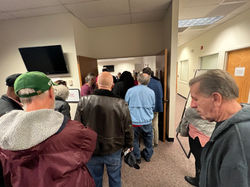 |
 |
The Truthline Network Publication Attachments List for This Report
For the growing number of readers who enjoy deep dives, explainers, and additional information, below are PDFs that supplement this report for your viewing or downloading.
[PDF] [Where in the report?] Governor Matt Meyer, Executive Order 16
[PDF] [Where in the report?] Governor Matt Meyer, Executive Order 18
[PDF] [Where in the report?] T.C. Memo. 2024-59, Parkway Gravel Inc. and Subsidiaries v. Commissioner of Internal Revenue
[PDF] [Where in the report?] Truthline Memorandum, "The Tax Court Record: Ferrara, Smiley, and the Airport Corridor Rezoning Chain", Companion Document to “The Quiet Dismantling of Delaware’s Democratic Guardrails”
[PDF] [Where in the report?] Truthline Memorandum, "Twenty Years, One Councilman: The George Smiley File, The Tax Court Record, the Property Chain, and the Questions Nobody Has Asked", Companion Document to “The Quiet Dismantling of Delaware’s Democratic Guardrails”
A Note on Methodology and Sourcing
This supplement follows the same sourcing standards as the original report. Every claim is traceable to a government document, court filing, campaign finance disclosure, published tariff, statutory text, or on-the-record statement from a named official. Where unnamed sources provide context, the underlying facts are independently verifiable through public records.
"We make it easy to verify. We make it hard to misquote."
RETURN TO TABLE OF CONTENTS
The Evidence File: Receipts, Sources, and Primary Documents
Title: "The Quiet Dismantling of Delaware’s Democratic Guardrails: Executive Order 18 and the Pattern of Developer-Driven
Land Use Policy"
1. Executive Orders and State Policy Documents
Executive Order No. 18, Implementing the Delaware Permitting Accelerator. Signed February 26, 2026, by Governor Matthew Meyer. https://governor.delaware.gov/executive-orders/executive-order-18/
Executive Order No. 16, Expanding Downtown Development Districts and Certifying Updated Delaware Land Use Strategies.
Signed January 30, 2026, by Governor Matthew Meyer.
State of Delaware News. (2026, February 26). Governor Matt Meyer signs executive order streamlining state permitting regulations. https://news.delaware.gov/2026/02/26/governor-matt-meyer-signs-executive-order-streamlining-state-permitting-regulations/
State of Delaware News. (2026, February 20). Downtown Development District rebate program opening application process for new district designations. https://news.delaware.gov/2026/02/20/downtown-development-district-rebate-program-opening-application-process-for-new-district-designations/
2. Delaware Statutes and Constitutional Provisions
Delaware Code, Title 9, Chapter 26 (New Castle County Zoning). https://delcode.delaware.gov/title9/c026/sc01/index.html
Delaware Code, Title 29, Chapter 101 (Administrative Procedures Act). https://delcode.delaware.gov/title29/c101/sc02/index.shtml
Delaware Constitution, Article I, Section 10 (Suspending Laws).
Delaware Constitution, Article II, Section 25 (Land Use Authority).
3. Case Law
Tate v. Miles, 503 A.2d 187 (Del. Supr. 1986). https://law.justia.com/cases/delaware/supreme-court/1986/503-a-2d-187-4.html
United States v. Slawik, 408 F. Supp. 190 (D. Del. 1976); 427 F. Supp. 824 (D. Del. 1977); reversed in part, 548 F.2d 75 (3d Cir. 1977). https://law.justia.com/cases/federal/district-courts/FSupp/408/190/1874004/
T.C. Memo. 2024-59, Parkway Gravel Inc. and Subsidiaries v. Commissioner of Internal Revenue, United States Tax Court.
Decided May 21, 2024. Docket No. 10819-21.
Blue Rehoboth Marina LLC v. Marina View Condominium Association, Inc., Delaware Superior Court, C.A. No. S21C-08-033 CAK.
Decided August 22, 2023.
Roy v. Williams (1978), Delaware Supreme Court.
4. Campaign Finance Records
Delaware Office of the State Election Commissioner. Campaign Finance Reports. Change Can’t Wait PAC, Account No. 02005278.
Reports filed 2021–2026.
Delaware Office of the State Election Commissioner. Campaign Finance Reports. Meyer for New Castle County, Account No. 01003643. Reports filed 2016–2022.
Delaware Office of the State Election Commissioner. Campaign Finance Reports. Meyer for Delaware, Account No. 01005311.
Reports filed 2022–2026.
5. County Legislation, Ordinances, and Administrative Records
New Castle County Council
Ordinance 23-168 (Public Notice for Rezonings). Introduced December 12, 2023. Prime Sponsors: Hartley-Nagle, Toole. Amending UDC Section 40.31.340.
Draft Ordinance: Proposed addition of Section 40.31.111 (Individual Rezoning Requirement). Prepared March 2024 by Hartley-Nagle.
Killed in administrative review before Council introduction.
Ordinance 23-083 (Application 2023-0325-Z, Comprehensive Rezoning). Introduced June 2023. Co-sponsors: Kilpatrick, Tackett.
87 properties.
Ordinance 22-143 (Application No. 2022-0335-S/Z), Walker Farm Industrial Development. Tax Parcel 10-024.00-219, 61.37 acres.
Rezoning S to I. Introduced by Smiley. Approved December 18, 2024. Recorded January 17, 2025, Instrument No. 20250117-0003883.
Ordinance 24-032 (Comprehensive Rezoning, 1204 Lighthouse Road). August 2024. Tax Parcel 06-147.00-017.
Ordinance 24-008 (Development Impact Fees). Sponsors: Durham, Carter, Toole. Passed 7-2, December 10, 2024. Vetoed December 26, 2024.
Resolution 25-027 (Flexible Rezoning Calendar). Sponsor: Kilpatrick. 2025.
Correspondence re: Ordinance No. 24-032, Comprehensive Rezoning 1204 Lighthouse Road. August 12 through September 17, 2024. (Reese, Durham, Borin Ogden, Carter.)
NCC Planning Board Agenda, October 17, 2023 (revised 10/11/2023), including App. 2023-0325-Z. State Agency Review. State of Delaware, Office of State Planning Coordination. PLUS Review 2024-01-04. February 21, 2024. Response to Ordinance 23-168.
DNREC. Walker Farm Industrial Development, WPCC 3046/24. Public notice for sanitary sewer infrastructure by First Industrial Realty Trust, Inc., June 26, 2024. https://dnrec.delaware.gov/public-notices/wr20240237/
Sussex County
City of New Castle, Ordinance 536. Rezoning of Tax Parcels 21-022.00-001 and 21-022.00-002, 130 and 150 Lukens Drive.
First reading May 10, 2022. Public hearing May 9, 2023.
Unified Development Code
New Castle County Code, Chapter 40 (Unified Development Code), Ordinance No. 97-172. Adopted December 31, 1997. Establishing Chapter 40 under County Executive Tom Gordon.
6. Audits and Government Reports
Delaware State Auditor. Performance Audit, Diamond State Port Corporation. December 2025. Lydia E. York, State Auditor. https://auditor.delaware.gov/2025/12/04/diamond-state-port-corporation-performance-audit/
Delaware Economic and Financial Advisory Council. Minutes of Meeting, March 17, 2025. https://financefiles.delaware.gov/DEFAC/minutes/Minutes_03.17.25_FINAL.pdf
Delaware Office of Management and Budget. Open Expenditures. Vendor: Greggo and Ferrara Inc. Fiscal years 2018–2026 (partial). Total: $201.51 million. https://opencheckbook.delaware.gov
DNREC Secretary Greg Patterson. Coastal Zone Act Status Decision, Project CZA-448SD. January 31, 2026.
Starwood Digital Ventures. Statement of Appeal to Delaware Coastal Zone Industrial Control Board. February 17, 2026.
7. Port of Wilmington Sources
Hartley-Nagle, K. (2026, February 18). Battle for Delaware’s waterfront: Port of Wilmington Truthline report. Supplemental sections added February 23, 2026. https://www.karenhartleynagle.com/battle-for-wilmingtons-waterfront-port-of-wilmington-truthline-report
Ashe, W., Jr. ILA Local 1694 President. Direct interviews, February 16 and February 20, 2026.
Port of Wilmington Tariff No. 1J, filed under 46 U.S.C. §40501(f). Section 11.2 classifies Presidents Day as Overtime Holiday.
WDEL. (2025, June 5). Port of Wilmington and Chiquita sign long-term agreement. https://www.wdel.com/business/port-of-wilmington-and-chiquita-sign-long-term-agreement/article_a5501af3-91e5-46e6-806f-8495143ac6f6.html
Enstructure Wilmington. Fresh fruit and cargo portfolio pages. https://portwilmington.com/fresh-fruit/
Meyer, M. (2025, February 21). A port for the people: We must expand Delaware’s economy with transparency [Op-ed]. The News Journal. https://www.yahoo.com/news/port-people-must-expand-delaware-093121342.html
8. Developer and Donor Profile Sources
Alan Levin and DEFAC
Delaware Business Times. (2025, December 16). Alan Levin profile. https://delawarebusinesstimes.com/supplements/de222/alan-levin/
Cape Gazette. Alan Levin joins Beebe Medical Foundation board of directors. https://www.capegazette.com/article/alan-levin-joins-beebe-medical-foundation-board-directors/205523
SoDel Concepts. About page. https://sodelconcepts.com/about
Progressive Grocer. Walgreens to buy 76-unit Happy Harry’s pharmacy chain. https://progressivegrocer.com/walgreens-buy-76-unit-happy-harrys-pharmacy-chain
Delaware Business Times. (2020, February 9). Frontier Airlines to announce return to Delaware (Airport Task Force, Levin chairing). https://delawarebusinesstimes.com/news/frontier-airlines-to-return-to-delaware/
Delaware Business Times. County expected to leave fate of airport management in County Executive’s hands. https://delawarebusinesstimes.com/news/wilmington-airport-open-rfp/
Greggo and Ferrara / Parkway Gravel
T.C. Memo. 2024-59, Parkway Gravel Inc. and Subsidiaries v. Commissioner of Internal Revenue. United States Tax Court. Decided May 21, 2024.
Delaware Business Times. (2024, March 13). Developer seeks to build two huge warehouses near New Castle.
Delaware Business Times. (2024, March 13). Project aims to bring 800+ homes near Middletown.
Spotlight Delaware. (2025, December 16). Two New Castle County industrial projects may become data centers.
Delaware Business Times. (2026, January 6). Three sites across New Castle explore data center conversions.
Capano Family
TIME Magazine. (1997, November 24). Brothers in crime. https://time.com/archive/6731840/brothers-in-crime/
Spotlight Delaware. (2025, December 16). Sussex County greenlights controversial Belle Mead development. https://spotlightdelaware.org/2025/12/16/sussex-county-greenlights-controversial-belle-mead-development/
Spotlight Delaware. (2026, January 13). Residents take Sussex County Council to court over Belle Mead. https://spotlightdelaware.org/2026/01/13/residents-take-sussex-county-council-to-court-over-belle-mead/
Buccini Pollin Group
Buccini Pollin Group. (2025, May 8). BPG breaks ground on STAR Campus residential development. https://www.bpgroup.net/news/buccini-pollin-group-breaks-ground-on-first-multifamily-residential-development-on-star-campus/
Commercial Observer. (2025, September). Buccini Pollin Group nabs $103M recap for Delaware office-to-resi conversion. https://commercialobserver.com/2025/09/buccdelaware-office-to-resi-conversion-dupont/
Delaware Business Times. (2026, January). Incyte to sell Bracebridge buildings to BPG. https://delawarebusinesstimes.com/news/incyte-to-sell-bracebridge-buildings-to-bpg/
Town Square Delaware. BPG opens The Press, adding 243 luxury apartments to downtown Wilmington. https://townsquaredelaware.com/buccini-pollin-group-opens-the-press-adding-243-luxury-apartments-to-downtown-wilmington/
Pettinaro
Delaware Business Times. Gregory Pettinaro, DE 222 honoree profile. https://delawarebusinesstimes.com/supplements/de222/de222-honoree-gregory-pettinaro/
Tarabicos Grosso LLP. (2020, March 10). Barley Mill Plaza redevelopment plan receives unanimous approval. https://tarabicosgrosso.com/barley-mill-plaza-redevelopment-plan-receives-unanimous-approval-wegmans-coming-to-delaware/
Delaware Public Media. (2019, February 20). New plan for Barley Mill Plaza promises Wegmans, jobs. https://www.delawarepublic.org/delaware-headlines/2019-02-20/new-plan-for-barley-mill-plaza-promises-wegmans-jobs
Pettinaro. Our Company page. https://pettinaroresidential.com/about/our-company
Copeland / du Pont
Delaware Business Times. (2020, January 6). 2020 Josiah Marvel Cup: Gerret and Tatiana Copeland. https://delawarebusinesstimes.com/news/josiah-marvel-cup-2020/
Wikipedia. Lammot du Pont Copeland. https://en.wikipedia.org/wiki/Lammot_du_Pont_Copeland
University of Delaware UDaily. (2022, May). Honorary degrees to be awarded at Commencement. Identifies Tatiana Copeland as owner and president of Rokeby Realty Company. https://www.udel.edu/udaily/2022/may/honorary-degrees-class-of-2022/
Bouchaine Vineyards. Our Proprietors: Gerret Copeland. https://bouchaine.com/pages/our-proprietors/gerret-copeland/
Labaton Keller Sucharow
Labaton Keller Sucharow. Offices page. Confirms Wilmington office at 222 Delaware Avenue, Suite 1510. https://www.labaton.com/the-firm/offices
Chambers USA. (2025). Labaton Keller Sucharow LLP profile. https://chambers.com/law-firm/labaton-keller-sucharow-llp-usa-5:155862
The Boston Globe, Spotlight Team. (2016, December 17). Critics hit law firms’ bills after class-action lawsuits. https://www.bostonglobe.com/metro/2016/12/17/lawyers-overstated-legal-costs-millions-state-street-case-opening-window-questionable-billing-practices/tmeeuAaEaa4Ki6VhBpQHQM/story.html
The Boston Globe, Spotlight Team. (2020, March 2). Judge orders Boston law firm to repay millions in inflated legal fees. https://www.bostonglobe.com/2020/03/02/metro/judge-orders-boston-law-firm-repay-millions-inflated-legal-fees/
The Boston Globe, Spotlight Team. (2018, June 28). Investigation alleges misconduct by Thornton Law Firm, recommends severe sanctions. https://www.bostonglobe.com/metro/2018/06/28/investigation-alleges-misconduct-thornton-law-firm-recommends-severe-sanctions/xq1Np65b8j6z5hz4m3u3nO/story.html
Santa Fe New Mexican / Searchlight New Mexico. (2022, April 22). Out-of-state law firms make donations to AG candidate Colon. https://www.santafenewmexican.com/news/local_news/out-of-state-litigation-contacts-seep-into-democratic-primary-race-for-attorney-general/article_69e65576-c189-11ec-ab53-f3177ac30dae.html
New York Law Journal. (2020, February 20). Labaton political donations line up with pursuit of client, records show. https://www.law.com/newyorklawjournal/2020/02/20/labatons-political-donations-line-up-with-pursuit-of-client-records-show/
DSM Commercial
DSM Commercial Real Estate Services. Company website. https://dsmre.com/who-we-are/
Delaware Business Times. (2024, March 13). DSM aims to double Middletown shopping center. https://delawarebusinesstimes.com/news/dsm-aims-to-double-middletown-shopping-center/
Delaware Business Times. (2025, April 2). In the C-Suite: Tripp Way, DSM Commercial. https://delawarebusinesstimes.com/news/in-the-c-suite-tripp-way/
Stonelock Properties / Montium
Montium. Brand announcement page. Confirms rebrand from Stonelock Properties. https://montium.com/refreshing-our-brand-reaffirming-our-culture/
Montium. Team page: Sam Tress. https://montium.com/members/sam-tress/
Delaware Business Times. N.J. firm buys Newark-area apartments for $32M (Iron Hill). https://delawarebusinesstimes.com/news/iron-hill-sale/
Delaware Business Times. N.J. firm buys Newark apartments for $19M (Southgate Gardens). https://delawarebusinesstimes.com/news/montium-southgate-buy/
Delaware Business Times. N.J. firm buys Newark apartments for $63M (Pine Brook). https://delawarebusinesstimes.com/news/pine-brook-sale/
DiPaula
Community Foundation for Palm Beach and Martin Counties. Board member profile: James C. “Chip” DiPaula Jr. https://yourcommunityfoundation.org/board/chip-dipaula/
Chesapeake Corporate Advisors. (2018). Acquisition of Flywheel Digital by Ascential. https://ccabalt.com/chesapeake-corporate-advisors-serves-as-exclusive-financial-advisor-to-flywheel-digital-llc/
Hynansky / Winner Automotive
Associated Builders and Contractors, Delaware Chapter. https://www.abcdelaware.com
Marina and Waterway Network
LoopNet. 3000 Summit Harbour Place, Bear, DE 19701. Listing ID 17218878. https://www.loopnet.com/Listing/3000-Summit-Harbour-Pl-Bear-DE/17218878/
Delaware Public Media. (2025, August 27). ‘I can’t play this game anymore’: union leader proposes pivot to New Jersey as Edgemoor Port stalls. https://www.delawarepublic.org/politics-government/2025-08-27/i-cant-play-this-game-anymore-union-leader-proposes-pivot-to-new-jersey-as-edgemoor-port-stalls
DNREC Wetlands and Waterways Section. Public notice, Rehoboth Bay Marina permit application. Published March 28, 2023.
9. News Reporting and Investigative Sources
Spotlight Delaware
Spotlight Delaware. (2026, February 23). Dredging delays divert ships past the Port of Wilmington. https://spotlightdelaware.org/2026/02/23/dredging-delays-divert-ships-past-the-port-of-wilmington/
Spotlight Delaware. (2025, December 30). Meyer vetoes New Castle County impact fee hike on development. https://spotlightdelaware.org/2024/12/30/meyer-vetoes-impact-fees/
Spotlight Delaware. (2024, June 6). Amid backlash, New Castle County considers repeal of Centreville development plan. https://spotlightdelaware.org/2024/06/06/centreville-pocket-repeal/
Spotlight Delaware. (2025, October 3). Gov. Meyer denies delaying reassessment data during 2024 campaign. https://spotlightdelaware.org/2025/10/03/gov-meyer-denies-delaying-reassessment-data/
Spotlight Delaware. (2025, August 7). NCC offices, manufacturing plants get tax bill cuts.
Spotlight Delaware. (2026, February 19). Reassessment hit Black, Brown Wilmington hardest.
Spotlight Delaware. (2026, February 25). Delaware City data center developer appeals Coastal Zone denial.
Spotlight Delaware. (2026, March 4). Data center regulations in NCC may see final vote, council makes compromises.
Spotlight Delaware. (2025, July 20). Proposed Delaware data center’s energy needs would dwarf all state households.
Spotlight Delaware. (2025, December 5). Auditor describes Port of Wilmington oversight failures; state officials push back. https://spotlightdelaware.org/2025/12/05/auditor-describes-port-of-wilmington-oversight-failures-state-officials-push-back/
Spotlight Delaware. (2025, November). DelDOT land purchase near Lewes.
Delaware Public Media
Delaware Public Media. (2024, June 12). New Castle County Council rescinds resolution adding cottage development option in Centreville. https://www.delawarepublic.org/politics-government/2024-06-12/new-castle-county-council-rescinds-resolution-adding-cottage-development-option-in-centreville
Other News Sources
Cohen, C., Hager, J., & Pope, L. (1989, May 26). Grand jury hears two more testify in NCCo corruption probe. The News Journal.
WHYY News. (2025, October 1). Delaware lawmakers probe delay in sending out tax notices during 2024 election cycle.
Delaware Business Times. (2025, April). Aldi to invest $560M in automated distribution center at Blue Diamond Park.
Wikipedia. Matt Meyer. https://en.wikipedia.org/wiki/Matt_Meyer
10. Comparative State Policy Research
Terner Center for Housing Innovation, University of California, Berkeley. Research on California SB 35 implementation and housing production outcomes. 2023.
Maryland Housing Expansion and Affordability Act (HEAA), 2025. Passed Maryland House 98-38, Senate 31-13.
Oregon House Bill 2001 (2019). Middle housing reform.
Montana legislative session, 2023. Zoning reform legislation.
11. Judicial Selection and Court Structure
Delaware Courts. Judicial Officers, Court of Chancery. https://courts.delaware.gov/chancery/judges.aspx
Ballotpedia. Judicial selection in Delaware. https://ballotpedia.org/Judicial_selection_in_Delaware
Attribution:
Content and analysis © 2025 The Truthline Network, a division of Nexus Innovation Group LLC.
All content authored by Karen Hartley-Nagle, Founder & Publisher, The Truthline Network; Editor-in-Chief, Host & Executive Producer,
The Truthline (Radio & Live); Former President, New Castle County Council (2016–2024); Founder & CEO, Nexus Innovation Group, LLC.
Excerpts, data, or quotations may be reproduced for noncommercial use with attribution to The Truthline Network and a direct link to the original report. Commercial use or republication requires written permission.
Cite as: Hartley-Nagle, K. (2026, March 4). The Quiet Dismantling of Delaware's Democratic Guardrails: Executive Order 18 And The Pattern of Developer-Driven Land Use Policy. The Truthline Network.
https://www.karenhartleynagle.com/eo18-report-developer-money-democratic-guardrails
Author: Karen Hartley-Nagle
Title: President of New Castle County Council, 2016 to 2024
Publisher: The Truthline Network
Date: March 10, 2026
Sections: 14 plus Introduction, Sources, and References
Read full documents: The Evidence File → Sources above
"Transparency isn’t charity. It’s the rent you pay for power"
Read the Audit Reckoning Series:
Report 1 | Report 2 | Report 3 | Report 4 | Coming Soon: Report 5
RETURN TO TABLE OF CONTENTS
THE TRUTHLINE NETWORK
"Truth doesn't whisper. It breaks through."


"The developers wrote the checks. The Governor signed the order.
The public lost the hearing. That is the transaction."
[Click the pictures below for linked news articles]


